
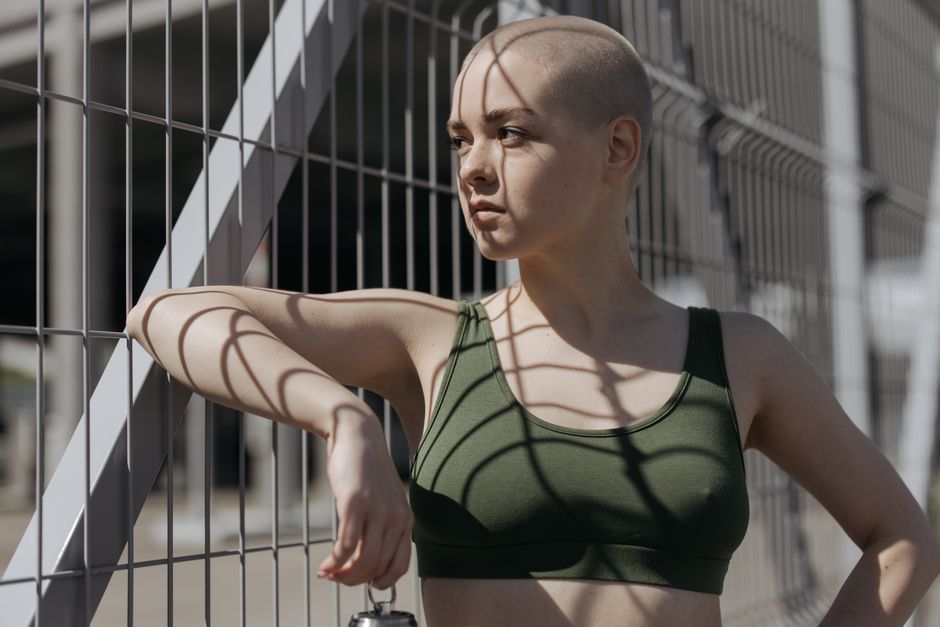
Female pattern baldness is a common form of hair loss in women, medically known as androgenetic alopecia. It causes thinning hair mainly on the top and crown of the scalp, but it rarely leads to complete baldness. The condition is driven by genetics and hormones, and while it is not dangerous, it can be distressing. Treatment options exist that can slow progression and, in some cases, help regrow hair, but results vary from person to person.
What Is Female Pattern Baldness Causes Treatments?
Female pattern baldness is a genetic condition that causes hair to thin gradually over time. It happens when hair follicles shrink, producing thinner and shorter hairs until they stop growing altogether. Unlike male pattern baldness, women usually keep their frontal hairline, and the thinning is spread across the top of the scalp rather than forming a receding line or a bald spot.
The condition is linked to hormones called androgens, which include testosterone. In women who are genetically predisposed, these hormones can shorten the growth phase of the hair cycle. Over time, the follicles become smaller, and the hair that grows from them becomes finer and less visible. This process is gradual, often taking years to become noticeable.
Female pattern baldness is very common. It affects millions of women, and the likelihood increases with age. Many women first notice it after menopause, but it can begin earlier. It is not a sign of poor health, and it does not mean you are losing your femininity or vitality.
What Does Female Pattern Baldness Look Like?
The most common sign is widening of the part line in the hair. Many women notice that their ponytail feels thinner, or that their scalp becomes more visible when their hair is wet or styled. The thinning is usually most pronounced on the crown of the head, while the front hairline remains intact.
There is a standard scale doctors use to grade female pattern hair loss, called the Ludwig classification. It describes three stages: mild, moderate, and extensive thinning. In mild cases, the hair on top of the head is slightly thinner. In moderate cases, the thinning is more obvious, and the scalp may be visible. In extensive cases, the hair on top is very thin, but the front hairline is still preserved.
Unlike some other causes of hair loss, female pattern baldness does not cause bald patches or sudden shedding. It is a slow, steady process. If you are losing handfuls of hair at once, or if you have round bald spots, that points to a different condition, such as telogen effluvium or alopecia areata. A doctor can help distinguish between these.
What Causes Female Pattern Baldness?
Genetics play the largest role. If your mother, father, or grandparents had pattern hair loss, your risk is higher. The condition is inherited, but the exact genes involved are complex and not fully mapped. It is not passed down only from the mother’s side, as is sometimes believed. Both sides of the family matter.
Hormones also play a central part. Androgens, particularly a derivative of testosterone called dihydrotestosterone (DHT), bind to receptors in the hair follicles. In genetically sensitive follicles, this binding triggers a process that shortens the hair growth cycle and shrinks the follicle over time. Not all women with female pattern baldness have elevated androgen levels. Many have normal hormone levels, which suggests the hair follicles themselves are simply more sensitive to normal amounts of these hormones.
Age is another factor. Hair thinning becomes more common as women get older, particularly after menopause. Estrogen levels drop during this time, and the balance between estrogen and androgens shifts. This hormonal change can accelerate the genetic tendency toward thinning.
Other conditions can mimic or worsen female pattern baldness. Iron deficiency, thyroid disorders, and polycystic ovary syndrome (PCOS) can all cause hair thinning. A doctor can test for these. Treating the underlying issue may slow or stop the hair loss, even if it does not restore full density.





How Is Female Pattern Baldness Diagnosed?
Diagnosis usually begins with a medical history and a physical exam of the scalp. A dermatologist will look at the pattern of thinning and ask about your family history, medications, and any recent health changes. In most cases, this is enough to make the diagnosis.
Sometimes additional tests are needed. Blood tests can check for iron deficiency, thyroid problems, or hormonal imbalances. A scalp biopsy is rarely needed, but it can be used if the diagnosis is unclear. In a biopsy, a small piece of scalp skin is removed and examined under a microscope. This can help rule out other causes of hair loss, such as scarring alopecia.
If you are experiencing sudden or patchy hair loss, or if the thinning is accompanied by itching, pain, or redness, see a doctor. These symptoms are not typical of female pattern baldness and need evaluation.
What Treatments Are Available?
Treatment for female pattern baldness focuses on slowing further thinning and, in some cases, stimulating regrowth. It is important to understand that no treatment works for everyone, and results take months to appear. Hair grows slowly, so you will not see improvement overnight.
Minoxidil is the most widely used treatment. It is an over-the-counter topical solution or foam applied directly to the scalp. It is available in 2% and 5% strengths. The 5% strength is often recommended for women, but it can cause unwanted hair growth on the face if it drips onto the skin. Minoxidil works by lengthening the growth phase of the hair cycle and enlarging shrinking follicles. It does not work for everyone, and if you stop using it, the regrown hair will fall out within a few months. You must use it consistently to maintain results.
Spironolactone is an oral medication that blocks androgen receptors and reduces the effects of male hormones on hair follicles. It is often used off-label for female pattern baldness, meaning it is not officially approved for this purpose but is commonly prescribed. It can take six to twelve months to see results. Side effects include dizziness, breast tenderness, and changes in menstrual cycle. It is not safe during pregnancy, so women who may become pregnant should not take it.
Low-level laser therapy is another option. Devices such as laser combs or helmets emit red light that is thought to stimulate hair follicles. Some studies suggest it can improve hair density, but the evidence is not as strong as for minoxidil. It is a time commitment, requiring regular use several times per week, and the devices can be expensive.
Platelet-rich plasma (PRP) therapy involves drawing your blood, processing it to concentrate the platelets, and injecting it into the scalp. The idea is that growth factors in the platelets stimulate hair follicles. Evidence for PRP is growing, but results are mixed, and it is not covered by most insurance plans. Multiple sessions are usually needed, and maintenance treatments are often required.
Hair transplantation is a surgical option for women with more advanced thinning. It involves moving hair follicles from the back of the scalp, where hair is genetically resistant to thinning, to the areas that are thinning. It can produce permanent results, but it is expensive, invasive, and not appropriate for every woman. Women with diffuse thinning across the entire scalp may not have enough healthy donor hair for a successful transplant.
Are There Natural Remedies That Work?
The market is full of supplements and oils that claim to regrow hair. The evidence for most of these is weak. No supplement has been proven to reverse female pattern baldness in large clinical trials.
Some research suggests that certain nutrients, such as iron, vitamin D, and zinc, are important for healthy hair growth. But if your levels are normal, taking extra will not help. Supplementing beyond what your body needs does not produce more hair. If you suspect a deficiency, ask your doctor for a blood test rather than guessing.
Scalp massage and essential oils are popular on social media. There is no robust evidence that they treat female pattern baldness. They may feel relaxing and improve the condition of the hair, but they do not address the hormonal and genetic drivers of the condition. Be cautious with essential oils — some can irritate the scalp, and they are not regulated as medicines.
Can Diet or Lifestyle Changes Help?
A balanced diet supports overall health, including hair health. But no specific diet has been shown to treat female pattern baldness. Eating enough protein, iron, and vitamins is sensible for general well-being, but it will not override your genetics.
Stress management may help indirectly. High stress can trigger temporary hair shedding, which can make pattern thinning look worse. Reducing stress will not stop pattern baldness, but it may prevent additional shedding on top of it. The same applies to sleep and exercise — they support health but do not treat the underlying condition.
Smoking has been associated with poorer hair health in some studies. Quitting smoking is good for many reasons, and hair might be one of them. But there is no evidence that quitting smoking reverses female pattern baldness.
What Happens Without Treatment?
Female pattern baldness is progressive. Without treatment, thinning tends to continue over time. The rate of progression varies widely between individuals. Some women experience slow thinning over decades, while others see more rapid changes over a few years.
The condition does not cause complete baldness. Women rarely lose all the hair on their scalp. The thinning usually remains confined to the top and crown, and the back and sides of the scalp typically keep their hair. This is different from male pattern baldness, which can progress to complete baldness on top.
Treatment can slow or halt the progression in many women, but it is not a cure. The goal is to maintain the hair you have and potentially regrow some. Early treatment generally gives better results, as it is easier to preserve existing hair than to regrow hair from follicles that have already shrunk significantly.
When Should You See a Doctor?
See a doctor if you notice gradual thinning on the top of your scalp, or if your part line is widening. It is also worth seeing a doctor if you are experiencing sudden hair loss, bald patches, or hair loss with itching or pain. These symptoms may point to a different condition that needs specific treatment.
A dermatologist is the best specialist to evaluate hair loss. They can confirm the diagnosis, rule out other causes, and discuss treatment options that fit your situation. There is no reason to wait until the thinning is advanced. Earlier evaluation gives you more options.
Frequently Asked Questions
Is female pattern baldness reversible?
It is not fully reversible, but treatment can slow progression and may regrow some hair. Results vary, and any regrowth requires ongoing treatment to maintain.
Does female pattern baldness mean you have too much testosterone?
Not necessarily. Many women with the condition have normal hormone levels. The hair follicles are simply more sensitive to normal amounts of androgens.
Can stress cause female pattern baldness?
Stress does not cause female pattern baldness, but it can trigger temporary shedding that makes thinning look worse. The underlying condition is genetic and hormonal.
What is the best treatment for female pattern baldness?
Minoxidil is the most established treatment and the first choice for many women. Oral medications like spironolactone are also effective for some, but they require a prescription and monitoring.
