
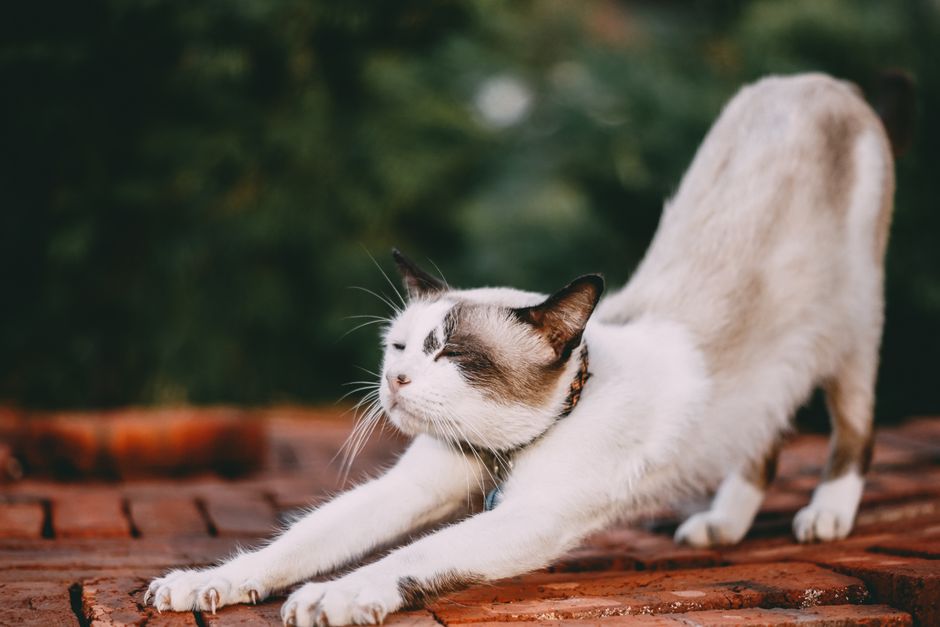
Feline hyperesthesia is a syndrome in cats marked by episodes of rippling skin along the back, tail twitching, and sudden bursts of frantic self-grooming or biting at the hindquarters. It is not a disease in itself but a collection of signs that can have several different underlying causes. The name comes from Greek roots meaning “over-sensation” — the cat appears to feel ordinary touch as intensely unpleasant. Because the signs overlap with several other conditions, diagnosis usually means ruling those out first.
What Is Feline Hyperesthesia Causes And Treatment?
The word “hyperesthesia” means increased sensitivity to touch. In a cat with this syndrome, the skin along the spine appears to become hypersensitive, and light contact — even a gentle stroke — can set off a reaction. The classic sign is a visible ripple of the skin running down the back, sometimes called a rolling skin wave.
It is important to understand what feline hyperesthesia is not. It is not a recognized disease with a single cause, a single diagnostic test, or a standard cure. Veterinary behaviorists and neurologists describe it as a syndrome — a pattern of signs that can arise from more than one source. Some cases are linked to underlying skin pain, some to nerve or spinal problems, and some appear to be behavioral. Many cases have no identifiable cause at all.
That ambiguity matters. A cat showing these signs needs a proper veterinary workup, not a guess from the internet. What follows explains the established knowledge about the signs, the possible causes, and the treatment approaches veterinarians use — and where the evidence is genuinely thin.
What Are the Signs of Feline Hyperesthesia?
The hallmark sign is the rippling skin along the back, and most owners recognize it before they know what it is called. The wave of muscle movement runs from the shoulders toward the tail, often in short bursts. Some cats also twitch their tail, flatten their ears, or dilate their pupils during an episode.
Common signs reported by owners include:
- Rolling or rippling skin along the spine
- Sudden bursts of intense grooming, licking, or biting at the back, flanks, or tail
- Tail twitching or chasing the tail
- Dilated pupils and a glazed or distant look during an episode
- Flinching, crying out, or running away when touched along the back
- Agitation, irritability, or aggression during or after an episode
Episodes can be brief or last longer, and they may happen spontaneously or be triggered by touch. Between episodes many cats behave normally. That on-and-off pattern is part of why the syndrome is easy to miss or misread as a behavioral quirk.
One clarification worth knowing: the rippling skin is a real, visible muscular event, not a sign of “nerves” in the emotional sense. Owners often describe their cat as “twitchy” or “having a moment,” but the underlying question is what is driving the skin and muscle sensitivity — and that is what a veterinarian has to sort out.
What Causes Feline Hyperesthesia?
There is no single established cause, and that is the honest state of the evidence. Veterinarians consider several possible contributors, and more than one may be present in the same cat. The main categories are skin problems, nerve and spinal issues, pain, and behavioral or stress-related factors.
Skin and parasite-related causes
Anything that makes the skin itchy or painful can produce grooming and biting that look like hyperesthesia. Fleas, flea allergy, and other external parasites are common culprits. Skin infections, allergies, and anal sac problems are also considered. In these cases the “hyperesthesia” signs may actually be a response to genuine skin discomfort, which is why a thorough skin exam and parasite control come first.
Nerve and spinal causes
Because the signs run along the spine, some cases are thought to involve nerve irritation or spinal disease. Conditions that affect the nerves supplying the skin and muscles of the back — including disc disease, nerve root irritation, or other spinal problems — can produce similar signs. Some researchers have proposed a link to a nerve condition affecting the tail and hindquarters, but this is not confirmed as a universal cause and is best described as one possible contributor rather than the explanation for all cases.
Pain and internal causes
Abdominal pain, back pain, and other sources of discomfort can make a cat restless, twitchy, and prone to sudden reactions. Some cats with these signs turn out to have an underlying painful condition. This is one reason a full physical exam and, where indicated, imaging or bloodwork are part of the workup.
Behavioral and stress-related factors
In some cats, especially those with a sensitive temperament, the signs appear linked to stress, conflict, or an unpredictable environment. Siamese, Burmese, and other Asian breeds are reported more often, which suggests a possible genetic or breed predisposition, though this is not firmly established. Behavioral causes are a real possibility but should be considered only after medical causes are ruled out — not as a first assumption.
How Is Feline Hyperesthesia Diagnosed?
There is no single test for feline hyperesthesia. Diagnosis is a process of ruling out other conditions, and it depends heavily on a detailed history from the owner.
Veterinarians typically start with a full physical examination, including a careful look at the skin and coat. They will ask about the timing, frequency, and triggers of episodes, and whether the cat shows signs between them. Video of an episode is often genuinely useful, because many cats do not perform the behavior in the clinic.
Depending on what the exam turns up, the workup may include:
- Flea and parasite control, plus skin testing for infection or allergy
- Bloodwork to check general health and rule out systemic disease
- Imaging of the spine if nerve or spinal disease is suspected
- Assessment of anal sacs and the abdomen for sources of pain
- Behavioral assessment if medical causes are excluded
Because the signs overlap with epilepsy, skin disease, pain, and anxiety-related conditions, a veterinarian may also consider those before settling on hyperesthesia. This is not a condition you can confirm at home, and self-diagnosis tends to lead owners down the wrong path.
How Is Feline Hyperesthesia Treated?
Treatment follows the cause, when one is found. If fleas, skin infection, or another identifiable problem is driving the signs, treating that problem is the priority. When no clear cause emerges, management focuses on reducing episodes and improving the cat’s comfort and environment.
Approaches veterinarians use, depending on the individual case, include:
- Parasite control and skin treatment if fleas, mites, or skin infection are involved
- Pain management when an underlying painful condition is identified
- Behavioral and environmental changes — predictable routines, reduced conflict, and safe spaces — when stress appears to play a role
- Medication in some cases, chosen by the veterinarian based on the suspected mechanism
Here the evidence is genuinely limited. No large controlled trials have established a standard drug protocol for feline hyperesthesia, and there is no medication approved specifically for it. Some veterinarians use medications borrowed from epilepsy, nerve pain, or anxiety treatment, but this is common clinical practice rather than strongly established evidence. Response varies, and some cats improve while others do not.
This is a place to be careful about online claims. Products marketed as cures or “calming solutions” for feline hyperesthesia have no clinical evidence behind them. If a cat is genuinely distressed, the right move is a veterinary workup, not a supplement from a website.
What Is the Outlook for a Cat With Feline Hyperesthesia?
The outlook varies widely and depends on the underlying cause. Cats whose signs come from a treatable skin or parasite problem often improve once that problem is addressed. Cats with no identifiable cause may have ongoing episodes that are managed rather than cured.
Many cats live normal lives between episodes, and the goal of management is usually to reduce the frequency and intensity of episodes and lower the cat’s distress. Some cats improve over time; others need ongoing management. Because the condition is a syndrome rather than a single disease, a veterinarian’s individual assessment is more useful than any general prognosis.
Owners play a real role here. Keeping a simple log of when episodes happen, what seems to trigger them, and what the cat was doing beforehand gives the veterinarian information no test can provide. Avoiding punishment during episodes matters too — a cat reacting to genuine discomfort does not respond to discipline, and punishment can increase stress.
Frequently Asked Questions
Is feline hyperesthesia painful for cats?
The condition is generally understood as involving increased skin sensitivity, and some cases are linked to underlying pain. Whether every cat experiences it as pain is not established, which is one reason a veterinary exam matters.
Can feline hyperesthesia be cured?
There is no established cure, because the syndrome has multiple possible causes. Cats with a treatable underlying problem may improve fully, while others are managed long term.
Is feline hyperesthesia the same as a seizure?
No, they are different, though the signs can look similar and epilepsy is one condition veterinarians rule out. A veterinarian can help distinguish between them.
Should I take my cat to the vet for rippling skin on the back?
Yes, rippling skin along the back with grooming or biting warrants a veterinary visit. Skin, parasite, spinal, and pain-related causes all need to be checked before assuming a behavioral explanation.
