
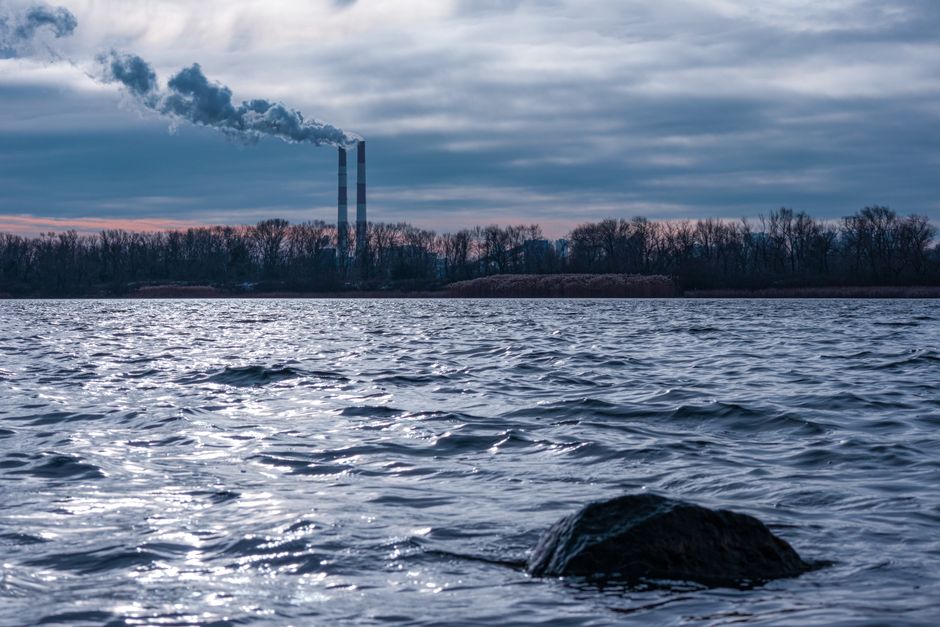
Air pollution is the biggest pollution problem in Europe. It shortens lives, harms the heart and lungs, and affects nearly every country on the continent. Fine particulate matter — the tiny specks known as PM2.5 — causes the largest share of the health damage, and it remains the leading environmental health risk in Europe even as other pollution problems have improved.
What Is Europe’s Biggest Pollution Problem?
Europe’s biggest pollution problem is air pollution, specifically fine particulate matter (PM2.5). This is not a close call. When researchers rank environmental risks by their impact on human health, air pollution consistently sits at the top in Europe.
The European Environment Agency has repeatedly identified air pollution as the single largest environmental health risk in Europe. The health burden comes mostly from PM2.5, tiny particles small enough to travel deep into the lungs and, in some cases, into the bloodstream. These particles are linked to heart disease, stroke, lung cancer, and respiratory illness.
What makes air pollution so damaging is that it is widespread and largely invisible. A person breathing polluted air in a European city may not notice anything unusual. Yet the cumulative effect on a population is enormous, and it falls hardest on children, older adults, and people with existing heart or lung conditions.
It is worth separating two ideas that often get mixed together. Air pollution is the biggest problem in terms of harm to human health. But if you measure pollution by volume or by environmental damage to ecosystems, water pollution and plastic waste become much more significant. The answer depends on how you define “biggest.”
Why Is PM2.5 So Harmful Compared to Other Pollutants?
PM2.5 is harmful because of its size. The “2.5” refers to particles measuring 2.5 micrometers or smaller — roughly 30 times thinner than a human hair. Particles this small bypass the body’s natural defenses in the nose and upper airways.
Larger particles tend to get trapped and coughed out. PM2.5 does not. It reaches the deepest parts of the lungs, where it can trigger inflammation. Some ultrafine particles are small enough to cross into the bloodstream, which is one reason air pollution is linked to heart attacks and strokes, not just breathing problems.
PM2.5 is also a mix rather than a single substance. It includes:
- Soot and smoke from burning fuels
- Sulfur and nitrogen compounds from industry and vehicles
- Ammonia from agriculture, which reacts in the air to form particles
- Dust and other natural sources
This mixture matters because it means there is no single fix. Reducing PM2.5 requires action across transport, energy, industry, and farming at the same time.
Where Does Europe’s Air Pollution Come From?
Europe’s air pollution comes from several major sources, and they have shifted over time. Decades ago, coal burning and heavy industry dominated. Today the picture is more mixed.
Road transport remains a major source in cities, especially diesel vehicles. Agriculture is a large and often overlooked contributor — ammonia from livestock and fertilizer reacts in the atmosphere to form fine particles. Residential heating, particularly wood and solid fuel burning, adds significantly to winter pollution in many regions. Industry and power generation still contribute, though cleaner fuels and regulation have reduced their share compared to the past.
One non-obvious point: a country’s air quality is not purely its own doing. Pollution travels. Particles and the gases that form them can cross borders, so emissions in one country affect the air in its neighbors. This is why Europe-wide coordination has been central to reducing air pollution, and why a single nation acting alone can only do so much.
How Has Europe’s Air Quality Changed Over Time?
Europe’s air quality has improved substantially over recent decades. This is one of the genuine environmental success stories on the continent. Levels of sulfur dioxide, lead, and several other pollutants have fallen sharply since the 1970s and 1980s, largely because of regulation and cleaner technology.
But improvement is not the same as safety. PM2.5 levels have also come down in many places, yet a large share of Europe’s urban population still breathes air that exceeds the health-based limits recommended by the World Health Organization. The gap between “better than before” and “safe” is where most of the current concern sits.
This is an important distinction for readers to hold onto. Headlines about falling pollution can create a false sense that the problem is solved. In reality, the health effects are still occurring at levels that regulators and health agencies consider too high.
Which Countries and Cities Are Most Affected?
Air pollution in Europe is not evenly spread. It tends to be worse in dense urban areas with heavy traffic, in regions that rely on solid fuels for heating, and in parts of Central and Eastern Europe where older industrial and heating infrastructure is more common.
Some of the highest PM2.5 levels are found in parts of Eastern Europe and the Balkans, while several Northern and Western European countries generally have lower concentrations. Large cities across the continent face traffic-related pollution, and even wealthy cities are not immune.
Rural areas are not automatically clean either. Because agricultural ammonia is a major source of secondary particles, some farming regions can have surprisingly high PM2.5 levels. This often surprises people who assume pollution is only a city problem.
What Are the Health Effects of Air Pollution?
The health effects of air pollution are well established and serious. They range from short-term irritation to long-term disease and premature death.
Short-term exposure can cause coughing, wheezing, and worsening of asthma. It can also raise the risk of heart problems within days in vulnerable people. Long-term exposure is linked to heart disease, stroke, lung cancer, and chronic respiratory conditions. Research has also connected long-term exposure to effects on pregnancy outcomes and children’s lung development.
The groups most at risk include:
- Children, whose lungs are still developing
- Older adults
- People with asthma, COPD, or heart disease
- People who live or work near heavy traffic or industry
It is important to be honest about what the evidence does and does not show. The link between air pollution and heart and lung disease is strong and consistent across many studies. Links to some other conditions are suggested by research but are less firmly established. That distinction matters when reading dramatic headlines.
Is Air Pollution Really Worse Than Water or Plastic Pollution?
Air pollution causes more direct harm to human health than water or plastic pollution in Europe today. That is the clearest way to answer the question. Drinking water in most of Europe is heavily regulated and generally safe, and while plastic pollution is a serious environmental issue, its direct toll on human health in Europe is far harder to quantify than air pollution’s.
But this comparison is not as simple as it sounds. Water pollution and plastic waste cause major harm to ecosystems, wildlife, and oceans. They also carry long-term and poorly understood risks, including microplastics entering the food chain. The honest position is that these problems are serious and under active study, but the evidence for direct human health harm is not as strong or as well measured as it is for air pollution.
So the ranking depends on the measure. By human health impact, air pollution leads. By environmental and ecological damage, the picture is more complex and no single pollutant dominates.
What Is Being Done to Reduce Pollution in Europe?
Europe has reduced pollution mainly through regulation and cleaner technology. Limits on vehicle emissions, cleaner fuels, industrial standards, and international agreements on cross-border pollution have all contributed to the long-term decline in many pollutants.
The European Union has set air quality standards and has been working toward aligning them more closely with World Health Organization guidance, though the exact limits and timelines have been subject to ongoing policy debate and may change. Readers should check current official sources for the latest figures, since these standards are periodically revised.
Reducing PM2.5 further will require continued action on transport, home heating, agriculture, and industry together. No single measure solves it. This is also why individual actions, while reasonable, cannot substitute for system-level change — the sources are simply too widespread.
Frequently Asked Questions
What is Europe’s biggest pollution problem?
Air pollution, specifically fine particulate matter known as PM2.5, is Europe’s biggest pollution problem in terms of harm to human health. It is widely identified as the largest environmental health risk on the continent.
Is air pollution in Europe getting better or worse?
It has improved substantially over recent decades, with large drops in pollutants like sulfur dioxide and lead. However, PM2.5 levels in many areas still exceed the health-based limits recommended by the World Health Organization.
What are the main sources of air pollution in Europe?
The main sources are road transport, agriculture, residential heating, industry, and power generation. Ammonia from farming and wood burning for heat are often underestimated contributors.
Can air pollution from one country affect another?
Yes. Air pollution crosses borders, so emissions in one country can affect air quality in its neighbors. This is why Europe-wide coordination has been central to reducing it.
