
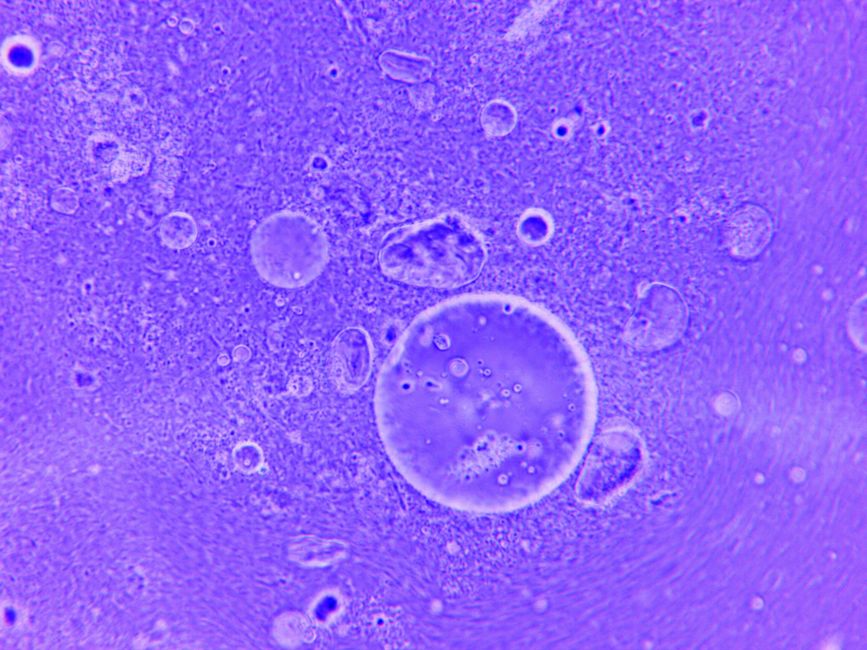
Entamoeba histolytica is a microscopic parasite that causes amebiasis, an infection of the intestines. It spreads through contaminated food or water and can cause severe diarrhea, stomach pain, and in serious cases, liver abscesses. Most people infected show no symptoms, but when the parasite invades the intestinal lining, it produces a distinct form of dysentery that requires specific medical treatment.
What Is Entamoeba Histolytica?
Entamoeba histolytica is a single-celled organism that infects the human large intestine. It is one of several Entamoeba species that live in the human gut, but it is the only one routinely associated with invasive disease. The other common species, Entamoeba dispar and Entamoeba mansonii, look identical under a microscope but do not cause illness.
The parasite exists in two forms. The cyst is the dormant, infectious form that survives outside the body. The trophozoite is the active form that feeds and multiplies inside the intestine. Cysts pass in stool and can survive for weeks in soil or water. When a person swallows a cyst, it travels to the intestine, where it opens and releases trophozoites.
Amebiasis is most common in tropical and subtropical regions with poor sanitation. It is a major cause of diarrhea worldwide, particularly in parts of Africa, Latin America, India, and Southeast Asia. In the United States, infections are uncommon and mostly occur in travelers, immigrants, or men who have sex with men.
How Does Entamoeba Histolytica Spread?
The parasite spreads through the fecal-oral route. This means microscopic amounts of infected stool end up in someone’s mouth. This happens through contaminated drinking water, unwashed produce, or hands that were not properly cleaned after using the bathroom.
Food handlers who are infected and do not wash their hands can pass the parasite to others. In areas with inadequate sewage treatment, water supplies become contaminated. Ice made from contaminated water is also a source. Sexual practices involving oral-anal contact can transmit the parasite directly.
Person-to-person spread is rare in developed countries with modern sanitation. However, institutional settings like daycares and psychiatric facilities have seen outbreaks when hygiene practices break down.
What Are the Symptoms of Amebiasis?
Most people infected with Entamoeba histolytica never develop symptoms. Estimates suggest that about 90 percent of infections remain asymptomatic. The parasite lives in the gut without invading tissue, and the person never knows they are infected. These individuals can still shed cysts in their stool and infect others.
When symptoms do appear, they typically start two to four weeks after exposure. The most common presentation is amebic colitis, an inflammation of the large intestine. Symptoms include:
- Watery or bloody diarrhea
- Stomach cramps and abdominal pain
- Tenesmus — a constant feeling of needing to pass stool
- Low-grade fever
- Weight loss and fatigue
The hallmark of amebic colitis is dysentery — stool containing blood and mucus. This distinguishes it from most other causes of diarrhea. The diarrhea can range from mild to severe, with some patients passing more than ten stools per day.
Invasive disease occurs when trophozoites penetrate the intestinal wall. This can cause ulceration, perforation of the bowel, or spread to other organs. The most common complication is an amebic liver abscess, where the parasite travels through the portal vein to the liver and forms a collection of dead tissue and pus.





What Are the Complications of Amebiasis?
Liver abscess is the most serious complication. It develops in a small percentage of infected people, sometimes weeks or months after the initial intestinal infection. Symptoms include high fever, severe right upper abdominal pain, and an enlarged tender liver. Some patients develop this without ever having noticeable intestinal symptoms.
Other complications are rare but possible. The intestine can perforate, causing peritonitis — a life-threatening infection of the abdominal cavity. The parasite can also form a mass of tissue called an ameboma, which mimics a colon tumor. Occasionally, the infection spreads to the lungs, brain, or skin, but these are very uncommon.
Children, pregnant women, malnourished individuals, and people taking corticosteroids are at higher risk for severe disease. People with weakened immune systems are also more vulnerable to invasive amebiasis.
How Is Entamoeba Histolytica Diagnosed?
Diagnosis requires laboratory testing because symptoms alone cannot distinguish amebiasis from other causes of dysentery. The standard approach starts with stool testing. A stool sample is examined under a microscope for cysts and trophozoites. However, microscopy cannot reliably distinguish Entamoeba histolytica from the harmless look-alike species. This is a significant limitation.
More accurate tests detect the parasite’s DNA or specific proteins in stool. Antigen tests and PCR tests are the preferred methods because they are specific to Entamoeba histolytica. These tests are not available everywhere, but they are the gold standard when accessible.
For liver abscess, imaging is required. An ultrasound or CT scan of the abdomen can show the abscess. Blood tests often show an elevated white blood cell count and abnormal liver enzymes. A blood test for antibodies against the parasite is also useful, though it cannot distinguish past from current infection in people from endemic areas.
If you have bloody diarrhea after traveling to a high-risk region, tell your doctor about your travel history. This information guides testing decisions.
What Is the Treatment for Amebiasis?
Treatment depends on whether the infection is invasive or not. All confirmed infections should be treated, even if asymptomatic, because the person can spread the parasite to others.
For invasive disease — amebic colitis or liver abscess — the first-line treatment is a medication called metronidazole or tinidazole. These drugs kill the trophozoites in the tissue. They are highly effective but can cause nausea, a metallic taste in the mouth, and sometimes vomiting. Alcohol must be avoided while taking these drugs and for at least 48 hours after the last dose.
After the tissue infection is cleared, a second medication is needed. This is called a luminal agent — a drug that kills cysts remaining in the intestine. Paromomycin is the most commonly used luminal agent. Without this second step, the infection can relapse because metronidazole does not effectively clear cysts from the gut lumen.
For asymptomatic carriers, treatment is a luminal agent alone. Paromomycin or another luminal drug clears the cysts without the need for tissue-active drugs.
Liver abscesses usually resolve with medication alone. Drainage of the abscess is only needed if it is very large, if it is about to rupture, or if the patient does not respond to drug therapy within a few days.
Antidiarrheal medications like loperamide should not be used during an active amebic infection. They can delay clearance of the parasite and worsen the disease by trapping the organism in the gut.
How Can Amebiasis Be Prevented?
Prevention centers on safe food and water practices, especially when traveling to high-risk regions. Drink bottled or boiled water. Avoid ice made from tap water. Eat only fruits and vegetables you peel yourself. Avoid raw vegetables and salads in areas with poor sanitation.
Hand hygiene is critical. Wash hands thoroughly with soap and water after using the bathroom and before handling food. Alcohol-based hand sanitizers are less effective against Entamoeba cysts than soap and water, so prioritize proper handwashing.
There is no vaccine against amebiasis. For travelers to endemic areas, the advice is consistent: boil it, cook it, peel it, or forget it. This simple rule prevents most foodborne and waterborne infections, not just amebiasis.
When Should You See a Doctor?
See a doctor if you develop bloody diarrhea, especially after international travel. Also seek care if you have persistent diarrhea lasting more than a few days, severe abdominal pain, or fever. Early treatment prevents complications and reduces the risk of spreading the infection to others.
If you have been diagnosed with amebiasis, complete the full course of medication exactly as prescribed. This includes the second luminal-agent phase, which some patients skip because they feel better. Skipping it leaves cysts in the intestine and the infection can return.
Frequently Asked Questions
Can Entamoeba histolytica go away on its own?
Some mild infections may resolve without treatment, but this is not reliable and the person remains infectious to others.
How long does it take to recover from amebiasis?
With proper treatment, symptoms usually improve within a few days, and the full course of medication takes about 10 days.
Is amebiasis contagious from person to person?
It spreads through the fecal-oral route, meaning direct contact with infected stool, not through casual contact or coughing.
Can you get amebiasis more than once?
Yes, previous infection does not provide lasting immunity, so reinfection is possible if you are exposed again.
