
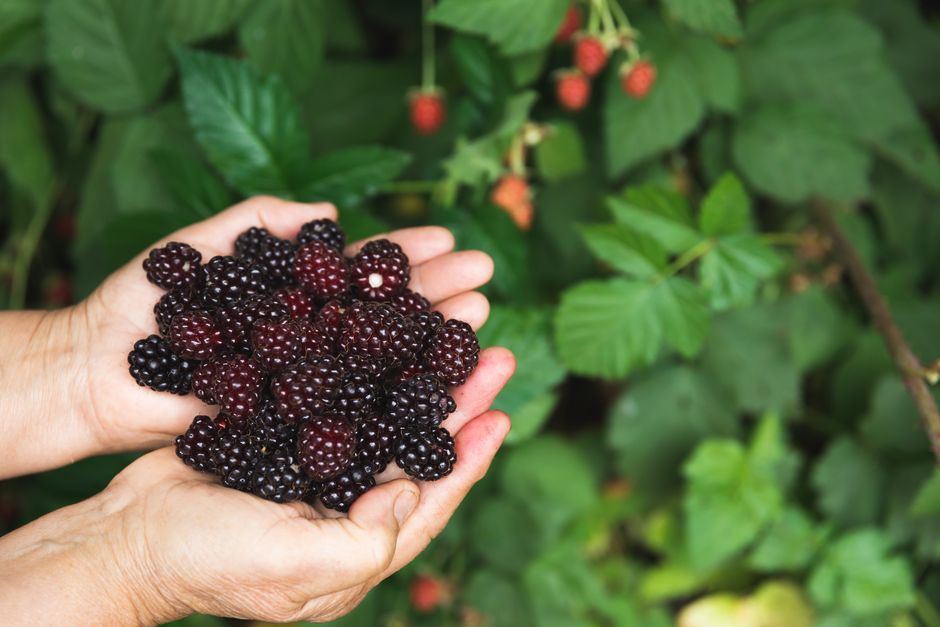
If you have ever walked out to your blackberry patch and found the leaves full of holes, looking lacy or skeletonized, you are not alone. The most common culprits are caterpillars, beetles, sawfly larvae, and slugs. A few pests stand out as repeat offenders on blackberries specifically: the spotted-wing drosophila larvae and the raspberry sawfly are frequent problems. The good news is that the damage is usually cosmetic, and a healthy blackberry plant can tolerate a fair amount of leaf loss without losing fruit.
What Is Eating My Blackberry Leaves?
The short answer is that multiple pests can do this, and identifying which one is eating your plant is the first step toward stopping it. Each pest leaves a different signature. Learning to read those signatures is more useful than reaching for a spray.
The most common leaf feeders on blackberries fall into a few groups:
- Caterpillars — chew irregular holes, often from the leaf edge inward. Some roll or tie leaves together with silk.
- Sawfly larvae — look like caterpillars but are actually the young of a wasp-like insect. They tend to feed in groups and can strip a leaf down to its veins.
- Beetles — the Japanese beetle is a well-known defoliator. It chews between the veins, leaving a lace-like skeleton.
- Slugs and snails — leave large, ragged holes and a shiny slime trail. They feed mostly at night or on damp days.
- Leafrollers and leaf tiers — caterpillars that fold or roll leaves and feed inside the shelter.
The pattern of damage matters. Holes chewed from the outside edge point to caterpillars or beetles. Skeletonized leaves with veins intact point to Japanese beetles or sawfly larvae. Ragged holes with slime point to slugs. If you see webbing, you are likely dealing with a caterpillar or spider mite problem.
How Do I Tell Which Pest Is Doing the Damage?
Go out at different times of day and look closely. Many pests hide during the heat of the day and feed in the evening, early morning, or at night. A flashlight check after dark can reveal slugs and some caterpillars you would never see at noon.
Here is how to narrow it down:
- Look at the damage shape. Round holes from the edge mean chewing insects. Lacy skeletons mean beetles or sawflies. Large ragged holes with slime mean slugs.
- Check the underside of leaves. Many caterpillars and sawfly larvae feed from below. Eggs are often laid there too.
- Look for frass. Small dark pellets of insect droppings near the damage tell you something is actively feeding.
- Shake the plant. Hold a white sheet or tray under a cane and shake it gently. Beetles and some caterpillars will drop off and be easy to see.
- Check for webbing or rolled leaves. These are shelters. Open them carefully to find the pest inside.
One clarification worth making: sawfly larvae are not caterpillars, even though they look almost identical. The difference matters because some treatments that work on caterpillars do not work the same way on sawflies. Sawfly larvae often feed in groups and react by raising their bodies in a distinctive S-shape when disturbed.
Are These Pests Dangerous to the Fruit or Just the Leaves?
Leaf damage alone rarely kills a mature blackberry plant. The plant has reserves and can regrow foliage. The bigger concern is what else the pest might do.
Some pests that eat leaves also damage fruit. The spotted-wing drosophila is a small fruit fly that lays eggs inside ripening berries, causing them to soften and spoil. Japanese beetles mostly feed on leaves and flowers but can also damage developing fruit. Slugs will feed on ripe berries that touch the ground.
So the question is not only whether the leaves are being eaten, but whether the same pest is also threatening your harvest. If you are seeing leaf damage and soft, sunken, or leaking berries, the two problems may be connected.




What Actually Works to Stop the Damage?
Start with the least aggressive method that solves the problem. For a home garden, that usually means physical removal and monitoring before any spray.
Methods with reasonable support:
- Handpick. For beetles and larger caterpillars, picking them off and dropping them into soapy water is effective and immediate.
- Row covers. Fine mesh over plants can keep flying pests away, but you must remove it during bloom so pollinators can reach the flowers.
- Encourage natural predators. Birds, lady beetles, lacewings, and parasitic wasps feed on many blackberry pests. Reducing broad-spectrum sprays helps these beneficials stay around.
- Remove and destroy heavily infested leaves. This reduces the pest population and limits spread.
- Keep the area clean. Fallen fruit and plant debris shelter pests and their eggs. Cleaning up in fall reduces next season’s population.
Insecticidal soap and horticultural oil can help with soft-bodied pests like aphids and some caterpillars. They work by contact, so they must hit the pest directly. They do not control beetles well. Bacillus thuringiensis is a bacterium that targets caterpillars specifically and is used by many gardeners, though it does not work on sawfly larvae.
For spotted-wing drosophila, the most effective approach is frequent harvest. Pick ripe fruit every day or two and refrigerate it right away. Do not let overripe fruit sit on the plant or the ground. This is a case where sanitation does more than spraying.
Do I Need to Worry About Pesticides on Blackberries I Will Eat?
Yes, this is worth taking seriously. Blackberries are a soft fruit that you often eat fresh, and you cannot peel away a residue. Any product you apply should be chosen and timed with that in mind.
Follow the label exactly. Every pesticide label states how many days must pass between the last application and harvest. This is called the pre-harvest interval, and it is not optional. Applying a product closer to harvest than the label allows can leave residue on fruit you are about to eat.
Wash berries before eating. Rinsing under running water removes surface residue and some surface microbes. Do not soak berries, which makes them mushy.
If you are not sure what is eating your plants, do not spray a broad insecticide hoping to cover all possibilities. That kills beneficial insects, can lead to worse pest problems later, and may leave residue you did not need. Identify the pest first, then choose a method that targets it.
When Is Leaf Damage a Real Problem?
For a mature, healthy blackberry plant, losing some leaves to pests is usually not a crisis. The plant can compensate. The situation changes when damage is severe or repeated.
Watch for these signs that the problem is worth acting on:
- Most of the leaves on a cane are gone or skeletonized.
- Damage is spreading quickly across the patch.
- New growth is being eaten as soon as it appears.
- You are also seeing fruit damage, soft berries, or mold.
- The plants are young or newly planted, with less reserve to regrow.
Young plants and newly established canes have less stored energy and are more vulnerable than a mature patch. If your blackberries are in their first year, it is worth being more proactive.
It also helps to know that some leaf damage is normal and expected. A blackberry patch is part of an ecosystem, and a certain amount of insect feeding is part of that. The goal is not a perfectly unblemished plant. The goal is a plant that stays healthy and produces fruit.
Frequently Asked Questions
What is eating my blackberry leaves at night?
Slugs and some caterpillars feed mostly at night, so a dark check with a flashlight often reveals them. Look for slime trails, ragged holes, and pests on the undersides of leaves.
Do sawfly larvae eat blackberry leaves?
Yes, sawfly larvae are common blackberry pests and can strip leaves down to the veins. They look like caterpillars but are a different insect, and some caterpillar-specific treatments do not affect them.
How do I stop bugs from eating my blackberry leaves without chemicals?
Handpicking, row covers during non-bloom periods, removing infested leaves, and cleaning up fallen fruit and debris all reduce pest numbers. Encouraging birds and beneficial insects also helps.
Can leaf damage kill my blackberry plant?
Severe or repeated defoliation can weaken a plant, especially a young one, but a mature blackberry plant usually survives moderate leaf loss. Watch for widespread damage or fruit problems as signs to act.
