
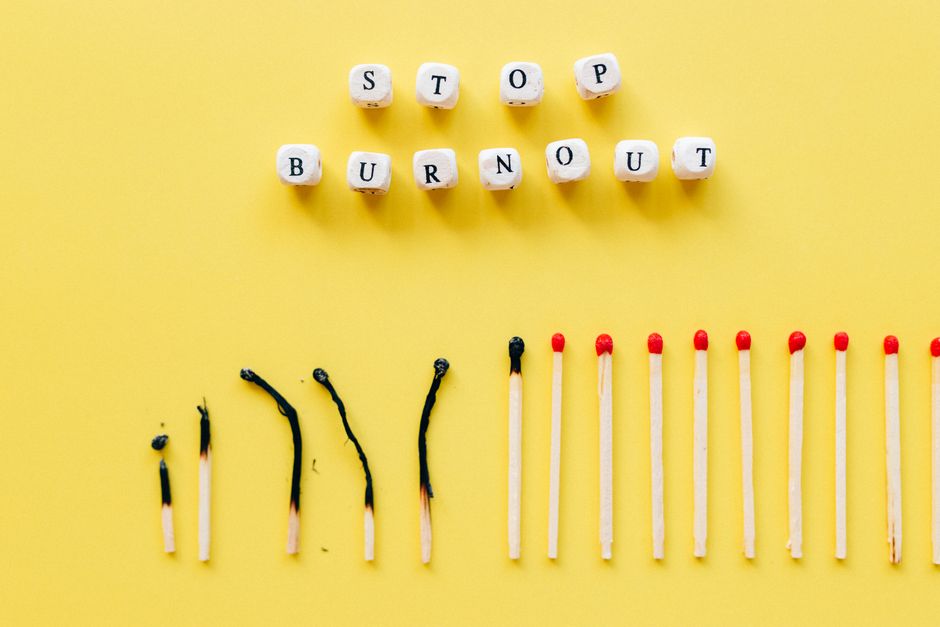
Doom scrolling is the habit of continuing to scroll through bad or upsetting news and social media content long after you have stopped getting anything useful from it. It is not a formal diagnosis, but researchers and clinicians treat it as a real behavioral pattern tied to anxiety, disrupted sleep, and low mood. You stop it by making the scrolling harder to start, setting limits you can actually keep, and addressing the anxiety that pulls you back to the feed.
What Is Doom Scrolling And How Do You Stop It?
Doom scrolling combines two things: a repetitive physical behavior (scrolling) and a psychological pull toward threatening information. The term gained wide use during the COVID-19 pandemic, but the behavior is older than the phrase. People have always been drawn to bad news. What changed is that the feed never ends and never stops loading.
The core mechanism is a loop. You see something alarming. Your brain flags it as important. You scroll to learn more or to resolve the discomfort. The next item is also alarming. The discomfort does not resolve, so the behavior repeats.
Stopping it works better when you understand that this is not a willpower failure. The design of the platforms is working as intended. Algorithms learn what holds your attention, and threat-related content holds attention very effectively. Fighting that with resolve alone tends to fail.
What tends to work is changing the environment and the timing. More on the specific strategies below.
Why Does Bad News Hold Your Attention So Strongly?
Human attention is biased toward threats. This is well established in psychology. A negative, threatening stimulus tends to capture attention faster and more firmly than a neutral or positive one. Researchers sometimes call this a negativity bias.
From an evolutionary standpoint, the logic is straightforward. Missing a piece of good news cost your ancestors little. Missing a predator cost them everything. A brain that overweights danger is a brain that survives.
That system was built for a world where threats were local and finite. A rustle in the grass resolved quickly — either it was a predator or it was not. Modern news does not resolve. There is always another crisis, another update, another thing to worry about.
The result is a threat-detection system running continuously against an endless supply of threats. That is an uncomfortable mismatch, and it explains why the scrolling feels compulsive rather than chosen.
Is Doom Scrolling Actually Bad For Your Mental Health?
Studies have found consistent associations between heavy doom scrolling and worse mental health — more anxiety, more stress, and lower mood. What those studies cannot easily prove is the direction of cause. It is genuinely possible that people who are already anxious scroll more, rather than scrolling making them anxious.
The honest position is that the evidence is mixed on causation but fairly consistent on correlation. Some research suggests a bidirectional relationship, where anxiety drives scrolling and scrolling then reinforces anxiety. That pattern fits what many clinicians observe in practice.
There is a related finding worth knowing. Passive consumption — scrolling past content without engaging, posting, or connecting with anyone — tends to be associated with worse outcomes than active use. Messaging a friend or participating in a discussion is a different behavior from silently absorbing a feed of bad news, even though both happen on the same app.
Sleep is one of the clearer concerns. Screen use close to bedtime, combined with emotionally arousing content, is associated with poorer sleep. Poor sleep in turn worsens mood and anxiety, which feeds the cycle. That part of the picture rests on reasonably solid ground.
How Do You Actually Stop Doom Scrolling?
The strategies that hold up best are the ones that change your environment rather than relying on in-the-moment discipline. Willpower is a limited resource. Friction is not.
Add friction between you and the feed
Make the app slightly harder to open. Move it off your home screen. Log out so you have to enter a password. Turn off push notifications, which are designed to pull you back. None of these are dramatic, and that is the point. Small barriers work because they interrupt an automatic behavior before it starts.
Set a boundary before you open the app
Decide in advance how long you will scroll and what you are looking for. A timer is crude but effective for many people. The key is deciding before you start, not after. Once you are inside the feed, your judgment about when to stop is compromised by the same pull that got you there.
Replace the behavior rather than just removing it
Scrolling fills a gap — boredom, transition time, the minutes before sleep. Removing it without filling that gap tends to fail. Have something specific to reach for instead: a book, a podcast, a short walk, a message to a friend. The replacement matters more than most advice admits.
Change when you scroll, not just how much
Many people find the first and last hours of the day are the most damaging times to scroll. Starting the day with a feed of bad news sets a tone. Ending it with arousing content interferes with winding down. Protecting those windows is often easier than cutting total screen time.
Curate what the algorithm feeds you
Algorithms respond to your behavior. Muting or unfollowing accounts that reliably upset you, and deliberately engaging with content you actually want more of, gradually shifts what you see. This is slower than a hard cutoff but it is sustainable.
Does A Digital Detox Work?
Short breaks from social media can help, and some studies have found improvements in mood and life satisfaction during periods of reduced use. The problem is durability. Most people return to their old patterns once the break ends, because nothing about their environment changed.
A weekend detox is not useless. It can show you how much of the habit was automatic. But treating it as a cure tends to disappoint. The people who do best are usually the ones who make small permanent changes rather than dramatic temporary ones.
There is also a practical caution. If scrolling has become a primary way you manage anxiety or low mood, abruptly removing it can leave you without a coping strategy. That is a reason to add replacement behaviors at the same time, and a reason to talk to a clinician if the underlying distress is significant.
When Should You Be Concerned About Your Scrolling?
Doom scrolling becomes worth addressing when it starts costing you something measurable. Sleep that is consistently short or disrupted. Work or relationships that are slipping. A persistent sense of dread that seems tied to your time online. Anxiety that builds rather than settles after you close the app.
It is also worth paying attention if the scrolling feels genuinely out of your control — if you are doing it while knowing you do not want to, and cannot stop. That pattern is not a diagnosis on its own, but it is the kind of thing a mental health professional can help with. Compulsive technology use is an area of active research, and clinicians increasingly take it seriously.
One clarification that gets lost in the coverage: the goal is not to eliminate news or social media. Staying informed is reasonable, and connection online is real connection for many people. The target is the compulsive, unresolved loop — the part that leaves you worse off than when you started. Most people can tell the difference once they start paying attention to how they feel after scrolling rather than during it.
Frequently Asked Questions
Is doom scrolling a real condition?
No, doom scrolling is not an official diagnosis in clinical manuals. It is a descriptive term for a behavioral pattern that researchers study in relation to anxiety, stress, and sleep.
How many hours of scrolling is too much?
No established clinical guideline sets a specific threshold for doom scrolling, because the harm depends on content and context rather than minutes alone. A more useful measure is whether it is affecting your sleep, mood, or daily functioning.
Does doom scrolling cause anxiety or just reflect it?
The evidence is mixed on direction, and some research suggests it runs both ways. Anxiety can drive scrolling, and the content consumed can then reinforce the anxiety.
What is the fastest way to stop doom scrolling at night?
Keep your phone out of reach before bed and stop consuming news in the hour before sleep. Deciding this in advance works better than trying to stop once you are already scrolling.
