
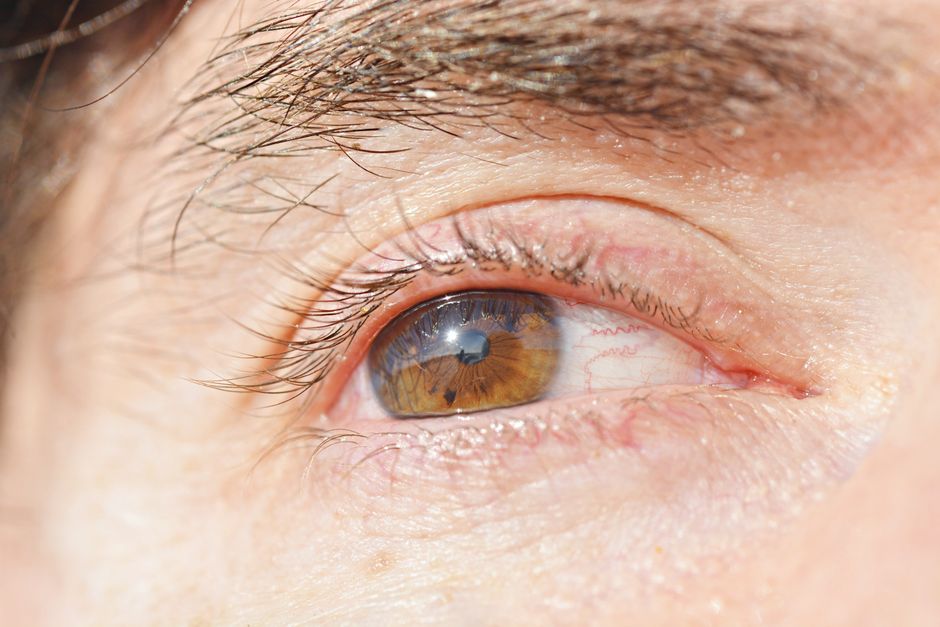
Disconjugate gaze means your two eyes do not point at the same target at the same time. One eye may drift inward, outward, up, or down while the other stays fixed. It is a sign, not a disease itself, and the causes range from a harmless quirk of eye alignment to serious neurological problems. Treatment depends entirely on what is driving it.
Normally your eyes move together as a matched pair. Six muscles control each eye, and the brain coordinates them so both eyes land on the same point. When that coordination breaks down, the result is disconjugate gaze. Some people call it a “conjugate gaze palsy” — that is not the same thing, and the difference matters. A conjugate gaze problem means both eyes fail to move in the same direction together. A disconjugate gaze means the eyes are not aligned with each other. Keeping those two terms straight helps you follow what your doctor is describing.
What Is Disconjugate Gaze Causes And Treatment?
Disconjugate gaze is any misalignment between the two eyes during looking. The most common cause in adults is a problem with one of the eye muscles or the nerve supplying it. In children, the most common cause is strabismus — a turned eye that has been present since early life.
Your brain controls eye movement through three cranial nerves. The oculomotor nerve (cranial nerve III) moves most of the eye muscles and lifts the eyelid. The trochlear nerve (cranial nerve IV) controls the superior oblique muscle. The abducens nerve (cranial nerve VI) controls the lateral rectus, which pulls the eye outward. Damage anywhere along those nerves, in the brainstem, or in the muscles themselves can produce disconjugate gaze.
Treatment is not one thing. It is aimed at the underlying cause. Some cases need no treatment at all. Others need prisms, eye exercises, surgery, medication, or urgent medical care.
What Are the Most Common Causes of Disconjugate Gaze?
The causes fall into a few broad groups. Knowing which group applies to you changes what happens next.
Strabismus is the most common cause overall, especially in children. The eyes are misaligned because the brain and eye muscles did not learn to work together properly during visual development. It can run in families. It is not caused by watching too much television or by sitting too close to a screen — that is a persistent myth.
Cranial nerve palsy is the most common cause in adults who develop new double vision. The sixth nerve is affected most often. Common triggers include diabetes, high blood pressure, and, less often, compression from a tumor or swelling. Many diabetic and hypertensive nerve palsies improve on their own over weeks to months, but that outcome is not guaranteed and needs medical follow-up.
Thyroid eye disease (Graves’ disease) can swell and stiffen the eye muscles, pushing one eye out of alignment. It is a well-recognized cause of disconjugate gaze in adults.
Neurological events — stroke, multiple sclerosis, or a brain tumor — can interrupt the pathways that coordinate eye movement. These are less common but more urgent.
Trauma to the eye socket or head can damage muscles or nerves directly.
Myasthenia gravis is an autoimmune condition that causes muscle weakness, and it can affect the eye muscles early. The misalignment often fluctuates through the day.
When Is Disconjugate Gaze a Medical Emergency?
New disconjugate gaze with certain accompanying symptoms needs urgent care. Do not wait to see if it resolves on its own.
Seek emergency evaluation if the misalignment comes on suddenly and is accompanied by any of the following:
- Severe headache, especially one that is sudden or different from your usual headaches
- Weakness, numbness, or drooping on one side of the face or body
- Slurred speech or trouble finding words
- A pupil that is larger than the other, or an eyelid that droops
- Loss of vision in one or both eyes
- Confusion or trouble staying awake
Those combinations raise concern for a stroke, a brain aneurysm, or increased pressure inside the skull. Sudden double vision on its own also deserves prompt medical attention, even without other symptoms.
A useful distinction: a pupil that stays normal in size while the eye cannot turn outward points more toward a nerve problem that is often benign and self-limiting. A pupil that is widely dilated along with a downward-and-outward turned eye is a different picture and is treated as an emergency until proven otherwise. Only a clinician can make that call.
What Symptoms Come With Disconjugate Gaze?
Double vision is the signature symptom in adults. When the eyes point at different targets, the brain receives two slightly different images and cannot fuse them into one. The result is seeing two of everything.
Some people also report:
- Eye strain or a pulling sensation
- Headaches, often worse with reading or screen use
- Tilting the head to one side to reduce the double image
- Closing one eye to see clearly
- Nausea or dizziness from the visual confusion
Children are different. A young child’s brain can suppress one eye’s image to avoid double vision. That means a child with disconjugate gaze may show no double vision at all. Instead, the brain may simply stop using the turned eye, which can lead to permanently reduced vision in that eye — a condition called amblyopia. This is why vision screening in childhood matters. A turned eye that does not cause double vision is still a problem worth evaluating.
How Is Disconjugate Gaze Diagnosed?
Diagnosis starts with a careful eye exam and a neurological exam. There is no single test that confirms disconjugate gaze — the diagnosis is made by identifying the misalignment and then finding its cause.
Your eye doctor will check how each eye moves in all directions of gaze. They will measure the misalignment with a cover test, in which one eye is covered while the other fixates, then the cover is switched. They will check your pupils and your eyelid position. These steps help localize which nerve or muscle is involved.
If the cause is not obvious, further testing may follow. Blood tests can check for diabetes, thyroid problems, and markers of myasthenia gravis. Imaging of the brain or eye socket — usually an MRI or CT scan — is often ordered when a nerve palsy is new, when the pupil is involved, or when other neurological signs are present.
In children, a vision test and a check for amblyopia are essential parts of the workup.
What Are the Treatment Options?
Treatment targets the cause. What works for one person may be wrong for another, so this is not a condition to self-treat.
Observation is often the first step for a new cranial nerve palsy linked to diabetes or high blood pressure. Many of these improve within weeks to a few months. Your doctor will monitor closely during that time.
Prisms are lenses that bend light so the two eyes’ images line up. They can relieve double vision without surgery. Prisms work well for small, stable misalignments and are less helpful when the angle changes constantly.
Eye exercises (vision therapy) can help some types of strabismus, particularly convergence insufficiency, where the eyes struggle to turn inward for close work. The evidence for vision therapy is strongest for specific convergence problems and weaker for other forms of strabismus. It is not a universal fix.
Surgery on the eye muscles can realign the eyes. It is commonly used for childhood strabismus and for stable adult misalignments that do not respond to other measures. Results vary, and some people need more than one procedure.
Medication depends on the cause. Myasthenia gravis has specific drug treatments. Thyroid eye disease may be managed with medications or other therapies guided by a specialist. Nerve palsies tied to diabetes or blood pressure are managed by controlling those conditions.
Patching is used in children to strengthen the weaker eye and prevent amblyopia. It is a treatment for the vision loss risk, not for the alignment itself.
No single approach works for everyone. A treatment plan built around your specific cause and your age is the only reliable path.
Can Disconjugate Gaze Be Prevented?
Some causes cannot be prevented. Strabismus that runs in families, congenital nerve problems, and autoimmune conditions are not things you can head off through lifestyle choices.
Other causes overlap with conditions you can influence. Keeping blood pressure and blood sugar in recommended ranges lowers the risk of the nerve damage that diabetes and hypertension can cause. Those are the same targets your doctor already tracks for heart and kidney health. Smoking cessation and regular medical checkups also reduce risk across the board.
For children, the most effective prevention is early detection. Vision screening catches a turned eye or a weak eye before it causes permanent vision loss. The American Academy of Pediatrics and other groups recommend vision screening at well-child visits starting in early childhood. If you notice a turned eye in a child at any age, get it checked — do not assume the child will outgrow it.
What Is the Outlook?
The outlook depends almost entirely on the cause. Many isolated nerve palsies in adults resolve over weeks to months, though some leave residual misalignment. Childhood strabismus often responds well to treatment, especially when started early. Conditions like stroke, multiple sclerosis, and myasthenia gravis have their own trajectories and treatments.
The one thing that holds across causes: early evaluation matters. A new misalignment in an adult, or a turned eye in a child, is worth a professional look. Most causes are manageable. A few are emergencies. Only an exam can tell you which one you are facing.
Frequently Asked Questions
Is disconjugate gaze the same as strabismus?
Strabismus is one common cause of disconjugate gaze, but the terms are not identical. Disconjugate gaze describes the misalignment itself, while strabismus is the specific condition of a turned eye that often begins in childhood.
Can disconjugate gaze go away on its own?
Some cases do, particularly nerve palsies linked to diabetes or high blood pressure, which often improve over weeks to months. Others need treatment, so new misalignment should always be evaluated rather than watched at home.
When should I worry about double vision?
Sudden double vision, or double vision with headache, weakness, slurred speech, a drooping eyelid, or a dilated pupil, needs emergency care. Double vision that has been stable for a long time still deserves a routine eye exam.
Can children have disconjugate gaze without double vision?
Yes. A young child’s brain can suppress one eye’s image, so double vision may never appear. That suppression can cause permanent vision loss in the weaker eye, which is why early screening matters.
