
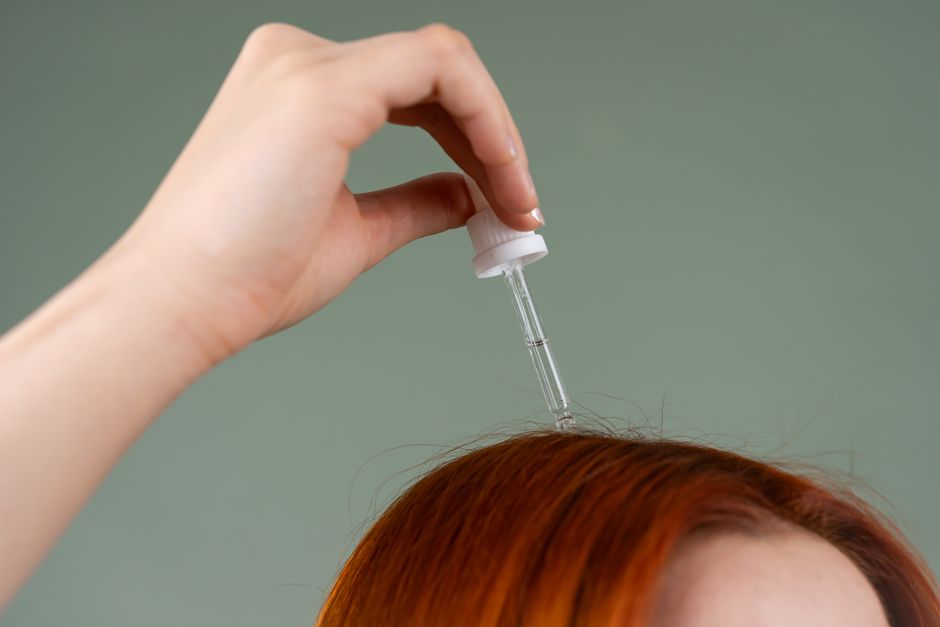
DHT stands for dihydrotestosterone. It is a hormone made from testosterone that plays a central role in a common form of hair loss. In people who are genetically prone to it, DHT gradually shrinks hair follicles on the scalp, leading to thinning and balding over time. It does not affect everyone this way, and its role in hair growth is more specific than most headlines suggest.
DHT is not a villain hormone. It serves real functions in the body, including sexual development before birth and during puberty. The problem is location. On certain parts of the scalp, in certain genetically susceptible people, DHT acts on hair follicles in a way that shortens their growth cycle and makes hair progressively finer. Understanding that distinction is the key to understanding everything that follows about causes, effects, and treatment.
What Is DHT and How Is It Made?
DHT is a potent androgen, a male-type hormone. It is produced when an enzyme called 5-alpha-reductase converts testosterone into dihydrotestosterone. This conversion happens mainly in the skin, the prostate, and the hair follicles themselves.
DHT is far more powerful than testosterone at binding to androgen receptors. That potency is why it matters so much in tissues that respond to androgens. In the scalp, that same potency is what drives the hair-follicle effects in susceptible people.
Both men and women produce DHT. Men produce far more because they have higher testosterone levels to convert. Women produce smaller amounts, but their hair follicles can still respond to it.
What Is DHT’s Role in Hair Loss?
DHT is the primary driver of androgenetic alopecia, the medical term for pattern hair loss. This is the most common form of hair loss in men and a frequent cause in women. The mechanism is well established.
Here is what happens. In genetically susceptible people, hair follicles in certain areas of the scalp are sensitive to DHT. When DHT binds to receptors in those follicles, it gradually miniaturizes them. Each growth cycle produces a thinner, shorter, less pigmented hair. Over many cycles, the follicle can shrink enough to stop producing visible hair.
The pattern is not random. In men, it typically begins at the temples and crown. In women, it usually shows as diffuse thinning along the part line, with the frontal hairline often preserved. The location of thinning reflects which follicles carry the genetic sensitivity.
Genetics matter more than hormone levels alone. Men with normal testosterone and normal DHT can still lose hair if their follicles are genetically sensitive. Men with high DHT who lack that sensitivity keep their hair. This is why measuring DHT in the blood does not reliably predict who will go bald.
Does DHT Cause Hair Loss in Women Too?
Yes, DHT can drive hair thinning in women, but the picture is more complex. Androgenetic alopecia is common in women, and DHT sensitivity plays a role in many cases. However, other causes often contribute or mimic it.
When a woman notices diffuse thinning, clinicians usually consider several possibilities before settling on a diagnosis. These include thyroid problems, iron deficiency, telogen effluvium (temporary shedding after stress or illness), and hormonal shifts around menopause. Some conditions, such as polycystic ovary syndrome, raise androgen levels and can contribute to thinning.
This is where caution matters. Hair loss in women should not be assumed to be a DHT problem without evaluation. The same treatments that work for men are not automatically appropriate for women, and some are not recommended during pregnancy or breastfeeding. A clinician can help sort out the cause.
What Are the Effects of DHT on Hair Follicles?
The core effect is miniaturization. DHT does not kill hair follicles outright. It shrinks them and shortens the growth phase of each hair cycle. The result is a slow, progressive change in hair quality.
What people notice, in rough order of appearance:
- Hair that looks thinner and finer over time
- A receding hairline at the temples in men
- Thinning at the crown or top of the head
- A widening part line in women
- More scalp visible through the hair
- Slower hair growth and shorter hairs overall
The process is gradual. Most people lose a meaningful amount of hair over years, not weeks. That slow timeline is also why treatments take months to show results — they work by interrupting a slow process, not reversing it overnight.
What Treatments Address DHT-Related Hair Loss?
Two medications are the most studied for DHT-driven hair loss: finasteride and minoxidil. They work in completely different ways, and the evidence for each is substantial but not identical.
Finasteride is an oral prescription drug. It blocks the enzyme that converts testosterone to DHT, lowering DHT levels in the scalp and body. Research consistently shows it slows hair loss and, in many men, regrows some hair. It requires a prescription and is not appropriate for women who are or may become pregnant. It can cause side effects, and a small number of men report persistent sexual side effects after stopping — a topic of ongoing research and debate.
Minoxidil is available over the counter as a topical liquid or foam, and by prescription as an oral tablet in some settings. It does not work by lowering DHT. Instead, it appears to lengthen the hair growth phase and improve blood flow to follicles. It can slow loss and promote regrowth in some people. Results vary, and hair loss typically resumes if you stop using it.
Other options exist. Some clinicians recommend ketoconazole shampoo, which has mild anti-androgen activity, though the evidence for hair regrowth is limited. Low-level laser therapy has some supporting studies but results are mixed. Hair transplant surgery can restore hair in specific areas but does not stop the underlying process elsewhere.
No treatment works for everyone, and none is a cure. The honest position is that these approaches can slow or partially reverse DHT-driven loss in many people, but response varies and results are not guaranteed.
Can You Lower DHT Naturally?
This is where marketing runs far ahead of evidence. Many supplements, shampoos, and “DHT blockers” claim to reduce DHT or block its effects. Most have little or no clinical evidence behind them.
Some natural compounds have shown anti-androgen activity in laboratory or small studies. Saw palmetto is the most studied, and results for hair loss are mixed at best. Some studies suggest modest effects; others find none. The evidence is not strong enough to present it as an established treatment.
Diet and lifestyle changes are often promoted as ways to lower DHT. There is no reliable evidence that typical dietary changes meaningfully reduce scalp DHT in a way that affects hair loss. Exercise, stress reduction, and good sleep support general health, but they are not proven hair-loss treatments.
Be cautious with products that promise to “block DHT” without any clinical data. If a shampoo claims to stop hair loss, ask what trials support that claim. In most cases, there are none.
When Should You See a Doctor About Hair Loss?
See a clinician if you notice sudden shedding, patchy loss, scalp itching or pain, or hair loss accompanied by other symptoms like fatigue or weight changes. These can point to causes other than DHT, and some are treatable.
For gradual pattern thinning, an evaluation can confirm the cause and rule out other conditions. Early treatment tends to work better than waiting, because it is easier to preserve hair than to regrow it. This is a general principle in hair loss care, not a guarantee.
Bring a list of any medications and supplements you take. Some drugs and nutritional deficiencies can contribute to hair loss, and those causes need different solutions.
Frequently Asked Questions
Does DHT cause hair loss in everyone?
No. DHT only drives hair loss in people whose hair follicles are genetically sensitive to it. Many people have normal DHT levels and keep their hair, while others with the same levels lose it.
Can lowering DHT regrow hair?
Lowering DHT with prescription medication can slow hair loss and, in some people, regrow some hair. Response varies, and it works best when started early.
Is DHT hair loss permanent?
Hair follicles miniaturized by DHT are not dead, but loss becomes harder to reverse over time. Early treatment offers the best chance of preserving hair.
Do DHT-blocking shampoos work?
There is little clinical evidence that shampoos meaningfully block DHT or regrow hair. Most claims are not supported by trials.
