
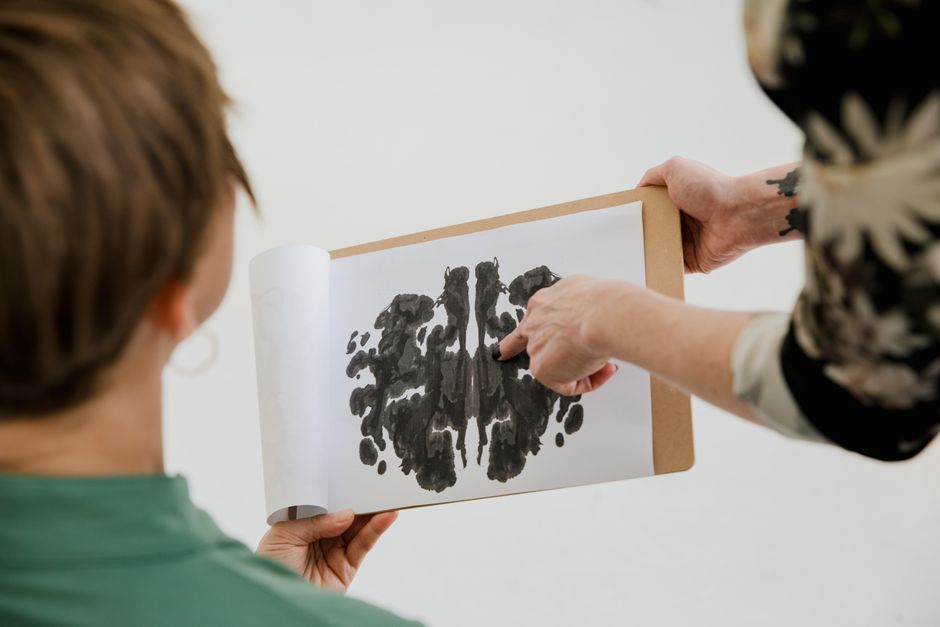
Do you choose your next thought, or does it simply arrive? That question sits at the center of one of psychology’s oldest debates. Determinism in psychology is the view that human thoughts, feelings, and actions are shaped by causes — genes, brain chemistry, learning, environment, and past experience — rather than arising from free choice alone. Psychologists describe several types of determinism, including biological, environmental, psychic, and hard versus soft determinism, and each type offers a different answer to how much control a person truly has.
What Is Determinism In Psychology Types Explained?
Determinism is the philosophical position that every event, including every human behavior, has a cause. In psychology, this idea becomes a working assumption: if behavior has causes, those causes can be studied, measured, and sometimes changed.
This does not mean psychologists deny that people make choices. It means they treat choice itself as something with underlying causes worth understanding. A person decides to quit smoking, for example. A determinist asks what led to that decision — brain changes from years of nicotine exposure, a doctor’s warning, a friend’s illness, a shift in how the person values the future.
The debate matters beyond philosophy. It shapes how clinicians treat addiction, how courts assign responsibility, and how parents think about their children’s personalities. If behavior is fully determined, blame and praise make less sense. If it is not, personal responsibility carries more weight. Most working psychologists land somewhere in between, and the types below explain where.
What Are the Main Types of Determinism in Psychology?
Psychologists and philosophers generally sort determinism into a handful of categories. Each one points to a different source of cause.
- Biological determinism — behavior is driven mainly by genes, hormones, and brain structure.
- Environmental (or cultural) determinism — behavior is shaped mainly by surroundings, upbringing, and social conditions.
- Psychic determinism — behavior is driven by unconscious mental processes, a view tied to Freud.
- Hard determinism — free will does not exist; every action is fully caused.
- Soft determinism (compatibilism) — free will and determinism can coexist; choices are real but caused.
- Reciprocal determinism — a person, their behavior, and their environment all influence each other.
These categories overlap. A person’s anxiety might have genetic roots, environmental triggers, and unconscious patterns all at once. Real human behavior rarely fits neatly into one box.
How Does Biological Determinism Explain Behavior?
Biological determinism holds that much of who you are is written into your biology. Genes influence temperament, risk for mental illness, and even how strongly you respond to stress. Brain chemistry affects mood and motivation. Hormones shape behavior across the lifespan.
The evidence here is strong in some areas and overstated in others. Twin studies consistently show that many psychological traits are partly heritable — meaning genes account for some portion of the differences between people. That is well established. What is not established is the idea that genes determine outcomes outright. Heritability is a population statistic, not a personal destiny.
This is where the term can mislead. A high genetic risk for depression does not mean a person will develop it. It means the odds shift. Environment, treatment, and life circumstances still matter enormously. Biological determinism is best understood as describing influence, not fate.





What Is Environmental Determinism and Does It Hold Up?
Environmental determinism argues that surroundings shape behavior more than anything internal. Upbringing, culture, income, education, and social pressure all leave deep marks. A child raised in chronic stress may develop a nervous system wired for vigilance. Someone surrounded by certain habits may adopt them without much thought.
This view has real support. Research on adverse childhood experiences has linked early hardship to long-term physical and mental health outcomes. Social conditions clearly influence behavior in measurable ways.
But pure environmental determinism has the same flaw as the biological version. It ignores individual differences. Two children can grow up in the same household and turn out very differently. People are not blank slates written on entirely by their surroundings. The honest position is that environment matters a great deal without explaining everything.
What Did Freud Mean by Psychic Determinism?
Psychic determinism is the idea that nothing in the mind happens by accident. Every slip of the tongue, forgotten appointment, or strange dream has a hidden cause rooted in unconscious conflict. This was a core assumption of Freud’s work.
Freud’s specific theories have largely fallen out of favor in mainstream psychology. Many of his claims were not testable, and later research did not support several of them. But the broader idea — that mental life has causes, including causes we are not aware of — has held up better. Modern research on implicit memory and automatic processing confirms that much of mental activity happens outside conscious awareness.
The takeaway is mixed. Psychic determinism as Freud framed it is not well supported. The general principle that unconscious processes influence behavior is supported by decades of cognitive research.
Hard Determinism vs Soft Determinism: What Is the Difference?
Hard determinism says free will is an illusion. Every choice is the inevitable result of prior causes, so no one could have acted differently. Soft determinism, also called compatibilism, says free will and determinism are not enemies. You can act freely even if your actions have causes, as long as you are acting according to your own desires and without external coercion.
The difference matters in practice. A hard determinist might argue that punishment is illogical because no one is truly responsible. A soft determinist would say people can still be held accountable because most of them act on their own intentions.
Most researchers in psychology and neuroscience lean toward some form of soft determinism. It allows for both causation and responsibility, which fits how courts, therapists, and everyday life actually operate.
What Is Reciprocal Determinism?
Reciprocal determinism comes from psychologist Albert Bandura’s social cognitive theory. It proposes that three things constantly influence each other: personal factors (thoughts, beliefs, biology), behavior, and the environment.
An example makes it concrete. A shy person avoids social events. That avoidance means fewer chances to practice social skills, which makes future social situations feel harder, which reinforces the shyness. The person, the behavior, and the environment are all feeding the loop.
This model is widely accepted because it explains why change is possible. If the loop runs in three directions, you can intervene at any point. Changing a behavior can shift the environment, which can shift how a person thinks. Therapy often works exactly this way.
Does Determinism Mean We Have No Free Will?
No, not necessarily. This is the most common misunderstanding about determinism. The word sounds like it erases choice, but that depends entirely on which type you mean.
Hard determinism does deny free will. Soft determinism does not. Biological and environmental determinism describe strong influences without claiming those influences are absolute. Reciprocal determinism actively builds room for change into its model.
Neuroscience has added fuel to the debate. Some experiments measuring brain activity before a person reports making a decision have been cited as evidence that choices are made unconsciously first. The interpretation of those studies is genuinely contested. Some researchers argue they show the brain preparing for a decision without proving the decision was not free. The evidence here is not settled, and confident claims in either direction go beyond what the data supports.
Why Does This Debate Matter in Real Life?
Determinism shapes how society treats people. If behavior is fully caused by forces outside a person’s control, punishment becomes harder to justify and treatment becomes more central. If people have genuine choice, accountability carries more weight.
In mental health care, the practical stance is usually somewhere in the middle. A therapist does not tell a client their depression was inevitable, nor that they simply chose to feel that way. The working view is that symptoms have causes — biological, psychological, and social — and that those causes can often be addressed.
This middle ground is not a cop-out. It reflects what the evidence actually shows. Human behavior is influenced by powerful forces, and people still retain meaningful capacity to respond to those forces. If you are struggling with your mental health, a licensed professional can help you understand your own patterns and what can realistically change. That is a conversation worth having with someone qualified, not something to work out alone.
Frequently Asked Questions
What is determinism in psychology in simple terms?
Determinism is the idea that human thoughts and actions have causes rather than arising from free choice alone. In psychology, it means behavior can be studied by looking at genes, environment, learning, and mental processes.
What are the main types of determinism in psychology?
The main types are biological, environmental, psychic, hard, soft, and reciprocal determinism. Each points to a different source of cause, and most real behavior involves a mix of them.
Does determinism mean free will does not exist?
Only hard determinism denies free will outright. Soft determinism holds that choices are real even though they have causes, and most psychologists lean toward this view.
What is reciprocal determinism in psychology?
Reciprocal determinism is Albert Bandura’s idea that a person, their behavior, and their environment all influence each other continuously. It is widely accepted because it explains how people can change.
