
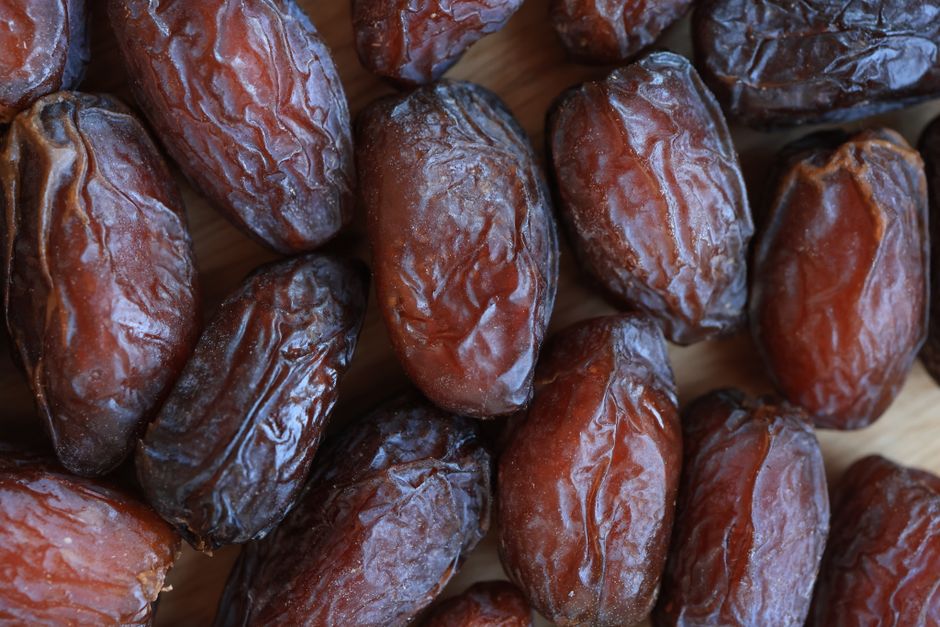
Date sugar is a sweetener made from whole, dried dates that have been ground into a granular form. Unlike refined white sugar, date sugar retains the fiber, vitamins, and minerals found in the whole fruit. It is not a liquid syrup; it is a dry, granulated product that looks similar to coarse brown sugar but does not dissolve the same way in liquids.
How Is Date Sugar Made?
Date sugar starts with whole dates. The dates are pitted and then dried until they have very little moisture left. After drying, the fruit is ground into small particles. The result is a sweetener that is essentially just powdered dates.
Because it comes from whole fruit, date sugar contains the natural sugars found in dates. These are primarily fructose and glucose. It also keeps the fiber from the fruit, which is a key difference from most other sweeteners.
No part of the date is removed during processing. There is no refining step, no chemical extraction, and no separation of sugar from the plant material. This is why date sugar provides more than just sweetness.
Date Sugar Nutrition Facts
The nutrition profile of date sugar is close to that of whole dates. A standard serving is one tablespoon, which weighs about 10 grams.
A single tablespoon of date sugar contains roughly 30 calories. It provides about 8 grams of carbohydrates, less than 1 gram of protein, and no fat. The fiber content is significant for a sweetener. One tablespoon offers about 1 gram of dietary fiber.
Date sugar also contains trace amounts of minerals. It provides small amounts of potassium, magnesium, calcium, and iron. These amounts are not large enough to make a meaningful contribution to your daily needs, but they are more than what you get from white sugar, which has none.
One important point is that date sugar has a higher fiber content than liquid sweeteners like honey or maple syrup. Those products are mostly pure sugar with minimal trace minerals. Date sugar is the only common sweetener that comes with intact plant fiber.
Glycemic Index and Blood Sugar Impact
Dates have a moderate glycemic index. Research consistently shows that whole dates do not cause the same rapid blood sugar spike as refined sugar, despite being sweet.
The fiber in dates slows down digestion. When you eat date sugar, the fiber slows the release of sugar into your bloodstream. This is different from white sugar, which is absorbed quickly and causes a fast rise in blood glucose.
Some studies indicate that dates have a glycemic index in the moderate range. This means they raise blood sugar less dramatically than glucose or white sugar. However, date sugar is still a concentrated source of sugar. It should not be treated as a low-sugar food.
If you have diabetes or prediabetes, date sugar is not a free pass. It will still raise your blood sugar. The effect may be somewhat blunted compared to refined sugar, but the total carbohydrate load matters most for glucose control.





How to Use Date Sugar in Cooking
Date sugar works well in dry applications. You can use it in baked goods like cookies, muffins, and quick breads. It adds a rich, caramel-like flavor that pairs well with warm spices like cinnamon and nutmeg.
There is one major limitation: date sugar does not dissolve in liquid. If you stir it into coffee, tea, or a smoothie, it will sink to the bottom and remain gritty. It is not a substitute for liquid sweeteners in beverages.
In baking, date sugar can replace white or brown sugar in most recipes. However, it changes the texture. Baked goods made with date sugar tend to be denser and more crumbly. The fiber absorbs moisture, so you may need to add extra liquid to your recipe.
A general rule is to replace sugar with date sugar at a 1:1 ratio by volume. You will likely need to increase the liquid in your recipe by a few tablespoons to compensate for the fiber. The final product will have a darker color and a deeper flavor.
Date sugar also works well as a topping. You can sprinkle it over oatmeal, yogurt, or fruit. It adds sweetness and a pleasant texture that resembles coarse brown sugar.
Date Sugar vs. Other Sweeteners
Comparing date sugar to other sweeteners helps clarify where it fits in a healthy diet.
| Sweetener | Fiber Content | Processing Level | Dissolves in Liquid |
|---|---|---|---|
| Date Sugar | Yes (about 1g per tablespoon) | Minimal (dried and ground) | No |
| White Sugar | None | Highly refined | Yes |
| Brown Sugar | None | Refined with molasses added | Yes |
| Honey | None | Minimal (bee-processed) | Yes |
| Maple Syrup | None | Boiled from tree sap | Yes |
Date sugar is unique because it is the only sweetener on this list that retains fiber. This fiber provides a slight nutritional advantage. It also means date sugar is less sweet than refined sugar, so you may need to use more to achieve the same level of sweetness.
In terms of calories, date sugar is comparable to white sugar. Both provide about 15-16 calories per teaspoon. The difference is not in calorie count but in what else comes along with those calories.
Potential Health Benefits of Date Sugar
The health benefits of date sugar come from its fiber and phytonutrients. Fiber supports digestive health by promoting regular bowel movements and feeding beneficial gut bacteria.
Dates contain polyphenols, which are plant compounds with antioxidant activity. Some research suggests these compounds may help reduce inflammation in the body. However, the amounts found in a typical serving of date sugar are small.
Using date sugar instead of refined sugar means you are getting some fiber with your sweetness. This can help you feel fuller after eating. It may also slightly slow the absorption of sugar into your bloodstream.
It is important to be clear about what date sugar is not. It is not a superfood. It is not a weight-loss tool. It is not a treatment for any medical condition. It is simply a less processed sweetener that retains some of the nutrients of the whole fruit.
Are There Any Downsides?
Date sugar is still sugar. The body processes the sugars in dates the same way it processes sugars from other sources. Too much added sugar of any kind is linked to weight gain, fatty liver disease, and metabolic problems.
The gritty texture is a downside for many people. If you expect date sugar to behave like regular sugar in beverages, you will be disappointed. It does not dissolve, and it can leave an unpleasant texture in drinks.
Date sugar is also more expensive than refined sugar. Because it takes a large quantity of whole dates to produce a small amount of date sugar, the cost is significantly higher.
Some people find that date sugar has a strong flavor that overpowers delicate recipes. It works well with bold flavors but may not suit recipes where you want a neutral sweetness.
Is Date Sugar Healthier Than White Sugar?
Date sugar is more nutritious than white sugar in a technical sense. It contains fiber, minerals, and antioxidants that white sugar completely lacks. If you are choosing between the two, date sugar is the better option.
However, the word “healthier” needs context. Date sugar is not a health food. It is still a concentrated source of sugar with a similar calorie count to white sugar. The differences are real but modest.
For most people, the best approach is to reduce total sugar intake regardless of the source. Swapping white sugar for date sugar may offer a small nutritional edge, but it is not a solution to a high-sugar diet.
Some research suggests that dates themselves are associated with positive health outcomes, particularly for digestive health. Whether date sugar provides the same benefits is less clear. The grinding process may affect the fiber structure.
How to Store Date Sugar
Date sugar should be stored in an airtight container in a cool, dry place. Because it contains natural fruit sugars and some moisture, it can clump over time.
If your date sugar becomes hard or clumpy, you can break it apart with a fork or pulse it briefly in a food processor. It does not need refrigeration.
Properly stored, date sugar can last for several months. Check the package for a best-by date and use your senses to judge freshness. If it develops an off smell or visible mold, discard it.
Frequently Asked Questions
Can date sugar be used in coffee or tea?
No, date sugar does not dissolve in liquid. It will sink to the bottom of your cup and remain gritty, so it is not a good choice for beverages.
Is date sugar safe for people with diabetes?
Date sugar will still raise blood sugar because it contains natural sugars. People with diabetes should treat it like any other sweetener and account for the carbohydrates in their meal plan.
Does date sugar taste like dates?
Yes, date sugar has a distinct caramel-like flavor that is similar to whole dates. The taste is richer and more complex than plain white sugar.
Can date sugar replace brown sugar in baking?
You can substitute date sugar for brown sugar at a 1:1 ratio, but the texture will be different. Baked goods will be denser and may need extra liquid added to the recipe.
