
Cosmetic threading is a non-surgical procedure in which a clinician places absorbable threads under the skin to lift sagging tissue and, in some products, to stimulate collagen. The threads are inserted with a thin needle or cannula and anchored in the deeper tissue. Results are temporary, because the body breaks the threads down over time. Thread lifts are not surgery, and their effect is generally more modest and shorter-lasting than a surgical facelift.
What Is Cosmetic Threading and How Do Thread Lifts Work?
Thread lifting is a mechanical procedure first. A clinician passes a thread beneath the skin, and the thread’s tiny barbs or cones grip the tissue. When the thread is pulled back, it drags the skin and soft tissue upward and holds it there. The lift you see in the mirror right after the procedure comes from that physical pull, not from a chemical reaction.
Many threads are made of materials that dissolve over months. Polydioxanone (PDO) is common, and so are poly-L-lactic acid (PLLA) and caprolactone-based threads. As the thread breaks down, the body responds with a mild inflammatory and wound-healing reaction. Some manufacturers and clinicians claim this reaction builds new collagen. That collagen stimulation is plausible and has been reported in small histological studies, but it has not been shown in large, well-controlled human trials to produce a lasting lift.
That distinction matters. The immediate lift is real but temporary. Any longer-term tightening is a separate claim, and the evidence for it is weaker.
What Happens During a Thread Lift Procedure?
A thread lift is usually done in an office setting. Most clinicians use a local anesthetic, sometimes with a mild sedative. The procedure typically takes under an hour, depending on how many areas are treated.
The clinician marks the skin, then inserts a fine needle or blunt cannula loaded with the thread. The thread is guided along a planned path, the tissue is repositioned, and the thread is anchored. Barbs or cones catch on the surrounding tissue to hold the new position. The entry points are small and usually need no stitches.
Common treatment areas include the jawline, cheeks, mid-face, neck, and brows. Some practitioners also use threads for body contouring, though the evidence for body use is even thinner than for the face.
Most people return to normal activity within a few days. Swelling, bruising, and mild discomfort are expected early on. Visible results can fade as swelling settles, which is why the first week can look different from the final outcome.
How Long Do Thread Lift Results Last?
Results vary widely, and no single timeline fits everyone. Much depends on the thread material, the number of threads used, the treatment area, and how much loose tissue the person started with.
The pull from the threads tends to soften as the body absorbs them. Different materials dissolve on different schedules, and clinicians often describe the visible lift as fading over a period of months rather than years. The honest position is that thread lift results are generally shorter-lived than a surgical facelift. Anyone promising multi-year results should be treated with caution.
Skin quality, age, and lifestyle all play a role. A person with thinner, more lax skin may see less durable results than someone with firmer tissue. Because outcomes are so variable, a realistic conversation with a qualified clinician before treatment matters more than any single number.
Is a Thread Lift Safe? What Are the Risks?
Thread lifts are generally considered minimally invasive, but they are not risk-free. The skin and tissue under the face contain nerves, blood vessels, and glands, and a thread placed in the wrong spot can cause problems.
Reported complications include:
- Bruising, swelling, and tenderness at insertion points
- Dimpling or puckering of the skin where a thread pulls unevenly
- Visible or palpable threads beneath the skin
- Infection at an entry point
- Asymmetry, where one side sits differently from the other
- Nerve irritation or, rarely, injury
- Thread migration, where a thread shifts from its intended position
- Granuloma, a small lump formed by the body’s reaction to the material
Some complications resolve on their own. Others may need a clinician to remove or adjust a thread, which is not always simple once tissue has healed around it. Choosing an experienced, properly licensed practitioner reduces but does not eliminate these risks. The evidence here is limited, and no procedure in this category can be described as risk-free.
Who Is a Good Candidate for Thread Lifting?
Thread lifts tend to suit people with mild to moderate skin laxity who want a subtle change without surgery. They are generally a poor fit for significant sagging, heavy jowls, or very loose neck skin, where a surgical approach is more reliable.
They are not for everyone. People who are pregnant or breastfeeding, have an active skin infection in the treatment area, or have certain autoimmune or bleeding conditions should discuss risks with a doctor first. Some clinicians advise caution for anyone with a history of poor scarring or reactions to implant materials.
A consultation should include a clear conversation about what a thread lift can and cannot do. If a clinic promises facelift-level results without surgery, that is a reason to look elsewhere.
Thread Lift vs. Facelift vs. Fillers: How Do They Compare?
These procedures do different things, and comparing them directly helps set expectations. A surgical facelift physically repositions and removes excess tissue and is the most durable option. Fillers add volume and can soften lines but do not lift. Threads attempt a mechanical lift with a dissolving material and sit somewhere in between in invasiveness and duration.
| Procedure | What It Does | Typical Durability | Invasiveness |
|---|---|---|---|
| Thread lift | Mechanical pull on tissue using dissolving threads | Generally months, variable | Minimally invasive |
| Surgical facelift | Repositions and removes excess tissue | Generally years | Surgical, with anesthesia and recovery |
| Dermal fillers | Adds volume; does not lift | Months | Minimally invasive injection |
Durability figures vary by product and person, so treat any specific timeline with skepticism. The table is a general guide, not a promise.
What Does the Evidence Actually Show About Thread Lifts?
The published evidence for thread lifting is limited compared with surgery or injectables. Much of it consists of small studies, case series, and practitioner reports rather than large randomized trials. That does not mean the procedure does not work. It means the strength of proof is lower than marketing often suggests.
One recurring issue is that results are judged subjectively. A clinician and a patient may rate a lift differently, and short follow-up periods can make early results look better than they hold up over time. Independent, long-term comparisons are scarce.
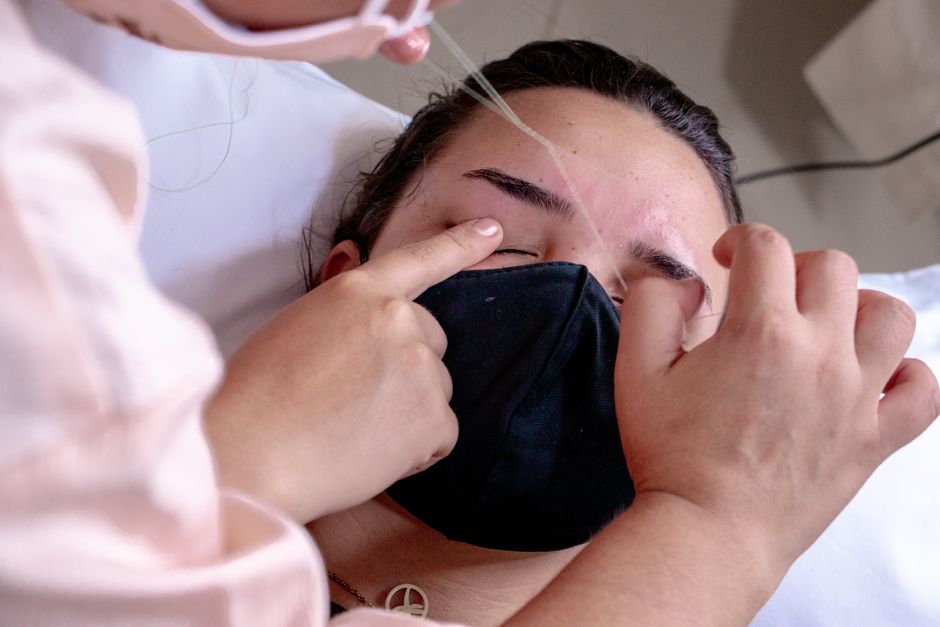
A useful clarification: the word “threading” in this context is not the same as eyebrow threading, the hair-removal technique. They share a name and nothing else. If you search for cosmetic threading and find hair removal results, that is why.
The takeaway is not to avoid thread lifts. It is to go in with realistic expectations, ask what evidence supports the specific product being used, and understand that the lift is temporary.
What Should You Ask Before Getting a Thread Lift?
A good consultation answers your questions before anyone picks up a needle. Ask who will perform the procedure and what their training and licensing are. Ask which thread material and brand will be used, and what evidence supports it.
Ask how many threads are planned and why. Ask what the realistic result looks like at one month, six months, and beyond. Ask what happens if a complication occurs and who is responsible for follow-up care.
Finally, ask for a clear cost breakdown and whether revision or removal is included. A clinic that welcomes these questions is a better sign than one that rushes toward a booking.
Frequently Asked Questions
How long does a thread lift last?
Results are temporary and vary by person, thread type, and treatment area, and the visible lift generally fades over months as the threads dissolve. It is shorter-lived than a surgical facelift.
Is a thread lift painful?
Most clinicians use local anesthetic, so discomfort during the procedure is usually manageable. Swelling, bruising, and tenderness afterward are common.
Can thread lifts replace a facelift?
No. A thread lift produces a more modest and shorter-lasting change, and significant sagging is usually better addressed with surgery.
What are the most common thread lift side effects?
Bruising, swelling, and skin dimpling are the most frequently reported issues. Less common problems include infection, thread migration, and asymmetry.
