
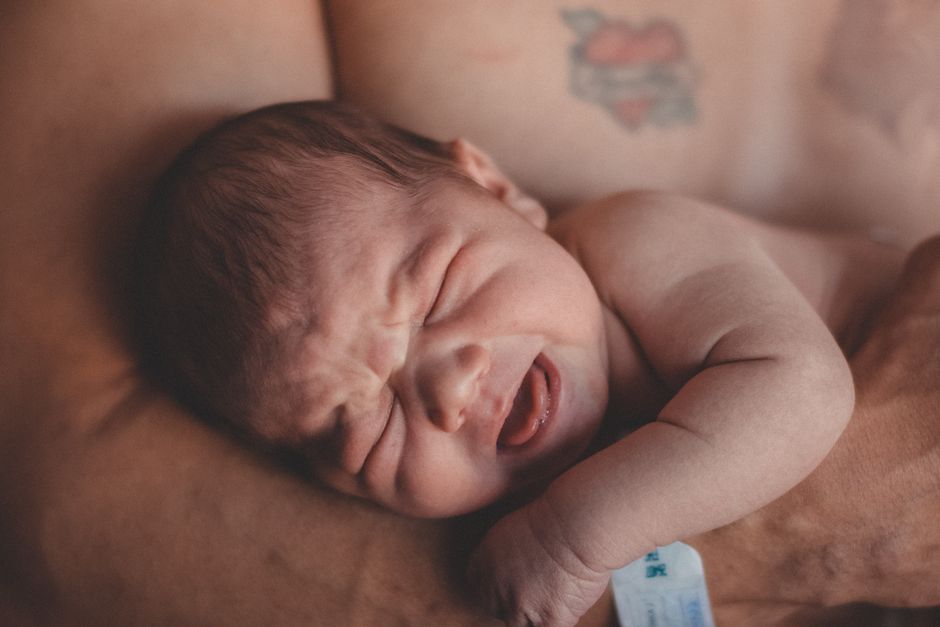
Few parenting topics spark as much disagreement as letting a baby cry. Controlled crying is a sleep training method where parents put a baby down awake and then check on them at timed intervals, letting the baby cry for short periods before offering brief comfort. The goal is to help the baby learn to fall asleep without a parent present. It is one of several approaches to infant sleep training, and the evidence on it is more nuanced than either its supporters or its critics usually suggest.
What Is Controlled Crying And Is It Safe For Babies?
Controlled crying, sometimes called “check and console” or graduated extinction, involves putting a baby to bed drowsy but awake, leaving the room, and returning at set intervals to briefly reassure the baby without picking them up or feeding them to sleep. The intervals typically lengthen over successive nights.
It sits at the middle of a spectrum. At one end is “cry it out,” where the baby is left alone until they fall asleep with no checks. At the other end are no-cry approaches, such as staying in the room and offering hands-on comfort while the baby learns to settle.
The method is generally considered safe for healthy, typically developing infants older than about six months, based on the research that exists. That said, the evidence has real limits, and it is not the only option that works.
How Does Controlled Crying Actually Work?
The idea rests on how sleep and settling develop in infancy. Newborns do not have mature sleep-wake regulation. Over the first months of life, babies gradually develop the ability to self-settle — to drift back to sleep on their own after a normal night waking.
All humans, including babies, wake briefly several times during the night. This is normal sleep architecture, not a problem. The difficulty arises when a baby has learned to fall asleep only under specific conditions — being rocked, fed, or held. When they surface between sleep cycles, those conditions are gone, and they signal for help getting back to sleep.
Controlled crying aims to break that association. By putting the baby down awake and offering only brief, low-key checks, the method gives the baby repeated chances to practice falling asleep without the parent’s presence. Over time, the theory goes, the baby learns to self-settle.
That mechanism is plausible and consistent with what is known about how sleep associations form. What is harder to establish is whether the method is uniquely effective compared with gentler approaches, or whether it simply works for some families faster.
Is Controlled Crying Safe For Babies?
For healthy babies over about six months, the available research does not show harm from brief, structured crying during sleep training. Several studies have followed infants after sleep interventions and checked measures such as emotional development, behavior, and the parent-child relationship, generally finding no lasting negative effects. Some research has looked at stress hormones during the training period and found they return to normal.
That is the honest summary of what the evidence supports. It is not the same as saying the method is proven harmless in every circumstance or for every child.
There are important limits to keep in mind:
- Controlled crying is not considered appropriate for babies under about six months, whose sleep and feeding needs are still developing rapidly.
- It is not recommended for premature infants, babies with certain medical conditions, or those with feeding or growth concerns without a clinician’s guidance.
- No method should be used if a baby is unwell, in pain, or genuinely hungry.
- Persistent or unusual crying should always be assessed by a healthcare provider rather than assumed to be a sleep issue.
Parents should talk to their pediatrician before starting any sleep training, particularly if the baby was born early, has reflux, or has any ongoing health concern.
What Does The Evidence Say About Sleep Training?
The research on infant sleep training is real but modest. Several randomized and controlled studies have found that behavioral sleep interventions, including controlled crying, can reduce the time it takes babies to fall asleep and the number of night wakings, at least in the short term. These findings are fairly consistent across studies.
Where the evidence gets thinner is in the longer term. Fewer studies follow families for many months or years, and results on whether sleep improvements persist are mixed. Some studies show benefits holding up; others show the differences between trained and untrained babies narrowing over time.
Another limit: much of the research relies on parent-reported sleep, which can be influenced by expectations. Studies using objective measures like activity monitors are fewer.
There is also no strong evidence that controlled crying is superior to gentler methods. Studies comparing behavioral approaches with no-cry or “camping out” methods have often found similar improvements in infant sleep, though the gentler methods may take longer to show results. This is a non-obvious point that gets lost in the debate: the choice may matter less than consistency and fit with the family.
How Does Controlled Crying Compare With Other Methods?
Sleep training is not one technique. It is a group of approaches that differ mainly in how much crying they involve and how present the parent stays.
| Method | What It Involves | Crying Involved |
|---|---|---|
| Extinction (“cry it out”) | Baby left to settle alone with no checks | Typically the most |
| Controlled crying | Timed checks at lengthening intervals | Moderate |
| Camping out / fading | Parent stays in room, gradually moves further away | Often less, may take longer |
| No-cry approaches | Hands-on comfort, feeding, or rocking to sleep | Minimal, but may not change sleep patterns |
The right fit depends on the baby’s age and temperament, the parents’ comfort level, and how much the family’s sleep is being disrupted. There is no single method that research shows is best for everyone.
What Are The Risks And Concerns?
The main concern raised about controlled crying is whether repeated crying episodes affect a baby’s stress response or emotional development. This is a legitimate question, and it has been studied, though not exhaustively.
Some research has measured cortisol, a stress hormone, in babies during sleep training. Findings have generally shown that cortisol rises during crying episodes but returns to baseline, and longer-term measures have not shown persistent elevation. Other researchers have raised theoretical concerns about early stress and brain development, but these are based largely on animal studies and on stress from severe, chronic neglect — not on brief, structured crying with a responsive parent nearby.
It is fair to say the evidence does not show harm from controlled crying in healthy infants over six months. It is also fair to say the research is not large or long enough to rule out every possible effect. Parents who are uncomfortable with the method should not feel pressured to use it.
One practical caution: controlled crying depends on a baby being able to self-settle. If a baby is crying because they are hungry, teething, sick, or in pain, the method does not apply. Responding to genuine needs is not the same as reinforcing a sleep association.
When Should Parents Seek Professional Advice?
Sleep problems in infancy are common, and most are not a sign of anything wrong. But some situations call for a clinician’s input rather than a sleep training method.
Talk to a pediatrician if a baby:
- Cries for long stretches in a way that seems different from usual
- Is not gaining weight as expected or feeds poorly
- Has reflux, breathing problems, or a chronic condition
- Seems unwell, feverish, or in pain
- Was born prematurely or has developmental concerns
A healthcare provider can help rule out medical causes and advise on whether sleep training is appropriate. Some families also find support from a pediatric sleep specialist or a health visitor useful, especially when sleep deprivation is affecting parental mental health.
Parental exhaustion is a real health issue, not a minor inconvenience. Persistent sleep loss is linked to mood problems and can affect how parents care for their baby. That is part of why sleep support matters — not just for the baby, but for the whole family.
Frequently Asked Questions
At what age can you start controlled crying?
Controlled crying is generally considered appropriate for healthy babies older than about six months. It is not recommended for younger infants or for babies born prematurely without a clinician’s guidance.
Does controlled crying harm a baby’s emotional development?
Research following infants after sleep training has not shown lasting negative effects on emotional development or the parent-child relationship in healthy babies over six months. The evidence is not large enough to rule out every possible effect, so parents should weigh their own comfort level.
How long does controlled crying take to work?
Many families report improvements within the first week, though this varies widely between babies. There is no reliable timeline that applies to every child, and some babies respond more slowly than others.
Is controlled crying the same as cry it out?
No. Controlled crying involves brief, timed check-ins, while cry it out leaves the baby alone with no checks. They are related methods but differ in how much parental contact they include.
