
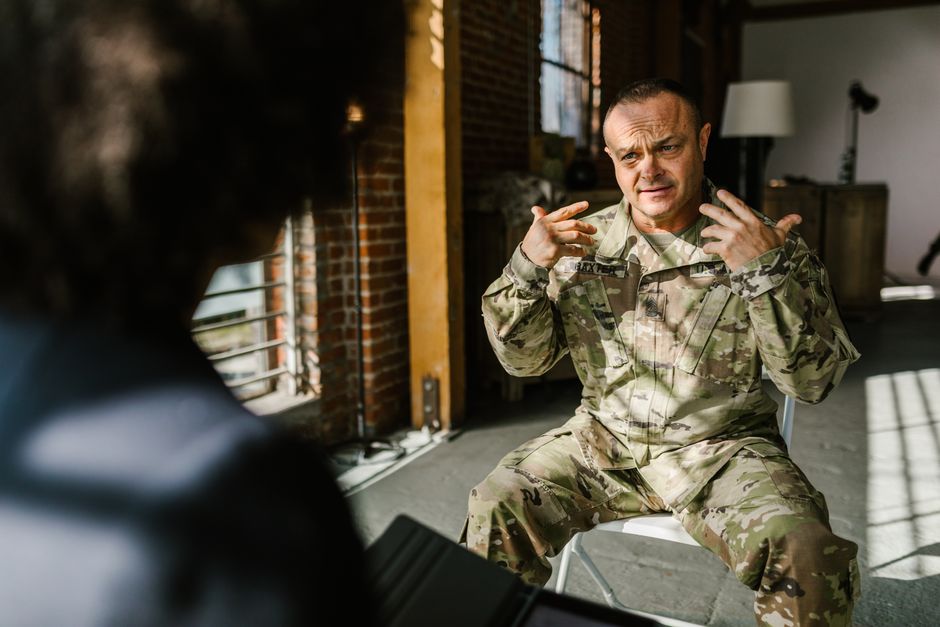
Combat PTSD is post-traumatic stress disorder that develops after exposure to war or combat trauma. It is a real medical condition, not a sign of weakness, and it is diagnosed using the same clinical criteria used for PTSD from any other cause. In veterans, it can affect sleep, mood, memory, relationships, and physical health for years after service ends — and it is treatable.
The numbers are sobering. Research consistently shows that veterans who deploy to combat zones have higher rates of PTSD than the general adult population. But the majority of combat veterans do not develop PTSD, and an important distinction matters here: the condition is not inevitable after trauma. Most people exposed to traumatic events recover without developing a disorder. For those who do, effective treatments exist.
What Is Combat Ptsd And How Does It Affect Veterans?
Combat PTSD is a psychiatric diagnosis. It requires exposure to actual or threatened death, serious injury, or sexual violence — either directly, by witnessing it, by learning it happened to a close person, or through repeated indirect exposure. In military settings, that exposure is usually combat, but it can also be military sexual trauma, witnessing a death, or handling human remains.
The diagnosis requires symptoms in four clusters, lasting more than one month, and causing real distress or problems functioning:
- Intrusion — flashbacks, nightmares, unwanted memories that feel like they are happening again
- Avoidance — staying away from people, places, or thoughts that trigger memories
- Negative changes in thinking and mood — persistent guilt, shame, blame, feeling detached, losing interest in things once enjoyed
- Changes in arousal and reactivity — being constantly on guard, startling easily, trouble sleeping, irritability, reckless behavior
These criteria come from the Diagnostic and Statistical Manual of Mental Disorders, Fifth Edition (DSM-5), the standard reference used in US clinical practice. The threshold is not “having bad memories.” It is a specific pattern of symptoms that persists and interferes with life.
How Common Is Ptsd Among Veterans?
Exact rates vary widely by era of service, branch, and how combat exposure is measured. That variance is real, not a reporting quirk. Studies of veterans from different conflicts have produced a wide range of estimates, and comparisons across studies are difficult because of differences in methods and populations.
What is well established is the general pattern: veterans with direct combat exposure have higher PTSD rates than veterans without it, and higher than the general adult population. Some research suggests rates are especially elevated among veterans who served in certain combat-heavy roles and among those with multiple deployments.
One clarification worth making: the widely cited lifetime prevalence of PTSD in the general US adult population is roughly 6 to 7 percent in major epidemiological surveys. Veteran rates in combat-exposed groups are consistently higher than that, but the exact figure depends heavily on which group is studied.
What Makes Combat Trauma Different From Other Trauma?
Combat trauma has features that shape how PTSD presents. The exposure is often prolonged rather than a single event. Service members may face repeated threats over months, which can produce a cumulative effect that differs from a one-time trauma.
Combat also involves moral dimensions that other traumas may not. Veterans may carry guilt or shame about actions taken or not taken, about surviving when others did not, or about harm to civilians. These experiences can shape the content of intrusive symptoms and complicate recovery.
There is also the matter of the transition home. In a combat zone, hypervigilance and emotional numbing can be adaptive — they help a person survive. Those same responses can become maladaptive in civilian life, where they no longer match the environment. This mismatch is part of why symptoms often surface or worsen after deployment ends rather than during it.
What Are the Symptoms Veterans and Families Notice First?
The earliest signs are often not the dramatic ones. Families frequently notice changes before the veteran does: withdrawal from people, irritability, drinking more, sleeping poorly, or a flatness in emotional response.
Veterans themselves often describe a sense of being constantly “on.” Startle responses are exaggerated. Crowds feel dangerous. Sleep is fragmented, and nightmares may replay events with disturbing accuracy.
Some veterans avoid talking about service entirely — not because they don’t remember, but because the memories intrude when they do. Others describe feeling numb or disconnected from people they love, which can be mistaken for lack of caring.
Depression, anxiety, and substance use commonly co-occur with PTSD. In clinical practice, these are not separate issues layered on top — they are frequently intertwined, and treating only one rarely works well. Research consistently shows that PTSD and depression co-occur at high rates in veteran populations.
How Is Combat Ptsd Treated?
PTSD is treatable, and several approaches have strong evidence behind them. The two best-supported categories are trauma-focused psychotherapy and certain medications.
Among psychotherapy approaches, prolonged exposure therapy and cognitive processing therapy have the strongest research support. Both involve working directly with traumatic memories in structured ways, and both have been studied extensively in veteran populations. Eye movement desensitization and reprocessing (EMDR) also has evidence supporting its use.
On the medication side, selective serotonin reuptake inhibitors (SSRIs) are the best-studied drug class for PTSD. Two — sertraline and paroxetine — are FDA-approved for the condition. Other medications are sometimes used, but the evidence base is weaker for most of them.
Not everyone responds to the first treatment tried. Some veterans benefit from combining therapy and medication. Some need to try more than one approach. That is a normal part of treatment, not a sign of failure.
What is less certain: the comparative effectiveness of different therapies against each other. Head-to-head trials exist, but the evidence does not clearly establish that any one first-line treatment is superior for every patient. Clinicians typically match treatment to the individual.
Some veterans also use complementary approaches — yoga, mindfulness, service animals, peer support. Some studies suggest benefit for certain of these, but the evidence is generally less robust than for trauma-focused therapy. No clinical guidelines currently recommend any of these as a replacement for evidence-based treatment.
Why Do Many Veterans Go Untreated?
Most veterans with PTSD do not receive adequate treatment. The reasons are practical, cultural, and structural.
Stigma remains significant. Some service members worry that seeking help will affect their career, their security clearance, or how they are viewed by peers. This concern is not imaginary — it reflects real institutional and cultural pressures that have historically discouraged help-seeking.
Access is another barrier. VA health care is available to eligible veterans, but eligibility rules are complex, wait times vary, and many veterans live far from specialized PTSD care. Some veterans are not enrolled in VA care at all.
There is also the matter of recognition. Some veterans do not connect their symptoms to PTSD. They may attribute sleep problems to aging, irritability to stress, or withdrawal to just being busy. The connection between combat exposure and current symptoms is not always obvious to the person experiencing it.
Does Combat Ptsd Affect Physical Health?
Yes. PTSD is not only a mental health condition. Research consistently shows that chronic PTSD is associated with higher rates of cardiovascular disease, metabolic problems, and chronic pain conditions.
The mechanisms are partly understood. Chronic stress activation affects the body over time — through the hypothalamic-pituitary-adrenal axis, the sympathetic nervous system, and inflammatory pathways. Sleep disruption, which is common in PTSD, adds its own burden.
Behavioral factors matter too. Veterans with PTSD have higher rates of smoking, alcohol use, and physical inactivity, all of which affect long-term health. These are not moral failings — they are often attempts to manage symptoms.
The relationship is not one-directional. Physical health problems can worsen PTSD symptoms, and PTSD can make it harder to manage chronic conditions. Treating one without addressing the other tends to produce incomplete results.
Can Combat Ptsd Be Prevented?
There is no proven way to prevent PTSD after combat exposure. That is an honest statement of where the evidence stands. Some interventions have been studied for prevention, but none has been shown to reliably prevent PTSD in people exposed to trauma.
What research does support is early identification and treatment. When symptoms are recognized and treated promptly, outcomes tend to be better than when they go unaddressed for years. This is why screening in primary care and military settings matters.
Some approaches that have been studied for prevention — like psychological debriefing immediately after trauma — have not shown clear benefit and may even be unhelpful in some cases. This is one area where intuition and evidence diverge.
Frequently Asked Questions
What is the difference between combat PTSD and regular PTSD?
The diagnostic criteria are identical. The difference is the type of trauma — combat PTSD follows exposure to war-related traumatic events, which tend to be prolonged and repeated. This can shape how symptoms present, but the underlying condition is the same.
Can combat PTSD show up years after service?
Yes. Symptoms can be delayed, sometimes emerging years after the traumatic event. Delayed expression is recognized in the diagnostic criteria, though it is less common than symptom onset within the first months after trauma.
Is combat PTSD permanent?
No. Many veterans improve substantially with treatment. Some continue to have some symptoms, but the condition is not considered permanently fixed, and recovery is possible.
How do I get help for combat PTSD?
Veterans can contact the Veterans Crisis Line by dialing 988 and pressing 1, or reach the VA directly to discuss eligibility and treatment options. A primary care doctor can also provide a referral and initial screening.
