
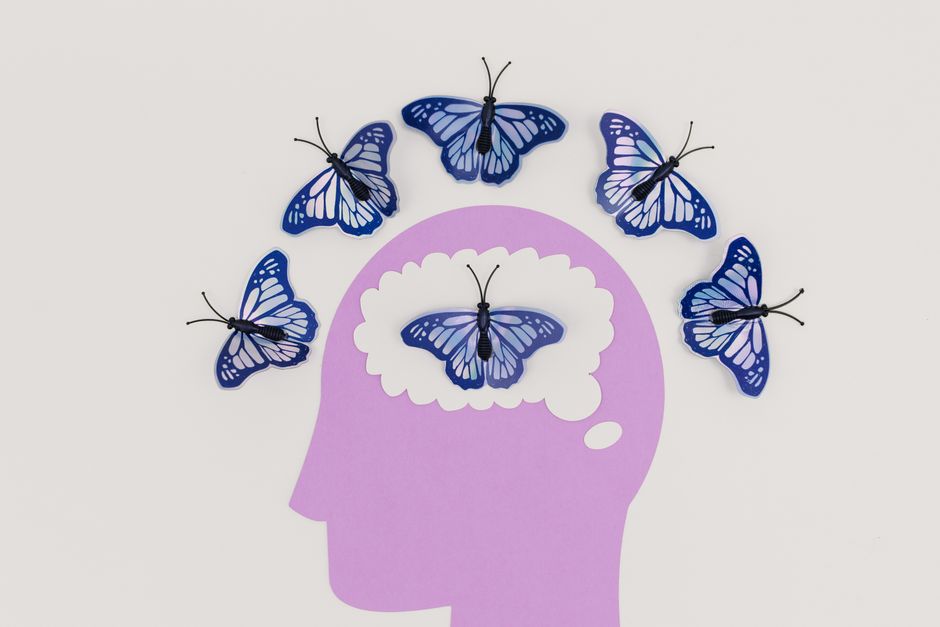
Cognitive psychology is the scientific study of how your brain takes in, processes, stores, and uses information. It looks at the mental processes behind everyday actions like remembering a phone number, reading a sentence, paying attention in a conversation, and solving a problem. Instead of just studying outward behavior, cognitive psychology focuses on the internal “thinking” steps that happen between a stimulus and your response.
What Does a Cognitive Psychologist Actually Study?
Researchers in this field break down complex mental tasks into smaller parts to see how they work. They study how you focus on one thing while ignoring distractions, how you turn what you see and hear into meaning, and how your brain builds and recalls memories.
They also study how you use language to express thoughts, how you make decisions between options, and how you solve problems when the answer is not obvious. The core idea is that your brain is like a highly complex information processor, and every thought you have follows a series of steps you are not usually aware of.
A key part of this field is understanding that your mental processes are not random. They follow patterns that can be observed, measured, and tested in controlled experiments.
How Is Cognitive Psychology Different From Other Types of Psychology?
Older schools of thought, like behaviorism, focused only on what could be seen from the outside—actions and reactions. Cognitive psychology changed that focus. It argues that to understand why you act the way you do, you must look at what happens inside the mind between the stimulus and the response.
Think of it like a computer. Behaviorism studies what happens when you press a key on the keyboard. Cognitive psychology studies the software and the internal processing that turns that keypress into an action on the screen.
It is also different from clinical psychology, which focuses on diagnosing and treating mental health conditions. While cognitive psychology has contributed to treatments, its main job is to understand the basic machinery of the mind in all people, not just those with specific disorders.
What Are the Main Processes in Cognitive Psychology?
To make the study manageable, researchers divide the mind into specific functions. These are the building blocks of all your mental activity.
- Perception: How your brain takes raw sensory data—light, sound, touch—and turns it into a meaningful experience. For example, recognizing that a specific pattern of light is a chair.
- Attention: How you select certain information to focus on while filtering out other information. This is why you can have a conversation in a loud, crowded room.
- Memory: How you encode, store, and retrieve information. This includes short-term memory that holds information for seconds and long-term memory that can last a lifetime.
- Language: How you understand spoken and written words and how you produce speech that others can understand.
- Problem-Solving and Decision-Making: How you evaluate options, plan steps, and choose a course of action when facing a challenge.
These processes do not work in isolation. They constantly interact. You need attention to form a memory, and you need memory to understand language.





How Did Cognitive Psychology Become a Major Field?
For much of the early 20th century, psychology was dominated by behaviorism. Researchers believed that the mind was a “black box” that could not be studied scientifically because thoughts were not directly observable. They argued that psychology should only study measurable behavior.
This changed in the 1950s and 1960s in what is often called the “cognitive revolution.” Several factors contributed to this shift. The development of computers provided a new metaphor for the mind. If a machine could process information in steps, perhaps the human mind worked in a similar way. Research in linguistics also showed that human language was too complex and creative to be explained by simple stimulus-response learning.
Researchers like George Miller and Ulric Neisser helped establish the field. Neisser’s 1967 book “Cognitive Psychology” is widely credited with giving the field its name and defining its scope. Since then, it has become one of the dominant approaches in psychology.
Why Does Cognitive Psychology Matter in Everyday Life?
This field is not just an academic exercise. It has produced practical knowledge that affects how you live, learn, and work.
Understanding memory limits has changed how teachers design lessons and how software developers design user interfaces. If you know that working memory can only hold a small amount of information at once, you can break complex instructions into smaller chunks. This is why phone numbers are grouped into segments rather than written as one long string of digits.
Cognitive psychology also explains why multitasking is often inefficient. Your attention is a limited resource. When you try to do two tasks that require conscious thought at the same time, your performance on both drops. This is why talking on the phone while driving is so dangerous, even with hands-free devices. The mental load of the conversation competes with the mental load of driving.
Understanding cognitive biases—systematic errors in thinking—helps you make better decisions. When you know that your brain tends to favor information that confirms what you already believe, you can actively seek out opposing viewpoints before making a big choice.
What Role Does Cognitive Psychology Play in Mental Health Treatment?
Cognitive psychology has had a major impact on therapy. The idea that your thoughts influence your feelings and behaviors is the foundation of Cognitive Behavioral Therapy, commonly known as CBT.
CBT is based on the principle that distorted or unhelpful thinking patterns contribute to emotional distress. For example, if you make a small mistake at work and immediately think “I am terrible at my job,” that thought can trigger feelings of anxiety or depression. Cognitive therapy helps you identify these automatic negative thoughts, test whether they are accurate, and replace them with more balanced thinking.
Research consistently shows that CBT is an effective treatment for conditions like anxiety disorders, depression, and post-traumatic stress disorder. It is one of the most studied forms of psychotherapy. The evidence for its effectiveness is strong, and it is often recommended as a first-line treatment alongside medication for many mental health conditions.
How Has Brain Imaging Changed Cognitive Psychology?
Modern technology has allowed researchers to see the brain in action. Tools like functional magnetic resonance imaging, or fMRI, measure blood flow in the brain, which indicates which areas are active during specific tasks.
This has created a bridge between cognitive psychology and neuroscience. The field is now often called cognitive neuroscience. Researchers can now ask not just “how does memory work?” but “which brain regions are involved when you retrieve a memory?”
This technology has confirmed many theories that were originally based only on behavioral experiments. For example, brain scans show that different types of memory—like remembering facts versus remembering personal experiences—activate different neural networks. This matches what cognitive psychologists had predicted from behavioral studies alone.
However, brain imaging has limits. It shows which areas are active, but it does not fully explain how those areas work together to produce a thought. The technology is a powerful tool, but it is one piece of a much larger puzzle.
What Are the Limits of Cognitive Psychology?
While cognitive psychology explains a great deal, it does not explain everything about the human mind. Critics point out that laboratory experiments often use artificial tasks that do not fully capture how people think in the real world.
For example, a memory test that asks you to memorize a list of random words is very different from remembering a meaningful conversation you had with a friend. The field has responded to this by developing more naturalistic research methods, but the gap between the lab and real life still exists.
Another limit is that cognitive psychology focuses mostly on individual mental processes. It does not fully account for the influence of culture, social context, or emotion on thinking. Your background and your current emotional state shape how you process information in ways that standard cognitive models may not fully capture. These factors are studied more directly in social psychology and cultural psychology.
Frequently Asked Questions
What is the main focus of cognitive psychology?
The main focus is on internal mental processes like perception, attention, memory, language, and problem-solving. It studies how you take in information and how you use it to think and act.
How does cognitive psychology apply to daily life?
It explains why multitasking reduces your performance and why you remember some things better than others. Its findings are used to improve education, design better technology, and help people make smarter decisions.
Is cognitive psychology the same as cognitive behavioral therapy?
No. Cognitive psychology is a broad scientific field that studies how the mind works. Cognitive behavioral therapy is a specific treatment method that uses those principles to help people change unhelpful thought patterns.
Does cognitive psychology rely on brain scans?
Modern cognitive psychology often uses brain imaging like fMRI, but it does not depend on it. Much of the field’s knowledge comes from carefully designed behavioral experiments that measure reaction times and accuracy.
