
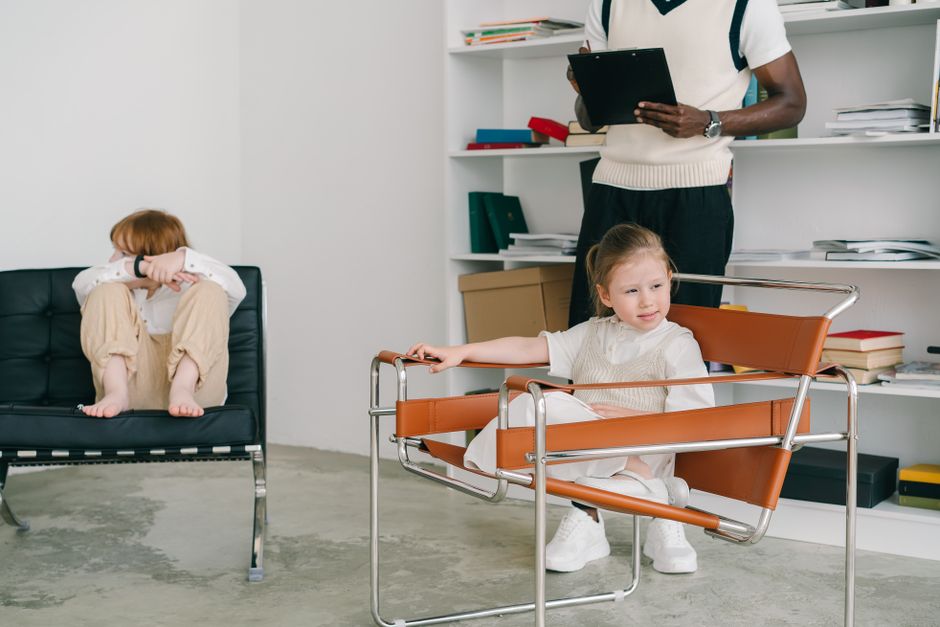
Clinical child psychology is a specialized field focused on understanding, diagnosing, and treating the mental, emotional, and behavioral challenges that children and adolescents face. It applies the science of psychology to the unique developmental needs of young people, from early childhood through the teenage years. This branch of psychology looks at how a child’s biology, environment, and developmental stage interact to shape their thoughts, feelings, and actions.
What Does a Clinical Child Psychologist Actually Do?
A clinical child psychologist does more than just talk with kids. These professionals are trained to work with children who may not yet have the language skills to explain what they are feeling. They use play, drawing, and other age-appropriate techniques to understand a child’s inner world.
Their work falls into three main areas: assessment, treatment, and consultation. During assessment, they use standardized tests, interviews with parents, and direct observation to identify specific issues. Treatment often involves therapy, but it can also include coaching for parents and collaboration with schools. Consultation means working with teachers, pediatricians, and other professionals to create a support network around the child.
What Is Clinical Child Psychology A Clear Overview of Its Purpose?
The core purpose of this field is to help children overcome obstacles that interfere with healthy development. This is not about labeling a child as “broken” or “difficult.” It is about identifying patterns that cause distress and finding practical ways to help.
Children are not just small adults. Their brains are still developing, and their symptoms often look different from adult symptoms. A child with anxiety might not say they feel worried. Instead, they might have stomachaches, refuse to go to school, or throw tantrums. A clinical child psychologist understands these differences and looks for the meaning behind the behavior.
Early intervention is a major focus. Research consistently shows that addressing mental health concerns in childhood leads to better outcomes later in life. Many adult mental health conditions have their roots in childhood, which makes early identification and treatment critical.
What Conditions Do Clinical Child Psychologists Treat?
Clinical child psychologists treat a wide range of conditions. Some of the most common include:
- Anxiety disorders, including separation anxiety and social anxiety
- Attention-deficit/hyperactivity disorder (ADHD)
- Autism spectrum disorder
- Depression and mood disorders
- Behavioral disorders like oppositional defiant disorder
- Learning disabilities
- Trauma and post-traumatic stress disorder (PTSD)
- Obsessive-compulsive disorder (OCD)
They also help children manage life stressors that do not meet the criteria for a formal diagnosis. This includes parental divorce, grief, bullying, and major transitions like moving to a new school. The goal is often to build coping skills that will serve the child for years to come.





What Training and Qualifications Are Required?
Becoming a clinical child psychologist requires extensive education. Most have a doctoral degree, either a Ph.D. or a Psy.D., which typically takes four to six years after a bachelor’s degree. This is followed by a supervised clinical internship and often a postdoctoral fellowship specifically in child psychology.
Licensure is mandatory to practice independently. Requirements vary by state, but all include passing a national examination. Many psychologists also pursue board certification in child and adolescent psychology through the American Board of Professional Psychology.
Parents should verify that the professional they choose is licensed. They can also ask about specific experience with their child’s age group and presenting concerns. A psychologist who works primarily with adults may not have the same expertise in child development.
How Does Therapy for Children Differ From Adult Therapy?
The approach to therapy depends heavily on the child’s age and developmental level. For young children, play therapy is often the primary method. Through play, children express emotions and experiences they cannot verbalize. The therapist observes themes in the play and uses the sessions to help the child process difficult feelings.
For older children and adolescents, talk therapy becomes more common. However, it still looks different from adult therapy. Teenagers are often more guarded and less likely to open up on command. A skilled therapist builds trust gradually and meets the teen where they are.
Parent involvement is another key difference. In adult therapy, the client is the sole focus. In child therapy, parents are often part of the treatment. This can mean separate parent sessions, family sessions, or coaching parents on strategies to use at home. Behavioral parent training is one of the most effective approaches for young children with behavioral issues.
Cognitive behavioral therapy (CBT) is widely used with children and has strong research support. It helps children identify unhelpful thought patterns and replace them with more realistic ones. For anxiety and depression, CBT is often the first-line treatment recommended by clinical guidelines.
When Should a Parent Seek Help?
Knowing when to seek help can be challenging. Children naturally have mood swings and behavioral ups and downs. However, certain signs suggest that professional support may be needed.
Consider seeking an evaluation if a child’s difficulties are persistent, intense, or interfering with daily life. This includes problems at school, difficulty making or keeping friends, or behavior that disrupts family functioning. Physical symptoms like frequent headaches or stomachaches with no medical cause can also be a sign of emotional distress.
Sudden changes in behavior are especially concerning. A child who was previously outgoing and becomes withdrawn, or a child who was calm and becomes aggressive, may be struggling with something significant. Regression, such as a child losing skills they had already mastered, is another red flag.
Trust your instincts as a parent. You know your child best. If you feel that something is wrong, it is reasonable to seek an evaluation even if you cannot pinpoint the exact problem. An initial consultation can provide clarity and direction.
What Is the Evidence for Child Psychotherapy?
The evidence base for child psychotherapy is strong for many conditions. CBT has been extensively studied in children and adolescents and is effective for anxiety, depression, and OCD. Behavioral interventions are well-supported for ADHD and disruptive behavior disorders.
Some treatments have more evidence than others. Parent-child interaction therapy (PCIT) has strong research support for young children with behavioral problems. Trauma-focused CBT is the leading evidence-based treatment for children who have experienced trauma.
However, the evidence is not uniform across all approaches. Some therapies are used in practice but have limited research support. Parents should feel comfortable asking a psychologist which treatment they plan to use and what evidence supports it. A reputable clinician will be transparent about this.
How Are Medications Involved?
Clinical child psychologists do not prescribe medication in most states. They work alongside pediatricians, child psychiatrists, or other medical providers who handle prescriptions. Psychologists provide therapy and behavioral interventions, while medical professionals manage medication.
For some conditions, combined treatment is most effective. Research indicates that for moderate to severe ADHD, medication combined with behavioral therapy often works better than either alone. For anxiety and depression in children, therapy is usually tried first, with medication added if symptoms do not improve enough.
If medication is recommended, the psychologist and prescribing clinician should communicate. This coordination ensures that treatment is cohesive and that side effects or lack of response are addressed promptly.
What Should Parents Expect in the First Appointment?
The first appointment is typically an intake session. The psychologist will gather detailed information about the child’s history, current concerns, and family background. This is often done with parents alone for younger children. For teenagers, the clinician may want to meet with the teen directly as well.
This is also a time for parents to ask questions. It is appropriate to ask about the psychologist’s experience, treatment approach, and how progress will be measured. A good fit between the family and the clinician matters for treatment success.
Assessment may take several sessions. The psychologist might use rating scales, interviews, and direct observation before making a diagnosis or treatment plan. Rushing this process can lead to inaccurate conclusions, so patience is important during this phase.
Frequently Asked Questions
How long does child therapy typically last?
Treatment length varies widely depending on the condition and its severity. Some short-term therapies last 8 to 20 sessions, while more complex conditions may require treatment over a year or longer.
Can a child psychologist diagnose autism or ADHD?
Yes, clinical child psychologists are qualified to diagnose these conditions through comprehensive assessment. They use standardized tools and gather information from multiple sources to make an accurate diagnosis.
Does my child need therapy or just better discipline at home?
If behavioral issues persist despite consistent parenting strategies, professional evaluation is warranted. A psychologist can help determine whether the behavior stems from a treatable condition or from environmental factors.
How do I know if my child’s therapist is working?
You should see measurable goals being tracked and regular feedback from the therapist. Progress is rarely linear, but you should notice positive changes in symptoms and daily functioning within a reasonable timeframe.
