
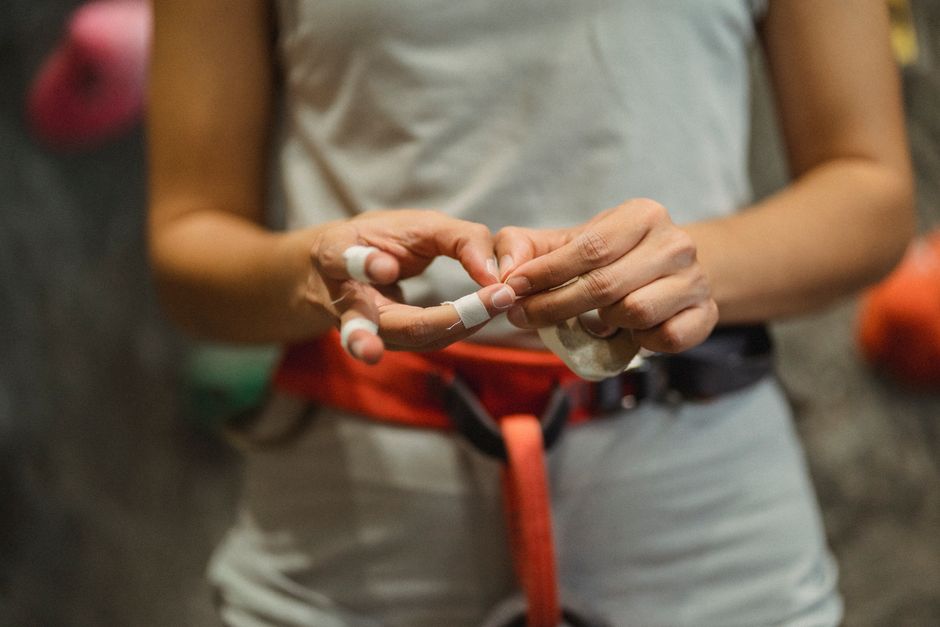
Climbing tape is a stretchy adhesive tape that climbers wrap around their fingers, hands, and wrists to protect skin and support finger joints during climbing. It is a standard piece of gear in the sport, used both to prevent injuries and to let climbers keep going after minor tweaks. While the tape does not make your tendons stronger, it can reduce strain on specific joints and protect the skin from sharp rock and rough holds.
What Is Climbing Tape Used For Skin Tendons More?
Climbing tape serves three main jobs: protecting skin, supporting finger joints, and managing minor injuries. The skin protection role is simple. Tape covers the back of the fingers and knuckles where skin can tear against rough rock or sharp edges. The tendon support role is more complex and often misunderstood.
Tape does not hold a finger together like a splint. Instead, it works by limiting how far a joint can bend or twist. When you tape a finger, you reduce the range of motion. Less motion means less strain on the pulley system inside the finger. The pulleys are small bands of tissue that hold the flexor tendons close to the bone. When a pulley tears, climbers feel a sharp pop and immediate pain. Taping can reduce the load on these pulleys enough to prevent that injury in some cases.
Tape also provides a small amount of sensory feedback. The tightness of the tape reminds you to be careful with that finger. Some climbers report that taped fingers feel more stable, even if the mechanical support is modest.
Does Climbing Tape Actually Protect Finger Tendons?
The evidence on tendon protection is mixed. Some studies suggest that taping the finger can reduce the strain on the A2 pulley, which is the pulley most commonly injured in climbers. Other research shows that the reduction in strain is small and may not be enough to prevent injury during maximum effort climbing.
What is clear is that tape is not a substitute for proper training and rest. A tendon that is already overloaded will not be saved by tape. The tape can reduce risk slightly, but it cannot change the fundamental strength of the tissue. If a climber is pushing too hard too fast, tape will not prevent the injury.
Some clinicians recommend taping for climbers who are returning to climbing after a pulley injury. In that situation, the tape may provide enough support to allow light climbing while the tendon heals. But even that practice is based more on clinical experience than on large controlled trials.
How To Tape Your Fingers For Climbing
There are several taping methods, and each serves a different purpose. The most common is the H-tape method for pulley protection. Here is how it works:
- Wrap the tape around the base of the finger, just above the palm crease.
- Wrap a second piece around the middle of the finger, just below the middle joint.
- Connect the two wraps with a strip of tape running along the palm side of the finger.
- Secure the ends so nothing is loose.
The tape should be snug but not tight enough to cut off circulation. If your fingertip turns blue or feels numb, the tape is too tight. You should be able to bend the finger fully, but the tape will limit how far the middle joint can hyperextend.
For skin protection, the taping is simpler. Cover the back of the knuckles or the sides of the fingers with a strip of tape. This is common on rough granite or sharp limestone where skin tears easily.





What Kind Of Tape Should You Use?
Most climbers use cloth athletic tape that is about half an inch wide. This width fits fingers well and stretches slightly. Some brands make tape specifically for climbing, but standard athletic tape works fine.
Zinc oxide tape is stiffer and does not stretch. It provides more rigid support but is harder to work with and can cut off circulation more easily. Most climbers prefer the stretchier cloth tape for everyday use.
Avoid using medical paper tape or bandage tape. These are too weak to provide any real support and will slide off during a climb. Also avoid waterproof tape, which does not breathe and can cause skin irritation.
Can Tape Help Other Parts Of The Body?
Climbing tape is also used on wrists, elbows, and even ankles. Wrist taping is common for climbers who feel pain during hard pulling moves. The tape limits wrist extension and can reduce strain on the forearm tendons.
Elbow taping is less common but some climbers use it for medial epicondylitis, often called golfer’s elbow. The tape provides compression and sensory feedback, but it does not treat the underlying inflammation. Rest and strengthening exercises are the main treatment for that condition.
Ankle taping is rare in climbing but can be useful for approach hikes on uneven terrain. The same principles apply: tape limits motion and provides feedback, but it does not replace a proper brace or rest.
What Tape Cannot Do
Tape cannot make a healthy tendon stronger. It cannot heal an injured tendon. It cannot prevent all finger injuries. These are important limits to understand.
Some climbers use tape as a psychological crutch. They believe the tape is protecting them, so they climb harder than they should. This can lead to injury because the tape provides only modest mechanical support. The feeling of security is not the same as actual protection.
Tape also cannot fix poor climbing technique. Crimping with a straight finger puts more load on the pulleys than using an open-handed grip. Changing your grip technique does more to prevent pulley injuries than any tape ever will.
When To See A Doctor For A Finger Injury
If you hear a pop in your finger while climbing and feel immediate pain, stop climbing. If the finger swells significantly, if you cannot bend it, or if there is visible deformity, see a doctor. These signs may indicate a pulley rupture or a fracture.
Minor tweaks often heal with rest. A good rule is to avoid climbing until you can make a full fist without pain. Returning too early is a common cause of chronic finger problems in climbers.
Some climbers see a hand specialist for a proper diagnosis. An ultrasound or MRI can confirm a pulley injury. Knowing exactly what is injured helps you plan recovery correctly. Guessing and taping over a serious injury can make it worse.
Alternatives To Taping
Finger splints and braces are stronger than tape but bulkier. They are used during recovery, not during climbing. Some climbers use silicone finger sleeves, which provide compression and some skin protection. These are not as supportive as tape but are easier to put on and remove.
For skin protection, liquid chalk and skin care balms can help prevent splits and tears. But none of these replace the mechanical support of tape for finger joints.
For tendon health, the best approach is gradual training progression. Increase your climbing intensity slowly. Take rest days. Strengthen your forearm muscles. These habits do more to prevent injuries than any taping routine.
Frequently Asked Questions
Does climbing tape actually prevent finger injuries?
Some research suggests it can slightly reduce strain on the A2 pulley, but the protection is modest. Tape is not a guarantee against injury, especially during maximum effort climbing.
How tight should climbing tape be?
Tape should be snug but not painful. If your fingertip turns blue or feels numb, the tape is too tight and needs to be redone.
Can I reuse climbing tape?
No. Once tape is removed, it loses its adhesive and stretch properties. Use fresh tape for each session.
Is taping better than using a finger splint?
Tape allows more movement and is practical for climbing. Splints provide stronger support but are too bulky for climbing and are mainly used during recovery.
