
Your heart beats about 100,000 times a day. Every one of those beats pushes blood through a network of vessels that, laid end to end, would stretch roughly 60,000 miles. Circulatory function is the work that entire system performs: moving blood through the body to deliver oxygen and nutrients to cells and carry waste products away. It is the body’s transport system, and it never fully stops until the end of life.
More precisely, circulatory function means the coordinated action of the heart, blood vessels, and blood working together to maintain blood flow to every tissue. That flow must be steady enough to meet each organ’s demand for oxygen, and flexible enough to shift supply when demand changes — like when you climb stairs or stand up quickly. When doctors talk about circulation, they are describing both this physical movement of blood and the pressure that keeps it moving.
What Is Circulatory Function and How Does the System Work?
Circulatory function depends on three components working as one unit: a pump, a set of pipes, and a fluid. The heart is the pump. The blood vessels are the pipes. The blood is the fluid that carries cargo.
The system actually runs two loops. In the pulmonary loop, the right side of the heart sends oxygen-poor blood to the lungs, where it picks up oxygen and releases carbon dioxide. That freshly oxygenated blood returns to the left side of the heart. From there, the systemic loop pushes it out through the aorta and into arteries that branch into smaller and smaller vessels, eventually reaching capillaries — tiny vessels so narrow that red blood cells pass through single file.
Capillaries are where the real work happens. Their walls are only one cell thick, which lets oxygen and nutrients diffuse out into tissue and lets carbon dioxide and other waste diffuse back in. Blood then collects into veins and returns to the heart to start the cycle again. A full circuit takes roughly a minute at rest, though that varies with heart rate and other factors.
One detail worth understanding: arteries carry blood away from the heart and veins carry it back, but “artery” does not always mean oxygen-rich. The pulmonary artery carries oxygen-poor blood to the lungs. That naming trips people up, but it reflects direction of flow, not oxygen content.
What Does Blood Pressure Have to Do With Circulation?
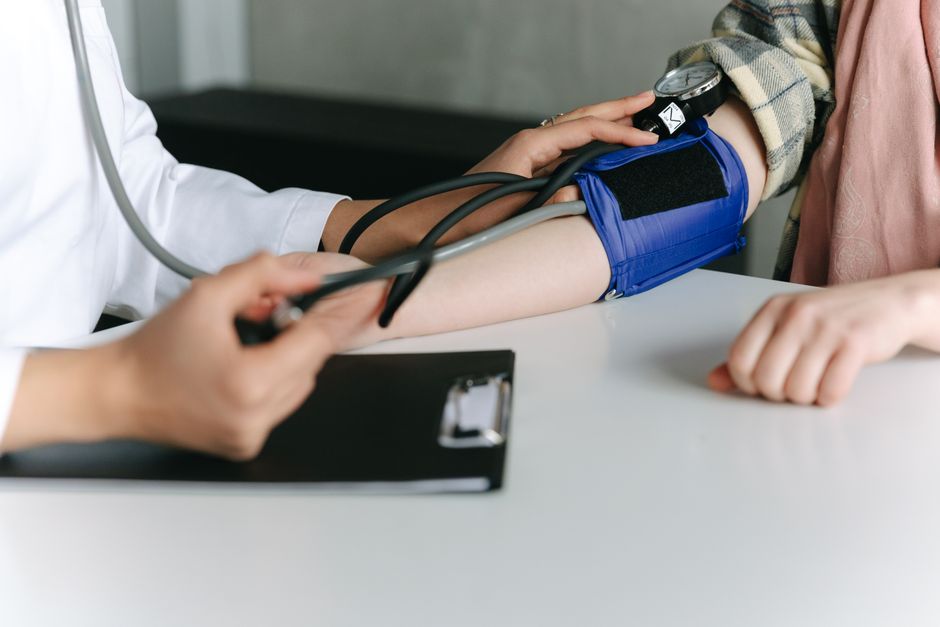
Blood pressure is the force of blood pushing against vessel walls, and it is what keeps blood moving through the system. Without pressure, blood would pool and organs would not receive oxygen.
Two numbers describe it. The top number, systolic pressure, reflects the force when the heart contracts. The bottom number, diastolic pressure, reflects the pressure when the heart relaxes between beats. A normal reading is generally considered below 120/80 mm Hg, based on widely used clinical guidelines.
Pressure has to be high enough to push blood to the brain when you stand up, but low enough not to damage vessel walls over time. The body manages this with constant small adjustments. Sensors in the major arteries detect changes in pressure and signal the heart and vessels to tighten or relax. That is why your blood pressure barely changes when you go from lying down to standing — the system corrects within seconds.
Persistently high pressure, though, strains the system. Over years, it can stiffen and damage arteries, which is why hypertension is linked to heart attack, stroke, and kidney disease. The relationship is well established in clinical research. What is less obvious is that high blood pressure usually causes no symptoms at all until damage is already advanced — which is why it is often called the silent condition and why measurement matters more than how you feel.
What Controls Blood Flow to Different Organs?
The body continuously redirects blood to wherever it is needed most. This is called autoregulation and local control, and it happens largely without your conscious awareness.
Small arteries and arterioles can widen or narrow in response to local signals. When a tissue needs more oxygen — say, a working muscle — the vessels feeding it dilate to increase flow. When you eat, vessels in the digestive tract widen to support digestion. During exercise, blood flow to working muscles rises sharply while flow to the gut and kidneys drops. The total volume of blood does not change; it gets redistributed.
The body prioritizes the brain and heart above all. Blood flow to the brain is kept remarkably constant across a range of blood pressures, a protective mechanism called cerebral autoregulation. Below a certain pressure, though, that protection fails, which is part of why severe blood loss or a sudden drop in pressure is a medical emergency.
What Happens When Circulatory Function Declines?
When circulation is impaired, the first problems show up in tissues that are farthest from the heart or most dependent on steady flow. That is why symptoms often appear in the legs, feet, hands, and brain.
Common signs that circulation may be reduced include:
- Cold hands and feet, or color changes in the fingers and toes
- Swelling in the lower legs and ankles
- Leg cramping or pain with walking that eases with rest
- Slow-healing wounds, especially on the feet
- Numbness, tingling, or a feeling of heaviness in the limbs
- Shortness of breath or fatigue with mild activity
These symptoms are not specific. Cold hands, for example, can come from room temperature, anxiety, low body fat, or a circulation problem. A single symptom rarely points to one cause. What matters is a pattern: symptoms that are new, worsening, or clustered together deserve medical attention.
Circulatory problems fall into a few broad categories. Atherosclerosis is the buildup of fatty deposits in artery walls, narrowing them over time. Heart failure means the heart cannot pump effectively enough to meet the body’s needs. Venous insufficiency means veins struggle to return blood from the legs. Each has a different mechanism and different management, which is why the underlying cause matters more than the general label “poor circulation.”
No supplement or device has been shown in large human trials to reverse established circulatory disease. Some clinicians recommend lifestyle measures and specific medications for diagnosed conditions, but these are decisions made with a doctor based on the actual diagnosis, not a general circulation concern.
How Do Lifestyle Factors Affect Circulation?
Several well-established factors influence circulatory health over time. The strongest evidence links regular physical activity, not smoking, and managing blood pressure and blood sugar to better circulatory outcomes.
Exercise trains the whole system. The heart muscle strengthens, blood vessels become more flexible, and the body gets better at directing flow. Even regular walking has measurable effects on vascular function in people who were previously inactive. The benefit comes from consistency, not intensity alone.
Smoking damages the lining of blood vessels and accelerates the narrowing of arteries. Stopping smoking reduces cardiovascular risk over time, and the earlier a person stops, the more of that risk is recoverable — though some elevated risk persists compared with people who never smoked.
Diet matters, but the evidence is more nuanced than marketing suggests. Patterns rich in vegetables, fruits, whole grains, and unsaturated fats are associated with better cardiovascular outcomes in large population studies. No single food or supplement has been shown to “improve circulation” in the way products often claim. Claims about specific ingredients improving blood flow usually rest on small studies or biological reasoning, not on demonstrated clinical benefit.
Sleep, stress, and body weight also play roles, though the relationships are complex and interact with each other. The honest summary: circulation responds to sustained habits, not quick fixes.
When Should You See a Doctor About Circulation?
Some circulatory symptoms are emergencies and need immediate care. Others can wait for a scheduled appointment. Knowing the difference matters.
Seek emergency care for sudden chest pain, sudden weakness or numbness on one side of the body, difficulty speaking, sudden shortness of breath, or a limb that turns pale, cold, and painful without explanation. These can signal a heart attack, stroke, or blocked blood flow to a limb, all of which are time-sensitive.
Make an appointment for symptoms that are persistent or gradually worsening: leg pain with walking, swelling that does not resolve, wounds on the feet that heal slowly, or frequent dizziness when standing. These are not automatically serious, but they are worth evaluating.
A doctor can assess circulation with a physical exam, blood pressure checks, and simple tests. Ankle-brachial index, which compares blood pressure in the ankle to the arm, is a common and noninvasive way to check for narrowed leg arteries. Blood tests can check for conditions that affect vessels. The evaluation is usually straightforward, and getting an answer is better than guessing.
Frequently Asked Questions
What is circulatory function in simple terms?
Circulatory function is the job your heart, blood vessels, and blood do together to move blood around your body. That movement delivers oxygen and nutrients to cells and carries waste away.
What are the main signs of poor circulation?
Common signs include cold hands and feet, leg swelling, cramping with walking, and slow-healing wounds. These symptoms have many possible causes, so a pattern of new or worsening symptoms should be checked by a doctor.
Can you improve circulation naturally?
Regular physical activity, not smoking, and managing blood pressure and blood sugar are linked to better circulatory health. No supplement has been shown in large human trials to reverse established circulation problems.
What is a normal blood pressure reading?
A normal reading is generally considered below 120/80 mm Hg. Readings consistently above that range should be discussed with a doctor, since high blood pressure often causes no symptoms.
