
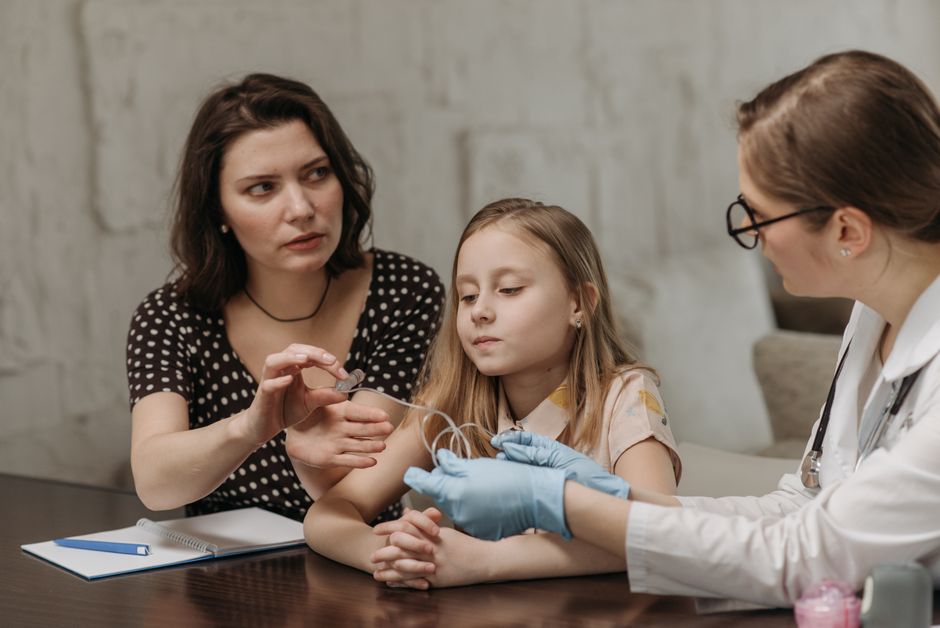
Child life is a healthcare profession that helps children and families cope with the stress of illness, injury, and hospitalization. Certified Child Life Specialists (CCLS) use play, age-appropriate education, and emotional support to reduce fear and help kids understand what is happening to their bodies. They work alongside doctors and nurses in hospitals, clinics, and other care settings, but they do not provide medical treatment themselves.
The field exists because medical care treats the body, and child life addresses the experience of being a patient. A child who understands a procedure and feels supported tends to cope better than one who is frightened and uninformed. That principle sits at the center of the profession.
What Does a Child Life Specialist Actually Do?
A Child Life Specialist prepares children for medical experiences and supports them through them. The work is part education, part emotional support, and part advocacy.
On a typical day, a specialist might explain an upcoming surgery using a doll and real medical supplies, so a child can see and touch what will happen. They might coach a child through a breathing exercise during a blood draw. They might sit with a sibling who feels forgotten while a brother is in intensive care. They might help a parent find words to explain a serious diagnosis to a young child.
The core tools of the profession are:
- Medical play — supervised play with real or toy medical equipment that lets children work through fear and gain a sense of control
- Preparation — explaining procedures in language a child can understand, matched to their age and development
- Distraction and coping support — techniques like guided breathing, counting, or focusing on a preferred activity during uncomfortable moments
- Normalization — keeping routines, schoolwork, and play alive during a hospital stay so a child’s life feels less interrupted
Child life specialists do not perform procedures, give medications, or make medical decisions. They work as part of the care team, and their focus is the child’s emotional and developmental needs.
Why Is Play Used as a Therapeutic Tool in Hospitals?
Play is how children process their world. In a hospital, it becomes a way to understand and manage experiences that would otherwise be confusing and frightening.
When a child plays with a stethoscope or an IV line, they move from passive recipient to active participant. That shift matters. A child who has rehearsed a procedure through play often arrives at the real thing with less fear. The mechanism is straightforward: familiarity reduces the unknown, and a sense of control reduces distress.
Play also serves a developmental purpose. Long hospital stays can interrupt the normal work of childhood — learning, socializing, and building independence. Child life specialists use play and activities to keep those developmental processes moving, which supports a child’s adjustment both during and after treatment.
It is worth being clear about what the evidence shows. Research on play-based preparation and child life support generally indicates benefits for reducing anxiety and improving cooperation during medical experiences. The evidence base is meaningful but not unlimited — studies vary in size and design, and outcomes are often measured through parent and staff reports rather than hard clinical endpoints. The direction of the findings is consistent, but this is not a field with large, definitive trials behind every practice.
How Do Child Life Specialists Prepare Children for Procedures?
Preparation is tailored to a child’s age, developmental stage, and temperament. A toddler and a teenager need very different explanations of the same surgery.
For young children, preparation tends to be concrete and sensory. A specialist might use a doll to show where an IV goes and explain that it will feel like a small pinch. For school-age children, the explanation can include more detail about why the procedure is needed. Teenagers usually want straight information and a role in decisions about their own care.
Good preparation generally follows a few principles:
- It happens close enough to the procedure that the child remembers it, but early enough to process it
- It uses honest language — specialists avoid saying something won’t hurt if it will
- It gives the child a coping plan, such as what they will do or think about during the procedure
- It includes parents, who are often the child’s most important source of comfort
Honesty is a professional norm in child life. Telling a child a shot won’t hurt may get cooperation once, but it damages trust and makes the next experience harder.
Who Do Child Life Specialists Work With?
Child life services extend to the whole family, not just the patient. Siblings, parents, and caregivers all experience the strain of a child’s illness.
Siblings often feel anxious, jealous, or guilty, and may act out or withdraw. A child life specialist can help them understand what is happening and give them space to express their own feelings. Parents benefit too — specialists help them understand how to talk to their child about difficult news and how to support coping at home.
The work also reaches beyond the hospital room. Child life specialists support children through:
- Emergency department visits and same-day surgery
- Chronic illness management and repeated hospital stays
- Preparation for procedures like imaging, blood draws, and surgery
- Grief and bereavement support for children facing loss
- School re-entry after a long absence or a visible change like hair loss
Some specialists also work in outpatient clinics, community settings, and programs serving children facing stressful life events.
What Training and Certification Does a Child Life Specialist Have?
Certified Child Life Specialists hold a relevant bachelor’s degree, complete supervised clinical experience, and pass a certification exam. Certification is maintained through ongoing professional development.
The field’s professional body sets standards for education and clinical training, and certification is generally expected by employers. A specialist’s background typically includes coursework in child development, family systems, and the impact of illness and hospitalization on children. The clinical internship is where that knowledge becomes practical skill — learning to assess a child’s coping style, prepare them for procedures, and work within a medical team.
This is a distinct healthcare role with its own credential, not an informal volunteer position. That distinction matters when families are deciding what support to ask for.
Does Child Life Support Improve Outcomes?
The strongest evidence for child life centers on reducing distress and improving the experience of care. Effects on hard clinical outcomes are less established.
Studies have found that children who receive preparation and support before procedures tend to show lower anxiety and better cooperation. Parents often report greater satisfaction with care. These are meaningful outcomes in their own right — a calmer child, a less traumatic experience, and a family that feels supported.
Claims that child life services shorten hospital stays, reduce medication use, or lower costs appear in the literature, but the evidence is mixed and should be treated with caution. It would be an overstatement to say these financial and clinical effects are firmly established.
What is well established is the underlying principle: children cope better with medical stress when they understand what is happening and have support. That is the foundation the profession is built on.
How Do Families Access Child Life Services?
Families typically access child life services through the hospital or clinic where a child is receiving care. Many children’s hospitals have child life departments, and a parent can ask a nurse or doctor for a referral.
Availability varies. Large children’s hospitals usually have dedicated child life teams, while smaller facilities may have limited or no coverage. It is reasonable for a parent to ask directly whether a child life specialist is available and to request a visit if so. Asking is not an unusual request — it is a standard part of pediatric care at many institutions.
For families preparing a child for a procedure at home, some of the same principles apply without a specialist: use simple honest language, let the child ask questions, and give them a small job or coping plan for the moment itself.
Frequently Asked Questions
What is child life in healthcare?
Child life is a healthcare profession that helps children and families cope with illness, injury, and hospitalization through play, education, and emotional support. Certified Child Life Specialists work as part of the care team but do not provide medical treatment.
What is the difference between a child life specialist and a nurse?
A nurse provides medical care such as medications and procedures, while a child life specialist focuses on a child’s emotional and developmental needs. The two roles work together but have different training and responsibilities.
Do you need a degree to be a child life specialist?
Yes, Certified Child Life Specialists hold a relevant bachelor’s degree, complete supervised clinical experience, and pass a certification exam. Certification is generally expected by employers in the field.
How do I get a child life specialist for my child?
Ask a nurse or doctor at the hospital or clinic where your child is receiving care. Availability varies by facility, and larger children’s hospitals are more likely to have dedicated child life teams.
