
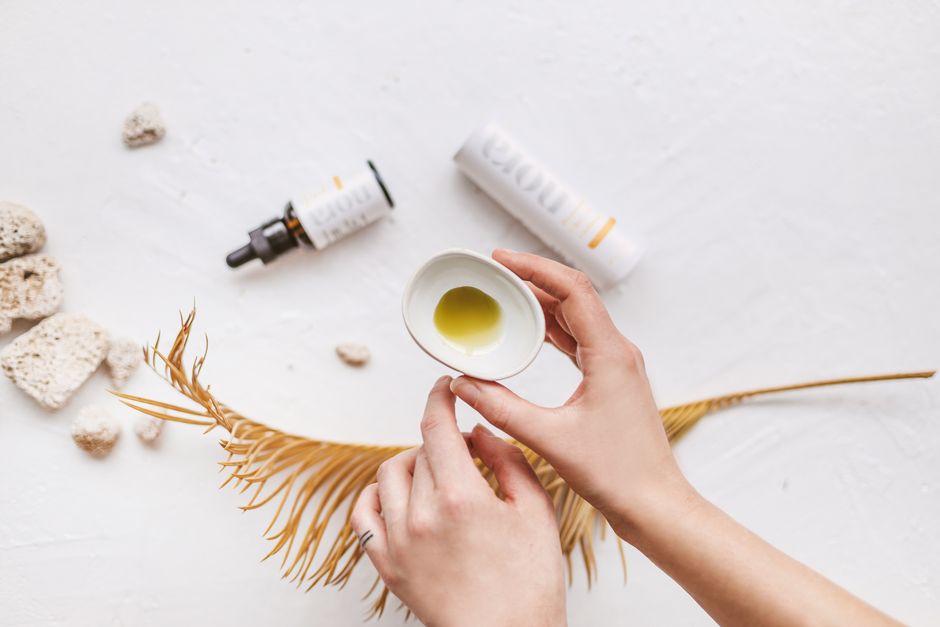
CBD balm is a topical product applied directly to the skin to target localized discomfort. People use it for muscle soreness, joint pain, and skin conditions like dryness or irritation. Unlike CBD oils taken under the tongue, balms work where you apply them, and they do not enter the bloodstream in significant amounts.
How Does CBD Balm Work on the Body?
Your body has an endocannabinoid system, a network of receptors that helps regulate pain, inflammation, and skin health. When you apply CBD balm to your skin, the CBD interacts with nearby receptors rather than traveling through your whole body.
The skin is a barrier. It keeps things out, including many ingredients in topical products. That means CBD balm affects the area where you rub it, not your entire system. This is why people use it for specific spots, like a sore shoulder or an achy knee, instead of for whole-body effects.
Most balms also contain other ingredients that contribute to the feeling of relief. Menthol, camphor, and essential oils are common additions. These ingredients create a cooling or warming sensation that can distract from pain signals. The massage motion of rubbing in the balm also helps increase blood flow to the area.
What Is Cbd Balm Used For Muscles Joints Skin
CBD balm serves three main purposes: muscle recovery, joint comfort, and skin care. For muscles, people often apply it after workouts or on areas that feel tight and sore. For joints, it is used on knees, hands, elbows, and other places where arthritis or overuse causes stiffness.
For skin, CBD balms are used on dry patches, rough areas, and minor irritations. The moisturizing base of the balm, often shea butter or beeswax, provides hydration. Some people with conditions like eczema or psoriasis use CBD balms, but the evidence for this use is limited.
It is important to understand what CBD balm does not do. It does not heal injuries. It does not cure arthritis. It does not repair damaged skin. What it can do is provide temporary comfort and moisture while your body does the healing work on its own.
Does CBD Balm Actually Relieve Pain?
The evidence for CBD balm as a pain reliever is mixed. Some studies suggest that topical CBD can reduce inflammation and pain in animal models. Human studies are fewer, and results vary. Some people report significant relief. Others notice no difference.
One challenge is that CBD is poorly absorbed through the skin. Research published in the Journal of Pain Research and other journals has examined this issue. The amount of CBD that reaches deeper tissues is small. This raises questions about how much of the relief comes from CBD itself versus the other ingredients in the balm.
What is more established is the benefit of the other ingredients. Menthol and capsaicin, both common in pain balms, have solid evidence for temporary pain relief. These work through different mechanisms than CBD. Menthol creates a cooling sensation that alters how your brain perceives pain. Capsaicin depletes a chemical involved in sending pain signals.
If a CBD balm helps you, the relief is real regardless of which ingredient causes it. But if you are choosing between a CBD balm and a standard menthol balm, know that the menthol balm has stronger evidence behind it.

CBD Balm for Joint Pain and Arthritis
Joint pain is one of the most common reasons people try CBD balm. Arthritis affects millions of Americans, and many seek alternatives to oral pain medications. Topical products are appealing because they avoid stomach irritation and other side effects of pills.
Some research suggests that topical CBD may help with arthritis pain. A study published in the journal Arthritis & Rheumatology found that a topical CBD gel reduced pain and swelling in rats with arthritis. Human studies have been smaller and less conclusive.
For people with osteoarthritis, the goal is typically to manage pain and maintain mobility. CBD balm may be useful as part of a routine that includes exercise, stretching, and other proven approaches. It should not replace medical treatment for inflammatory joint conditions like rheumatoid arthritis, which requires specific disease-modifying medications.
A practical note: joint pain that is severe, accompanied by swelling and redness, or getting worse over time warrants a medical evaluation. Do not assume a balm will resolve a problem that needs medical attention.
CBD Balm for Muscle Soreness and Recovery
Muscle soreness after exercise, known as delayed onset muscle soreness, typically peaks 24 to 72 hours after activity. People use CBD balms during this period to ease discomfort and speed recovery.
The evidence here is also limited but somewhat encouraging. Some studies indicate that topical CBD may reduce muscle soreness after intense exercise. One study in the Journal of the International Society of Sports Nutrition examined this and found some benefit, though the study was small.
What is clear is that the act of massaging a balm into sore muscles has benefits on its own. Massage reduces muscle tension and improves blood flow. Even a balm without active ingredients would provide some benefit through massage alone.
For muscle recovery, the most proven strategies remain sleep, hydration, protein intake, and gradual training progression. CBD balm is a comfort measure, not a recovery enhancer.
CBD Balm for Skin Conditions
People use CBD balms for dry skin, eczema patches, and minor irritation. The moisturizing ingredients are the most reliable part of this use. Shea butter, coconut oil, and beeswax are effective skin conditioners with long histories of safe use.
CBD itself may have anti-inflammatory properties that benefit the skin. Some research suggests that CBD can reduce oil production in sebaceous glands and calm inflammatory responses in skin cells. This has led to interest in CBD for acne and other inflammatory skin conditions.
However, no large clinical trials have confirmed that CBD balm treats eczema, psoriasis, or acne. The research is early stage and mostly laboratory based. Some dermatologists recommend CBD products for certain patients, but this is not standard practice.
If you have a skin condition, talk to a dermatologist before relying on a CBD balm. Some skin conditions require prescription treatments. Delaying those treatments while trying an unproven product can allow the condition to worsen.
How to Choose and Use a CBD Balm
CBD products are not regulated like medications. The FDA has approved only one CBD product, a prescription drug for certain forms of epilepsy. Everything else, including balms, is sold as a cosmetic or supplement, with less oversight.
This means quality varies widely. Some products contain less CBD than their labels claim. Some contain none. Third-party testing helps, but not all companies do it. Look for products with a certificate of analysis from an independent lab.
When using a CBD balm, start with a small amount on a small area of skin. Wait to see how your skin reacts. If you have sensitive skin, check the ingredient list for potential irritants like essential oils or fragrances.
Apply the balm to clean, dry skin and rub it in thoroughly. How often to apply depends on the product and your needs. Follow the label instructions. If you do not notice benefit within a week or two, the product may not be right for you.
Do not apply CBD balm to broken skin or open wounds. Do not use it on your face unless the product is specifically designed for facial use. And if you are pregnant, breastfeeding, or taking medications, talk to your doctor before using any CBD product.
CBD Balm vs. Other CBD Products
CBD comes in many forms: oils, tinctures, capsules, edibles, vapes, and topicals. The main difference is how they enter your body. Oils and edibles are absorbed through the digestive system or under the tongue and enter the bloodstream. Topicals like balms do not.
This difference matters for effects. Oral CBD can affect your whole body, but it takes longer to work and has lower absorption. Topical CBD works faster in the applied area but stays local. If you want whole-body effects, a balm will not provide them.
Oral CBD also carries more risks. It can interact with medications, particularly blood thinners and seizure medications. Topical CBD has fewer systemic effects, so the risk of drug interactions is lower. But the skin can absorb some CBD, so the risk is not zero.
There is also the question of legality. Hemp-derived CBD with less than 0.3% THC is federally legal in the US. But state laws vary. Check your local regulations before purchasing.
Potential Side Effects and Safety Concerns
CBD balms are generally well tolerated, but side effects are possible. Skin irritation, redness, and itching can occur, especially in people with sensitive skin. The other ingredients in the balm are often the cause rather than the CBD itself.
Allergic reactions are possible, particularly to essential oils, fragrances, or botanical extracts. If you develop a rash, stop using the product and wash the area with mild soap and water.
Some people worry about CBD showing up on drug tests. Topical CBD is less likely to cause a positive result than oral CBD, but it is not impossible. THC can be present in trace amounts even in hemp-derived products. If drug testing is a concern, choose a product with a certificate of analysis showing no detectable THC.
There is no established safe dose for CBD balm. No clinical guidelines exist for this population or any population regarding topical CBD dosing. This is because the research has not established one. Use the product as directed on the label and pay attention to how your body responds.
What the Research Does and Does Not Show
Here is the honest summary of the evidence. Topical CBD shows promise for pain and inflammation in animal studies. Human studies are fewer, smaller, and mixed. The strongest evidence supports the other ingredients in balms, like menthol and moisturizers.
No study has confirmed that CBD balm cures or treats any disease. No large human trials have confirmed its effectiveness for arthritis, muscle soreness, or skin conditions. The FDA has not approved CBD balm for any medical use.
This does not mean CBD balm is useless. Many people find it helpful, and the placebo effect is real. If a product helps you manage discomfort without side effects, that is a legitimate outcome. But it is important to have accurate expectations about what the science currently supports.
Research is ongoing, and the picture may change. For now, treat CBD balm as a comfort measure with limited evidence, not as a proven medical treatment.
Frequently Asked Questions
How long does CBD balm take to work?
Most people feel effects within 15 to 30 minutes of application. The timing depends on the product, the amount used, and the area of the body.
Can I use CBD balm every day?
Yes, daily use is generally safe for most people. If you notice skin irritation, reduce frequency or stop using the product.
Will CBD balm make me feel high?
No. Hemp-derived balms contain less than 0.3% THC, which is not enough to cause a high. Topical application also limits how much enters your bloodstream.
Is CBD balm safe to use with other medications?
Topical CBD has a lower risk of drug interactions than oral CBD, but the risk is not zero. Talk to your doctor if you take prescription medications.
