
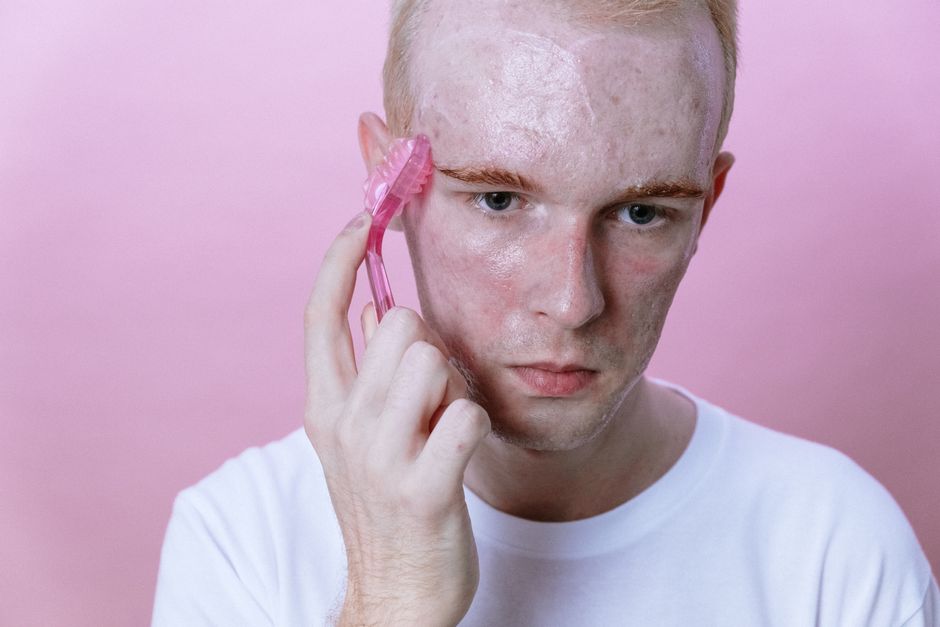
Acne has three main drivers: hormones, diet, and stress. Hormones — particularly androgens like testosterone — increase oil production and change how skin cells shed inside pores. Diet can influence those hormones and blood sugar, which in turn affects oil and inflammation. Stress raises cortisol, which also nudges oil glands into overdrive. Most acne is a combination of all three, not one single cause.
If you have tried every cleanser on the shelf and your skin still breaks out, the problem is almost certainly happening beneath the surface. Understanding what each factor actually does — and what the evidence really shows — is more useful than chasing the next product.
What Is Causing My Acne Hormones Diet Stress?
Acne forms when a pore becomes blocked by dead skin cells and oil, and bacteria that normally live on the skin multiply inside it. That triggers inflammation — the redness, swelling, and sometimes pus you see on the surface.
The chain starts with sebum, the oil your sebaceous glands produce. Sebum production is directly controlled by androgen hormones. This is why acne clusters around puberty and why hormonal conditions that raise androgens tend to worsen acne. It is also why women often see breakouts at predictable points in their menstrual cycle.
Diet and stress do not create acne from nothing. They act on the same system — influencing hormones, blood sugar, and inflammation — which is why they can tip the balance in someone already prone to breakouts.
How Do Hormones Cause Acne?
Androgens tell your sebaceous glands to make more oil. In people with acne-prone skin, those glands also tend to be more sensitive to androgen signals, meaning normal hormone levels can still produce excess sebum.
Hormones affect more than oil. Androgens also influence keratinocytes — the skin cells that line the pore. When these cells shed more rapidly and stick together, they form the plug that starts a pimple. So hormones drive two of the three core acne mechanisms at once.
In women, the menstrual cycle creates predictable shifts. Many notice breakouts in the week or so before a period, when estrogen falls and androgens are relatively unopposed. This pattern is common and does not necessarily mean anything is medically wrong.
Some women have an underlying hormonal condition such as polycystic ovary syndrome (PCOS), which can raise androgen levels and cause persistent acne along the jawline and chin, often alongside irregular periods or excess facial hair. If acne appears suddenly in adulthood with other symptoms like these, it is worth discussing with a clinician. But most adult acne occurs without any diagnosable hormonal disorder.
Does Diet Really Affect Acne?
Diet can influence acne, but the effect is modest and varies a lot between people. This is one of the most debated areas in dermatology, and honest answers matter more than dramatic ones.
The strongest dietary signal involves high-glycemic foods — things that spike blood sugar quickly, like white bread, sugary drinks, and refined carbohydrates. High blood sugar triggers insulin release, and insulin can raise levels of a hormone called IGF-1, which increases sebum production and skin cell turnover. Some studies suggest that low-glycemic diets are associated with fewer acne lesions, though the evidence is not uniform and study sizes have generally been small.
Dairy — particularly skim milk — has been linked to acne in some observational studies. The proposed mechanisms include hormones naturally present in milk and the insulin response dairy provokes. This is an association, not proof of cause. Some people notice clear improvement when they cut back on dairy; many notice nothing.
What the evidence does not support is the old claim that greasy food or chocolate directly causes acne. The research here is weak and inconsistent. Eating fries does not put oil into your pores.
One clarification worth knowing: diet is a modifier, not a root cause. If your acne is driven mainly by hormonal sensitivity, dietary changes alone are unlikely to clear it. They may reduce frequency or severity in some people.
Can Stress Make Acne Worse?
Yes — stress can worsen acne, and the mechanism is well established. When you are stressed, your body releases cortisol and other stress hormones. Cortisol increases sebum production and can amplify inflammation. Stress also slows wound healing, which means pimples take longer to resolve and can leave more noticeable marks.
There is a feedback loop here that many people miss. Acne itself is stressful. Research has consistently found that acne is associated with higher rates of anxiety and lower quality of life, and that stress about skin can worsen the condition. Breaking that loop — through sleep, stress management, and realistic expectations about treatment timelines — is part of managing acne, not a soft add-on.
Stress does not cause acne in someone whose skin is not already prone to it. It aggravates an existing tendency. That distinction matters, because it means stress reduction is helpful but rarely sufficient on its own.
Which Factor Matters Most?
Hormones are the primary driver in most cases. Diet and stress act on the same hormonal and inflammatory pathways, which is why the three factors are so intertwined — and why it can feel impossible to isolate one cause.
A useful way to think about it:
- Hormones set the baseline. They determine how much oil your skin produces and how readily pores clog.
- Diet can shift that baseline up or down, mainly through effects on insulin and IGF-1.
- Stress adds fuel — raising cortisol, increasing oil, and prolonging inflammation.
Genetics sit underneath all of it. If one or both parents had significant acne, your risk is higher regardless of diet or stress. That is not a reason to give up on lifestyle factors — it just sets realistic expectations about what they can and cannot do.
What Actually Helps Treat Hormonal, Dietary, and Stress-Related Acne?
Treatment depends on severity and pattern, and some approaches are far better supported than others. A few honest distinctions:
Topical treatments such as benzoyl peroxide and retinoids are well established for mild to moderate acne. They address the blocked pore and inflammation directly. They do not fix hormonal drivers, but they manage the visible result.
Hormonal treatments — certain oral contraceptives and the medication spironolactone — are used for hormonal acne in women. These are prescription options with real evidence behind them, but they carry risks and require a clinician’s oversight. They are not appropriate for everyone, and they are not for use during pregnancy.
Isotretinoin is effective for severe acne but carries significant risks and requires strict medical monitoring. It is not a casual option.
Dietary changes such as reducing high-glycemic foods are reasonable to try, but the evidence is moderate at best. No specific diet has been proven to cure acne.
Stress management — sleep, exercise, and psychological support where needed — is a supportive measure. It is not a standalone acne treatment.
For persistent or severe acne, seeing a dermatologist is the most reliable path. Acne that scars can cause permanent damage, and early effective treatment reduces that risk. This is one area where waiting to see if it resolves on its own can cost you.
What About “Hormonal Acne” Products and Supplements?
Most products marketed for “hormonal acne” have no clinical evidence behind them. The term has become a marketing label rather than a medical category.
Supplements claiming to balance hormones are largely unregulated in terms of efficacy claims. No large human trials confirm that common over-the-counter “hormone balance” supplements clear acne. Some, like high-dose vitamin B12, have actually been associated with worsening acne in some people — an example of how a product marketed for skin can do the opposite.
If a product promises to “fix” hormonal acne without a prescription, treat that claim with skepticism. Hormonal acne that is genuinely driven by androgens usually requires addressing those androgens, which means medical treatment.
Frequently Asked Questions
Does stress cause acne?
Stress can worsen existing acne by raising cortisol, which increases oil production and inflammation. It does not typically cause acne in skin that is not already prone to it.
What foods trigger hormonal acne?
High-glycemic foods and dairy, especially skim milk, are the most studied dietary links to acne. The evidence is moderate and varies between people, so no single food is proven to trigger acne in everyone.
How can I tell if my acne is hormonal?
Hormonal acne often appears along the jawline and chin and flares around menstrual periods. A clinician can assess whether an underlying condition like PCOS is involved, but most adult acne occurs without a diagnosable hormonal disorder.
Can cutting out dairy clear up acne?
Some people notice improvement when they reduce dairy, but the evidence is based on associations rather than proof of cause. Many people see no change, and dairy provides important nutrients, so any elimination is worth discussing with a clinician.
