
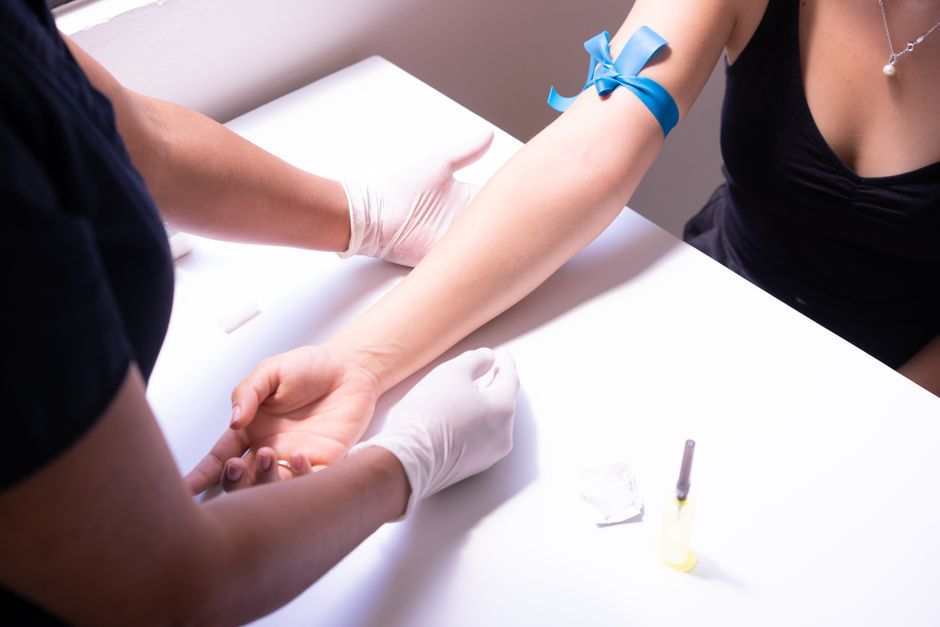
Capillary blood is the blood found in the smallest blood vessels of the body — the capillaries — and it is the type of blood collected when you get a fingerstick or heel prick. It is collected by puncturing the skin with a small lancet, usually on the side of a fingertip or the heel of an infant, and letting a drop of blood flow into a test strip, tube, or collection device. This method is common because it is quick, needs very little blood, and can be done in a clinic, pharmacy, or at home.
What Is Capillary Blood And How Is It Collected?
Capillary blood is blood circulating through capillaries, the microscopic vessels that connect the smallest arteries to the smallest veins. These vessels are where the exchange of oxygen, nutrients, and waste products happens between blood and body tissues.
When a lancet punctures the skin, it cuts through a small cluster of capillaries just beneath the surface. Blood flows out and is collected. This is different from venous blood, which is drawn from a vein with a needle and syringe, and arterial blood, which is drawn from an artery and used mainly for specific tests like blood gas measurements.
The collection process is straightforward:
- The site is cleaned and allowed to dry.
- A small lancet punctures the skin, usually on the side of a fingertip where nerve endings are less dense.
- The first drop may be wiped away because it can contain tissue fluid that dilutes the sample.
- Blood is collected into a tube, capillary tube, or applied directly to a test strip.
- Pressure and a bandage are applied to stop the bleeding.
The whole process takes only a few minutes. That speed and simplicity are why it is used so widely for screening and monitoring.
How Is Capillary Blood Different From Venous Blood?
Capillary blood is not identical to venous blood. It is a mixture of blood from arterioles, venules, and capillaries, plus a small amount of interstitial fluid — the fluid that surrounds cells.
This mixture can affect certain measurements. For example, glucose readings from a fingerstick may differ slightly from a venous draw, and some point-of-care devices are calibrated specifically for capillary samples. Hemoglobin and hematocrit values can also vary somewhat between the two sample types.
For many routine tests, these differences are small enough that capillary sampling works well. For others, a venous sample is required because the test needs a larger volume of blood or a sample that is not diluted by tissue fluid.
One practical difference is volume. A fingerstick yields a few drops. A venous draw can yield several tubes. That matters when a test requires a larger or more precise sample.
Where On The Body Is Capillary Blood Usually Collected?
The fingertip is the most common site in adults and older children. The side of the fingertip is preferred over the center because it has fewer nerve endings, which makes the stick less painful.
In infants, the heel is used instead of the finger. A heel prick is standard for newborn screening tests, which check for a range of conditions shortly after birth. The heel is used because it has a good blood supply and is less likely to cause injury to deeper structures than a finger would in a newborn.
Other sites are sometimes used, including the earlobe, but the fingertip and infant heel are by far the most common.
The choice of site matters for a practical reason: some areas have more capillaries close to the surface and are easier to puncture safely. The side of the fingertip and the outer part of the heel are chosen with this in mind.



What Tests Use Capillary Blood?
Capillary blood is used for a wide range of tests. Some of the most common include:
- Blood glucose monitoring for diabetes, done at home with a meter or a continuous glucose monitor.
- Newborn screening, which checks for metabolic and genetic conditions.
- Hemoglobin and hematocrit checks, often used to screen for anemia.
- Some point-of-care tests for infections or other conditions.
- Certain cholesterol and lipid screenings in some settings.
The list is not unlimited. Tests that need a large volume of blood, that are sensitive to tissue fluid dilution, or that require specific handling usually need a venous sample. When in doubt, the lab or clinician decides which sample type is appropriate for the test being ordered.
Why Is Capillary Blood Used So Often?
Capillary sampling is used often because it is fast, less invasive than a venous draw, and requires minimal training to perform. It can be done in a doctor’s office, a pharmacy, a health fair, or at home.
For people who monitor a condition regularly — such as diabetes — the ability to check blood glucose at home with a fingerstick is a major advantage. It allows for frequent testing without repeated clinic visits.
For newborns, a heel prick allows screening for serious conditions before symptoms appear. That early detection can matter for treatment decisions.
There are also limits. Capillary sampling gives a small sample, and some tests simply cannot be run on it. It can also be affected by how the sample is collected — squeezing the site too hard, for example, can add tissue fluid and alter results.
What Can Affect The Accuracy Of A Capillary Blood Sample?
Several things can affect the accuracy of a capillary sample. Proper technique matters.
If the finger is squeezed or milked too hard, interstitial fluid can mix with the blood and dilute the sample. This can lower glucose readings or affect other measurements.
Cold hands can reduce blood flow, making it harder to get an adequate sample. Warming the hand before the stick can help.
The first drop of blood may contain more tissue fluid, so some protocols call for wiping it away and using subsequent drops.
Contamination from lotions, dirt, or alcohol that has not fully dried can also affect results. Cleaning the site and letting it dry is a standard step for a reason.
For home glucose monitoring, the accuracy of the meter and strips matters too. Expired strips or a meter that has not been calibrated can give misleading readings. This is one area where technique and equipment both play a role.
Is Capillary Blood Collection Safe?
Capillary collection is generally considered a low-risk procedure. The main risks are minor: a small bruise, slight soreness, or rarely a minor infection at the puncture site.
Serious complications are uncommon. The lancet is sterile and designed for single use. Sharing lancets or reusing them is not recommended because of the risk of infection.
For people who take blood-thinning medications, capillary sampling may cause more bleeding than usual, but it is still commonly done. If you take a blood thinner and are concerned, it is reasonable to ask your clinician about it.
In infants, heel pricks are standard and well tolerated. The procedure is quick, and the risks are minimal when done correctly.
How Does Capillary Collection Compare To Venous Collection?
| Feature | Capillary | Venous |
|---|---|---|
| Site | Fingertip or heel | Vein, usually in the arm |
| Sample size | Small (a few drops) | Larger (one or more tubes) |
| Training needed | Minimal | More extensive |
| Common uses | Glucose, newborn screening, some point-of-care tests | Most lab tests requiring larger or precise samples |
| Discomfort | Brief, minor | Brief, minor to moderate |
The right method depends on the test. Neither is universally better. Each has strengths and limits, and the choice is usually made based on what the test requires.
What Should You Expect During A Fingerstick?
You will feel a quick sting when the lancet punctures the skin. It lasts a second or two. After that, the site may be slightly sore for a short time.
The person performing the stick will usually clean the site, use a fresh lancet, and collect the blood. You may be asked to hold still and keep your hand warm beforehand.
After collection, pressure is applied with a gauze or cotton ball, and a bandage is placed. Most people can go about their day immediately afterward.
If you feel faint during or after the procedure, tell the person performing it. This is uncommon with a fingerstick but can happen.
Does Capillary Blood Give The Same Results As A Vein Draw?
For many tests, capillary and venous results are close enough to be used interchangeably. For some tests, they are not.
Glucose is a good example. A fingerstick glucose reading and a venous glucose reading can differ slightly, and reference ranges or device calibrations account for this. For most monitoring purposes, the difference is not clinically significant.
For other tests, such as certain hormone levels or tests that require precise measurement of substances affected by tissue fluid, a venous sample may be preferred or required.
The general principle is that the sample type should match the test. If a lab or clinician specifies venous, it is usually for a reason related to accuracy or sample requirements.
Frequently Asked Questions
Is capillary blood the same as venous blood?
No, capillary blood is a mix of blood from small vessels plus a small amount of tissue fluid, so it is not identical to venous blood. For many routine tests the difference is small, but some tests require a venous sample for accuracy.
Why is the side of the fingertip used instead of the center?
The side of the fingertip has fewer nerve endings than the center, so it is less painful to puncture. It also has a good blood supply for collecting a sample.
Can capillary blood be used for all blood tests?
No, capillary blood works for many tests but not all. Tests that need a larger sample, or that are affected by tissue fluid dilution, usually require a venous draw.
Is a fingerstick painful?
A fingerstick causes a brief sting that lasts a second or two. Most people find it less uncomfortable than a venous draw, though sensitivity varies from person to person.
