
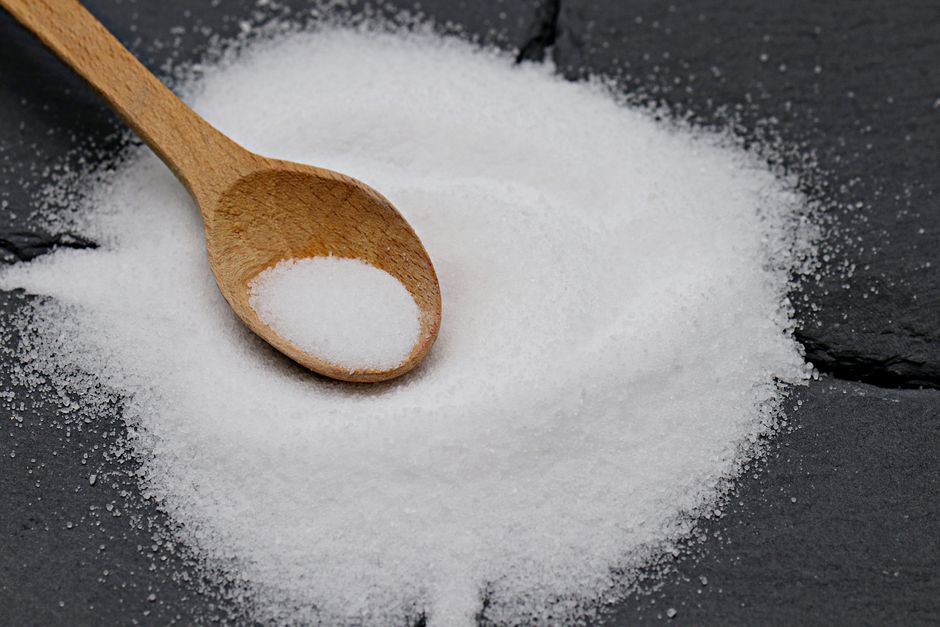
Borax is a naturally occurring mineral compound made of sodium, boron, oxygen, and water. Its chemical name is sodium tetraborate, and it has been mined and used by humans for thousands of years. You will find it in laundry detergents, household cleaners, pesticides, and some craft supplies — but not in food, and not in any product meant to be swallowed.
What Is Borax Sodium Tetraborate?
Sodium tetraborate is a salt of boric acid. The most common form, borax decahydrate, has the chemical formula Na₂B₄O₇·10H₂O. That means each unit contains two sodium atoms, four boron atoms, seven oxygen atoms, and ten water molecules.
When heated, borax loses its water and becomes a white powder called anhydrous borax. When dissolved in water, it forms a mildly alkaline solution. That alkalinity is why it works as a cleaning agent — it helps break down grease and lifts certain stains.
Borax is not the same as boric acid, though the two are related. Boric acid (H₃BO₃) is a weak acid derived from borax. Both contain boron. Both are toxic if swallowed in sufficient amounts. Neither belongs in your body.
The name “borax” comes from the Persian word burak, and the mineral has been traded across Asia and Europe for centuries. It was historically used in goldsmithing, mummification, and as a flux in metallurgy. Today its main commercial uses are in glass, ceramics, detergents, and fire retardants.
Is Borax Safe to Eat or Drink?
No. Borax is not safe to eat or drink. It is not a food, not a supplement, and not a remedy for any condition.
Swallowing borax can cause nausea, vomiting, diarrhea, and abdominal pain. Larger amounts can lead to more serious effects, including damage to the kidneys and central nervous system. In severe cases, ingestion can be fatal. The dose matters — small amounts may cause only mild symptoms, while larger amounts are dangerous.
There is no established safe level of borax consumption for humans. No clinical guidelines exist for using borax as a supplement, and no regulatory body has approved it for internal use. The FDA does not recognize borax as safe for food use. In fact, borax has been used as a pesticide, and pesticides are not meant to be ingested.
Some people online claim borax can treat arthritis, fungal infections, or other conditions. These claims are not supported by clinical trials. The evidence is limited to anecdotes and animal studies, which do not establish safety or effectiveness in humans. The risks of ingesting borax are well documented. The benefits are not.
What Are the Common Uses of Borax?
Borax is used in dozens of household and industrial products. Its ability to clean, buffer pH, and kill certain pests makes it useful in specific applications.
- Laundry detergents and boosters: Borax softens water and helps remove stains. It is often added to laundry loads to boost cleaning power.
- Household cleaners: Mixed with water, it can clean surfaces, sinks, and toilets.
- Pest control: Boric acid and borax are used to kill ants, cockroaches, and other insects. The powder damages their digestive systems and exoskeletons.
- Glass and ceramics: Borax is a key ingredient in heat-resistant glass, like Pyrex, and in ceramic glazes.
- Flame retardants: It is used to treat wood, fabric, and other materials to make them less flammable.
- Slime and crafts: Borax is a common ingredient in homemade slime recipes because it cross-links with glue polymers.
These uses are external. None involve eating or drinking the compound.
How Does Borax Affect the Body?
Boron, the key element in borax, is not considered an essential nutrient for humans. That means your body does not need it to function. Plants need boron, but humans do not have a known requirement for it.
When borax enters the body — whether swallowed, inhaled, or absorbed through broken skin — it is converted to boric acid. Boric acid is then distributed to tissues and eventually excreted, mostly in urine. The kidneys clear it relatively quickly in healthy people.
The problem is that boron compounds can interfere with cellular processes. At high enough concentrations, they affect the nervous system and kidneys. Symptoms of poisoning can include headache, dizziness, nausea, vomiting, and in severe cases, seizures and organ failure.
Skin contact with borax is generally less concerning than ingestion, but it can still cause irritation, especially with prolonged exposure. Inhaling borax dust can irritate the lungs and airways. The Occupational Safety and Health Administration (OSHA) has set workplace exposure limits for borax dust to protect workers who handle it regularly.
Children are more vulnerable to borax poisoning than adults because of their smaller body size. A small amount that might cause mild symptoms in an adult could be more serious for a child.
Can Borax Be Used as a Natural Remedy?
No. There is no reliable clinical evidence that borax treats any medical condition in humans.
Some alternative health websites claim borax can treat arthritis, lupus, fungal infections, or even cancer. These claims are not supported by controlled human trials. A few small studies have looked at boron supplements for specific conditions, but those are different from borax. Even for boron, the evidence is limited and mixed.
The dose makes the poison. Borax is toxic at levels that some people online have suggested consuming. There is no way to know a safe dose because no safe dose has been established. The margin between a potentially therapeutic dose and a toxic dose is unknown, and for many people, the first sign of toxicity would be the first sign that something is wrong.
If you have a health condition, talk to a doctor or pharmacist. Do not use borax as a substitute for proven treatments. The risks are real. The benefits are not supported by evidence.
What Should You Do If Someone Swallows Borax?
If someone swallows borax, call Poison Control immediately at 1-800-222-1222 in the United States. Do not wait for symptoms to appear. Do not try to make the person vomit unless a medical professional tells you to.
If borax gets in the eyes, rinse with water for at least 15 minutes and seek medical attention. If it gets on the skin, wash the area with soap and water. If it is inhaled, move to fresh air.
Keep borax out of reach of children and pets. Store it in its original container, clearly labeled. Do not transfer it to food containers or water bottles. Do not use it in any way that could lead to accidental ingestion.
If you are using borax for cleaning or crafts, wear gloves and work in a well-ventilated area. Wash your hands after handling it. Do not eat, drink, or smoke while using it.
How Does Borax Compare to Boric Acid?
Borax and boric acid are closely related but not identical. Both contain boron, and both are toxic if ingested. The table below shows the main differences.
| Property | Borax (Sodium Tetraborate) | Boric Acid |
|---|---|---|
| Chemical formula | Na₂B₄O₇·10H₂O | H₃BO₃ |
| pH in water | Mildly alkaline (around 9.2) | Weakly acidic (around 5.1) |
| Common uses | Laundry, cleaners, glass, slime | Pest control, antiseptics, eyewash |
| Toxicity if swallowed | Toxic | Toxic |
| Safe to eat? | No | No |
Both compounds are dangerous if swallowed. Neither is a food or supplement. The difference in pH affects how they are used, but not their safety profile when ingested.
Is Boron a Nutrient You Need?
Boron is not an essential nutrient for humans. The human body does not have a known requirement for it.
Some research suggests boron may play a role in bone health and calcium metabolism, but the evidence is not strong enough to recommend boron supplements. The amounts of boron found in food — in fruits, vegetables, nuts, and legumes — are small and generally considered safe. That is different from consuming borax, which contains much higher concentrations of boron.
If you eat a balanced diet, you likely get small amounts of boron naturally. There is no established recommended daily intake for boron because it is not considered essential. No clinical guidelines recommend boron supplementation for any condition.
Why Is Borax Sometimes Called a “Natural” Cleaner?
Borax is a naturally occurring mineral, so it is sometimes marketed as a “natural” cleaner. That label is accurate in the sense that it comes from the earth. It does not mean it is safe to eat or that it is harmless.
Many natural substances are toxic. Lead, arsenic, and mercury are natural. So is cyanide. The word “natural” describes where something comes from, not whether it is safe.
Borax is an effective cleaner and has legitimate uses. It is also a poison if ingested. Both things are true. Understanding the difference between external use and internal use is key.
Frequently Asked Questions
What is borax sodium tetraborate used for?
Borax is used in laundry detergents, household cleaners, pest control, glassmaking, and some craft projects like homemade slime. It is not used as a food or medicine.
Is borax toxic to humans?
Yes. Borax is toxic if swallowed and can cause nausea, vomiting, kidney damage, and other serious effects. There is no established safe level for human consumption.
Can you get boron from food instead of borax?
Yes. Small amounts of boron occur naturally in fruits, vegetables, nuts, and legumes. These food sources are considered safe, unlike borax, which contains much higher boron concentrations.
What should I do if I accidentally swallow borax?
Call Poison Control immediately at 1-800-222-1222 in the US. Do not wait for symptoms and do not induce vomiting unless a medical professional tells you to.
