
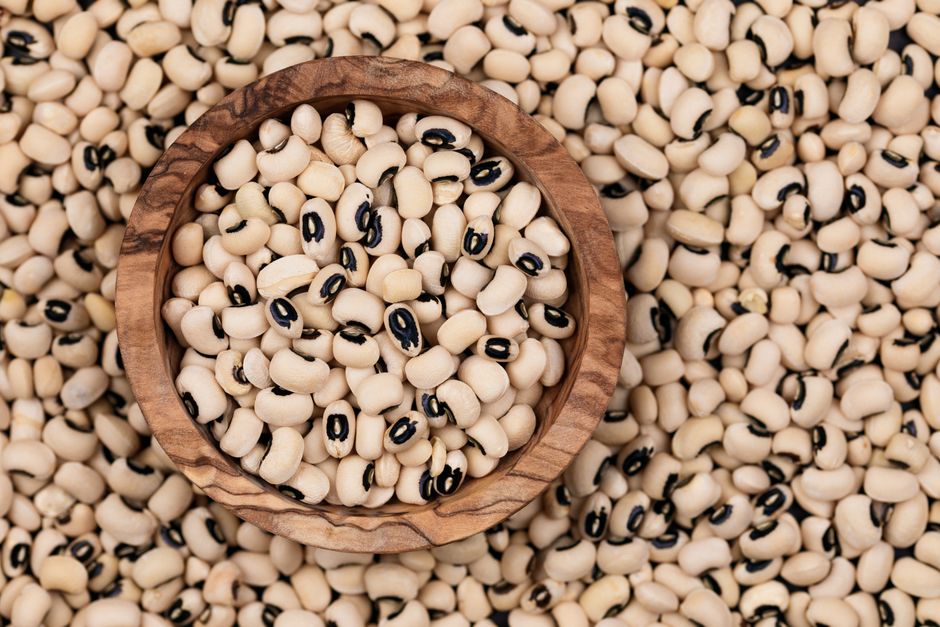
Black eyed beans are the small, cream-colored, oval beans with a distinctive black spot on their curve, and they are one of the most widely eaten legumes in the world. They are the same species as cowpeas, known scientifically as Vigna unguiculata. In the United States, they are most familiar as the “black eyed peas” eaten on New Year’s Day for good luck, but they are a staple food across West Africa, the Caribbean, South America, and the southern United States.
What Is Black Eyed Beans? Explained
Black eyed beans are edible seeds from a climbing plant in the legume family. The plant produces pods, and each pod holds several of these kidney-shaped beans. They are a warm-weather crop that grows well in dry conditions, which is one reason they became such an important food source across parts of Africa and the southern US.
The name “black eyed pea” and “black eyed bean” refer to the same food. Botanically, it is a pea. In cooking and everyday speech, people call it a bean. This naming overlap confuses many shoppers, but there is no difference between the two on your plate.
They are sold in several forms:
- Dried — the most common form, requiring soaking and longer cooking
- Canned — pre-cooked and ready to heat, often with added salt
- Frozen — partially or fully cooked, with a texture closer to fresh
- Fresh — available in some regions during harvest season
One clarification worth knowing: the “black eyed pea” is not related to the green garden pea or to black beans. It belongs to a different genus. That matters mainly for people tracking specific nutrients or managing certain diets.
What Nutrients Do Black Eyed Beans Provide?
Black eyed beans are a solid source of plant protein, fiber, and several vitamins and minerals. Like all legumes, their exact nutrient content varies with how they are cooked and whether they are canned or dried.
According to USDA nutritional data, a half-cup of cooked black eyed beans (without added salt or fat) provides roughly 80 calories, about 5 to 6 grams of protein, and around 3 to 4 grams of fiber. They also supply folate, iron, potassium, and magnesium.
The fiber content matters. Most adults in the US fall short of recommended fiber intake, and legumes are one of the more efficient ways to close that gap. Fiber supports digestive health and can help with feelings of fullness after a meal.
One detail people often miss: the black “eye” spot does not carry special nutritional value. It is simply a pigmentation feature of the seed. The nutrition comes from the whole bean.
Are Black Eyed Beans Good for You?
Black eyed beans fit well into a generally healthy eating pattern. They are low in fat, contain no cholesterol, and provide protein and fiber together — a combination that many foods do not offer.
Diets rich in legumes are associated with lower risk of several chronic conditions in large population studies. That does not mean black eyed beans specifically prevent disease. It means people who eat more legumes tend to have better health outcomes, and researchers believe the fiber, protein, and micronutrient content play a role.
What the evidence does support:
- Legumes can help with satiety, which may support weight management
- Fiber from legumes supports bowel regularity
- Plant proteins like those in beans are part of heart-healthy dietary patterns
What the evidence does not support: any claim that black eyed beans treat, cure, or prevent a specific disease on their own. No clinical trial has shown that. They are a nutritious food, not a medicine.





Why Do Black Eyed Beans Cause Gas?
Black eyed beans contain oligosaccharides — complex sugars that human digestive enzymes cannot break down. When these sugars reach the large intestine, gut bacteria ferment them. That fermentation produces gas.
This is normal and applies to most beans. It is not a sign of a problem with the food or with your digestion.
Black eyed beans are generally considered one of the easier beans to digest compared to larger beans like kidney or navy beans. Many people tolerate them with less gas. Still, individual tolerance varies widely.
Practical approaches that some people find helpful:
- Soaking dried beans and discarding the soaking water before cooking
- Rinsing canned beans thoroughly to remove some of the starches
- Starting with smaller portions and increasing gradually over weeks
- Using over-the-counter enzyme products designed for legumes, though evidence on how well these work is limited and mixed
If beans consistently cause severe pain, bloating, or diarrhea, that is worth discussing with a clinician. It could point to a digestive condition rather than ordinary gas.
How Do You Cook Black Eyed Beans?
Dried black eyed beans do not require soaking the way many other beans do. They cook relatively quickly — often in about 45 minutes to an hour after bringing them to a simmer. Soaking can shorten that time and may reduce gas for some people, but it is optional.
Canned black eyed beans are already cooked. They only need to be heated through, which takes a few minutes.
A few cooking notes that matter:
- Do not add salt or acidic ingredients like tomatoes or vinegar early in cooking. They can keep dried beans from softening properly.
- Skim off foam that rises during the first few minutes of boiling.
- Cook until tender but not mushy. Overcooking breaks down the skins.
In the southern US, they are traditionally cooked with pork, onions, and seasonings. In West Africa and the Caribbean, they appear in stews, rice dishes, and fritters. The bean itself is versatile and takes on the flavors around it.
One safety point: dried beans should never be eaten raw. Raw or undercooked beans contain compounds that can cause nausea, vomiting, and stomach upset. Thorough cooking destroys them.
Are There Any Risks or Downsides?
For most people, black eyed beans are a safe and healthy food. There are a few situations where attention is warranted.
Kidney conditions. Beans are high in potassium and phosphorus. People with advanced kidney disease are often advised to limit these minerals. Anyone with kidney disease should follow their clinician’s guidance on legume intake rather than assuming beans are automatically fine.
Gout. Legumes contain purines, which the body breaks down into uric acid. Older guidance told people with gout to avoid beans. More recent evidence suggests purine-rich plant foods do not raise gout risk the way purine-rich meats and seafood do. Still, individual responses vary, and anyone with gout should discuss diet with their doctor.
FODMAP sensitivity. People following a low-FODMAP diet for irritable bowel syndrome are often advised to limit or avoid beans, including black eyed beans, during the elimination phase. This is a temporary clinical protocol, not a permanent recommendation.
Canned varieties. Canned black eyed beans can be high in sodium. Draining and rinsing them reduces sodium content, though it does not eliminate it. People watching salt intake should check labels.
Black Eyed Beans vs. Other Common Beans
Black eyed beans differ from other beans in a few practical ways. The table below compares them on general characteristics rather than exact numbers, since values shift with cooking method and brand.
| Bean | Typical cooking time (dried) | General digestion | Common uses |
|---|---|---|---|
| Black eyed beans | About 45–60 minutes | Often easier than larger beans | Stews, rice dishes, salads, New Year’s traditions |
| Kidney beans | About 60–90 minutes | More likely to cause gas | Chili, soups, rice and beans |
| Black beans | About 60–90 minutes | Moderate | Tacos, soups, dips |
| Chickpeas | About 90–120 minutes | Moderate to higher | Hummus, curries, salads |
The main practical difference is time. Black eyed beans cook faster than most other dried beans, which makes them convenient for weeknight cooking.
Frequently Asked Questions
Are black eyed beans and black eyed peas the same thing?
Yes, they are the same food. The names are used interchangeably, though “pea” is more common in the southern US and “bean” is more common elsewhere.
Do you have to soak black eyed beans before cooking?
No, soaking is optional. They cook faster than most dried beans and can go straight into the pot, though soaking may shorten cooking time and reduce gas for some people.
Are black eyed beans high in protein?
They provide a moderate amount of plant protein — roughly 5 to 6 grams per half-cup cooked, based on USDA data. That is less than meat or soy but meaningful as part of a meal.
Can you eat black eyed beans on a low-FODMAP diet?
Generally no, not during the strict elimination phase. Beans are high in FODMAPs and are usually restricted, then reintroduced based on individual tolerance under a clinician’s guidance.
