
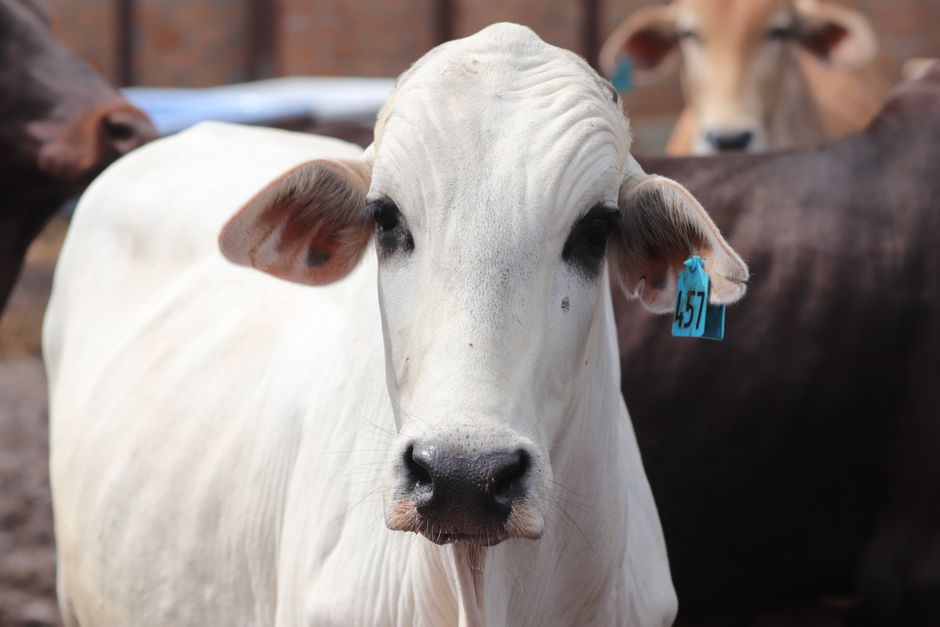
Beef tallow is the rendered fat of cattle, usually taken from the fatty tissue around the kidneys and loins. Rendering means melting that fat slowly and straining out the solid bits, which leaves a shelf-stable cooking fat that is solid at room temperature. It has been used for cooking, frying, and soap-making for centuries, and it is chemically close to other animal fats like lard and duck fat.
What Is Beef Tallow Exactly?
Beef tallow is fat that has been separated from beef tissue and purified by heat. The word “tallow” specifically refers to rendered fat from cattle or sheep, while “suet” is the raw, unrendered fat found around the kidneys and other organs.
To make tallow, the raw fat is cut into pieces and heated gently. The fat melts, and the remaining connective tissue and impurities are strained away. What’s left cools into a white or pale yellow solid. This process removes most of the water, which is why tallow keeps for a long time without refrigeration.
Not all beef fat is the same. The hard fat around the kidneys, called kidney fat or leaf fat, produces the highest-quality tallow because it is firmer and has a milder flavor. Fat trimmed from muscle meat also works but tends to be softer and more strongly flavored.
What Is the Nutritional Content of Beef Tallow?
Beef tallow is almost entirely fat. According to USDA nutritional data, 100 grams of beef tallow contains roughly 902 calories and about 100 grams of total fat, with no meaningful amount of protein or carbohydrate.
The fat in tallow is mostly saturated and monounsaturated. A large share of the saturated fat is stearic acid, which is notable because it affects cholesterol differently than some other saturated fats. Tallow also contains some palmitic acid and oleic acid, the same monounsaturated fat found in olive oil, though in much smaller amounts.
Tallow contains small amounts of fat-soluble vitamins, particularly vitamin E and vitamin D, but the amounts vary widely depending on the animal’s diet and the rendering process. It is not a reliable source of these vitamins. Any claim that tallow is a significant vitamin source overstates what the data shows.
How Does Beef Tallow Compare to Other Cooking Fats?
The main practical difference between tallow and vegetable oils is its fat profile and how it behaves under heat. Tallow is high in saturated fat, which makes it stable at high temperatures, while many seed oils are high in polyunsaturated fat and break down more readily when heated repeatedly.
| Fat | Main fat type | Smoke point (approx.) | Typical use |
|---|---|---|---|
| Beef tallow | Mostly saturated and monounsaturated | Around 400°F (varies) | Frying, roasting |
| Butter | Mostly saturated | Around 350°F | Sautéing, baking |
| Lard | Mixed, high monounsaturated | Around 370°F | Frying, baking |
| Olive oil (extra virgin) | Mostly monounsaturated | Around 350–410°F | Sautéing, dressings |
| Canola oil | Mostly monounsaturated, some polyunsaturated | Around 400°F | General cooking, frying |
Smoke points vary by refinement and quality, so treat these as general ranges rather than fixed numbers. The key point is that tallow’s high saturated fat content makes it resistant to oxidation during frying, which is why it was historically favored for deep-frying.
Is Beef Tallow Healthy?
The honest answer is that the evidence is mixed and depends heavily on how much and how often you eat it. Tallow is not a “health food” in the way some online claims suggest, but it is also not uniquely harmful compared to other fats.
Here is what is well established. Diets high in saturated fat can raise LDL cholesterol in many people, and elevated LDL is a established risk factor for cardiovascular disease. Beef tallow is high in saturated fat. That relationship is not in serious dispute.
What is less clear is how much tallow specifically affects health outcomes compared to other saturated fats. Stearic acid, the dominant saturated fat in tallow, appears to raise LDL cholesterol less than palmitic acid does in controlled feeding studies. Some research suggests this, though the overall picture on stearic acid and heart disease risk remains debated.
Claims that tallow is anti-inflammatory, protects the gut, or is superior to seed oils are not supported by large human trials. No clinical evidence currently confirms these benefits. Some of these claims rest on biological reasoning or animal studies, which is not the same as demonstrated clinical benefit in people.
There is also a fair point buried in the debate. Highly processed foods containing refined seed oils are often unhealthy, but the problem is usually the processing and the overall diet, not the oil in isolation. Replacing those foods with tallow-cooked meals does not automatically make them healthy.
What Are the Risks of Cooking With Beef Tallow?
The main risks are dietary, not acute. Because tallow is dense in calories and saturated fat, it is easy to eat more of both than intended. A single tablespoon contains roughly 115 calories and about 12 grams of saturated fat.
For context, major health organizations generally recommend keeping saturated fat to less than 10% of daily calories. For someone eating 2,000 calories a day, that is about 22 grams of saturated fat. Two tablespoons of tallow would exceed that on its own.
There is also a practical safety point. Tallow has a high smoke point, but overheated or repeatedly reused frying fat can break down and form compounds that are not good to eat. This applies to any frying oil, not just tallow.
People with high LDL cholesterol or existing heart disease should talk to their clinician about how much saturated fat fits their diet. This is general information, not personal medical advice.
Is Beef Tallow the Same as Suet or Lard?
No, and the difference matters for cooking. Suet is raw, unrendered beef fat, usually from around the kidneys. Tallow is suet that has been melted and strained. Lard, by contrast, comes from pigs, not cattle.
Suet has a higher melting point and a firmer texture, which is why it is traditionally used in certain pastries and puddings. Tallow is more versatile because rendering makes it uniform and easier to store and cook with. Lard is softer and has a different flavor, and its fat profile differs from tallow’s.
One clarification worth making: “tallow” is sometimes used loosely online to mean any rendered animal fat. Strictly speaking, tallow refers to ruminant fat from cattle or sheep, so a product labeled “beef tallow” should come from cattle.
How Is Beef Tallow Stored and Used?
Tallow keeps well because rendering removes the water that spoils fresh fat. Stored in a sealed container in a cool, dark place, it can last for months. Refrigeration extends that further, and freezing extends it longer still.
In the kitchen, tallow is used for deep-frying, roasting potatoes and vegetables, and making traditional pastries. It has a mild beefy flavor that suits savory dishes more than sweet ones. Many people who cook with it do so for the flavor and heat stability rather than for health reasons.
Outside the kitchen, tallow has long been used to make soap and candles. That history is part of why it is so familiar, and part of why it is now being rediscovered as a cooking fat.
Frequently Asked Questions
What is beef tallow made of?
Beef tallow is rendered cattle fat, usually from the tissue around the kidneys and loins. Rendering melts the fat and strains out impurities, leaving a solid cooking fat.
Is beef tallow healthier than butter?
Both are high in saturated fat, and the evidence does not show tallow is clearly healthier than butter. The better choice depends on your overall diet and how much saturated fat you eat.
Can you eat beef tallow every day?
You can eat it daily, but it is dense in calories and saturated fat, so portion size matters. Health organizations generally recommend keeping saturated fat to less than 10% of daily calories.
Is beef tallow the same as lard?
No, tallow comes from cattle and lard comes from pigs. They have different fat profiles, textures, and flavors, though both are rendered animal fats used for cooking.
