
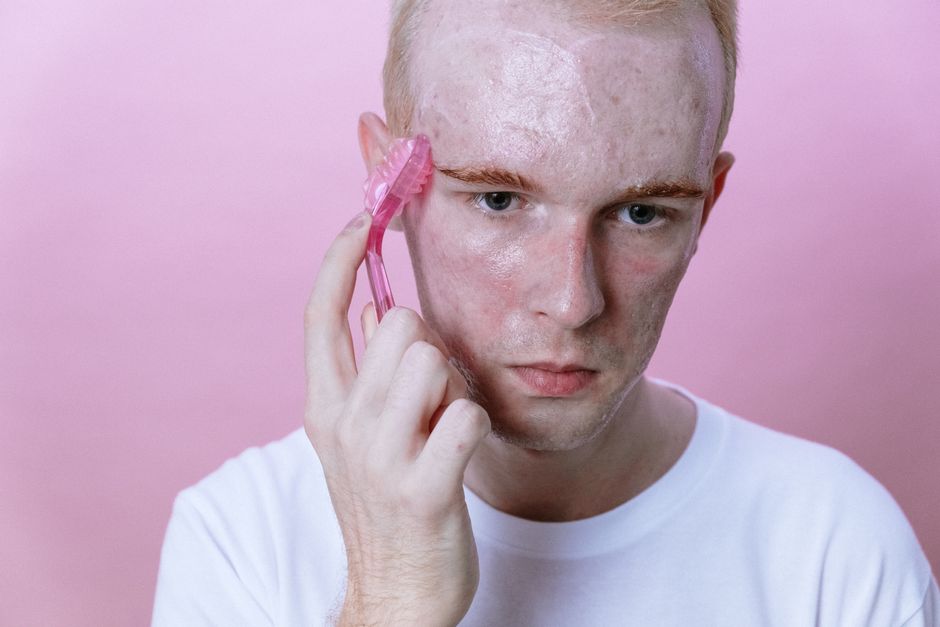
Bacterial acne is a common form of acne caused by the overgrowth of Cutibacterium acnes bacteria within clogged pores. Treatment typically involves reducing bacteria with topical or oral medications, along with consistent skincare to prevent new breakouts. The goal is to control inflammation, clear existing pimples, and stop the bacteria from thriving.
What Causes Bacterial Acne?
Acne forms when pores become clogged with oil and dead skin cells. This creates a low-oxygen environment where Cutibacterium acnes, a bacteria that normally lives on skin, can multiply rapidly. The immune system responds to this overgrowth with inflammation — redness, swelling, and pus.
Not everyone with acne has a bacterial problem. For some, clogged pores are the main issue. But when bacteria play a major role, the pimples tend to be inflamed, tender, and filled with pus. This distinguishes bacterial acne from non-inflammatory blackheads and whiteheads.
Several factors can trigger bacterial acne: hormonal changes, excess oil production, heavy sweating, or using pore-clogging products. Stress and diet may also contribute, but the evidence on diet is mixed.
How Is Bacterial Acne Different From Other Acne Types?
Acne is typically divided into two broad categories: non-inflammatory and inflammatory. Non-inflammatory acne includes blackheads (open comedones) and whiteheads (closed comedones). These are caused by clogged pores, not bacteria. Inflammatory acne includes papules (red bumps), pustules (pus-filled bumps), nodules (deep, hard lumps), and cysts (deep, soft, pus-filled lumps). Bacterial acne usually refers to the pustules and deeper inflamed lesions where C. acnes is actively driving inflammation.
Some people have mostly blackheads and whiteheads — their acne is primarily comedonal, not bacterial. Others get angry red pustules that quickly fill with pus — that pattern strongly suggests bacterial involvement. The treatment approach differs: non-inflammatory acne responds well to retinoids and exfoliants, while bacterial acne often needs antimicrobial treatments.
What Role Does Cutibacterium Acnes Play?
Cutibacterium acnes (formerly called Propionibacterium acnes) is a normal part of your skin microbiome. In healthy skin, it does not cause problems. When a pore gets blocked, the bacteria multiply in the trapped oil. They break down sebum into fatty acids, which irritate the pore lining and trigger an immune response. The result is inflammation, pus, and pain.
Different strains of C. acnes exist. Some strains are more likely to cause inflammation than others. Researchers have found that people with acne tend to have a different balance of these strains compared to people without acne. However, routine testing of bacterial strains is not done in clinical practice — treatment is based on the visible pattern of breakouts.



What Are the Most Effective Treatments for Bacterial Acne?
Treatment depends on severity. For mild to moderate bacterial acne, a combination of topical therapies is usually effective. For moderate or severe cases, oral medications may be needed.
Topical treatments include benzoyl peroxide, which kills bacteria and helps clear pores. It is available over the counter in strengths from 2.5% to 10%. Higher strengths are not always more effective — they often cause more irritation. Topical antibiotics, such as clindamycin or erythromycin, can also reduce bacterial overgrowth. However, topical antibiotics are often combined with benzoyl peroxide to reduce the risk of antibiotic resistance.
Retinoids like adapalene (available over the counter) and tretinoin (prescription) help prevent clogged pores. They are not directly antibacterial, but they reduce the environment where bacteria thrive. Using a retinoid alongside an antimicrobial can be very effective.
Oral antibiotics are reserved for moderate to severe bacterial acne that does not respond to topicals. Commonly prescribed options include doxycycline, minocycline, and sarecycline. These antibiotics reduce inflammation and kill bacteria. They are typically used for 3–6 months, not longer, because of resistance concerns.
Isotretinoin is a powerful oral retinoid for severe, treatment-resistant acne. It works by shrinking oil glands, reducing bacteria, and calming inflammation. It is highly effective, but it has significant side effects and requires close medical supervision. Women must not become pregnant while taking it due to severe birth defect risks.
For women with hormonal patterns of bacterial acne (breakouts along the jawline and chin), oral contraceptives or spironolactone can help by reducing the oil production that feeds bacteria.
Do Antibiotics Work for Bacterial Acne?
Yes, antibiotics are effective at killing C. acnes and reducing inflammation. Both topical and oral antibiotics are used. However, antibiotic resistance is a growing problem. Some strains of C. acnes no longer respond to commonly used antibiotics like erythromycin. For this reason, dermatologists usually prescribe antibiotics for short courses and avoid using them alone as long-term treatment.
Benzoyl peroxide helps overcome resistance — it kills bacteria without creating resistance. Many dermatologists recommend using a benzoyl peroxide wash or product alongside an antibiotic to preserve its effectiveness.
Oral antibiotics are more powerful than topical ones, but they come with more side effects: stomach upset, sun sensitivity, yeast infections, and potential disruption of gut bacteria. They should not be used indefinitely. The goal is to bring the acne under control, then transition to a maintenance regimen with non-antibiotic topicals.
How Can You Prevent Bacterial Acne From Returning?
Prevention focuses on keeping pores clear and limiting bacterial overgrowth. Consistent daily skincare helps: gentle cleansing, use of a non-comedogenic moisturizer, and a topical retinoid or benzoyl peroxide product as maintenance.
Avoid over-washing or using harsh scrubs — this irritates skin and can worsen inflammation. Products labeled “oil-free” or “non-comedogenic” are less likely to clog pores. For those who sweat heavily, showering promptly after exercise can reduce bacterial growth on the skin.
Dietary changes are often suggested, but evidence is limited. Some studies link high-glycemic foods (sugary, refined carbs) and dairy to more acne, but reducing these foods does not reliably clear bacterial acne for everyone. If you notice a clear pattern with certain foods, it may help to avoid them, but diet is rarely a substitute for medical treatment.
When Should You See a Dermatologist?
You should consider seeing a dermatologist if over-the-counter treatments do not improve your acne after 6–8 weeks. Also seek help if acne is painful, deep (nodules or cysts), or leaving dark marks or scars. A dermatologist can prescribe stronger medications and rule out other conditions that mimic acne, such as rosacea or folliculitis.
If you have already tried a combination of benzoyl peroxide, an over-the-counter retinoid (like adapalene), and a gentle skincare routine without improvement, professional guidance is reasonable. Severe bacterial acne can cause permanent scarring, so early treatment matters.
What About Natural or Alternative Treatments?
Some people try tea tree oil, green tea extract, or zinc. Some small studies suggest tea tree oil has modest antibacterial effects, but it is less powerful than benzoyl peroxide and can irritate the skin if used undiluted. No large, high-quality trials confirm that natural treatments match the effectiveness of standard medical therapies for bacterial acne.
The evidence for probiotics (oral or topical) for acne is still emerging. Probiotics may support a balanced skin microbiome, but no consensus guidelines currently recommend them as primary treatment. Be cautious with any alternative product that claims to “cure” acne — if it sounds too good to be true, it likely is.
Frequently Asked Questions
Can bacterial acne be cured?
Bacterial acne can be effectively controlled with treatment, but it may not be permanently “cured.” Many people need ongoing maintenance therapy to prevent flare-ups.
Is bacterial acne contagious?
No, bacterial acne is not contagious. The bacteria involved live on almost everyone’s skin; the problem is overgrowth in clogged pores, not catching it from another person.
What is the fastest way to get rid of bacterial acne?
Combining benzoyl peroxide with a topical retinoid like adapalene is a fast, effective over-the-counter approach. For severe cases, a dermatologist can prescribe oral antibiotics or isotretinoin for quicker results.
Can diet cause bacterial acne?
Some research suggests high-glycemic foods and dairy may worsen acne, but the evidence is not strong enough to recommend universal dietary restrictions. Diet alone rarely causes or cures bacterial acne.
