
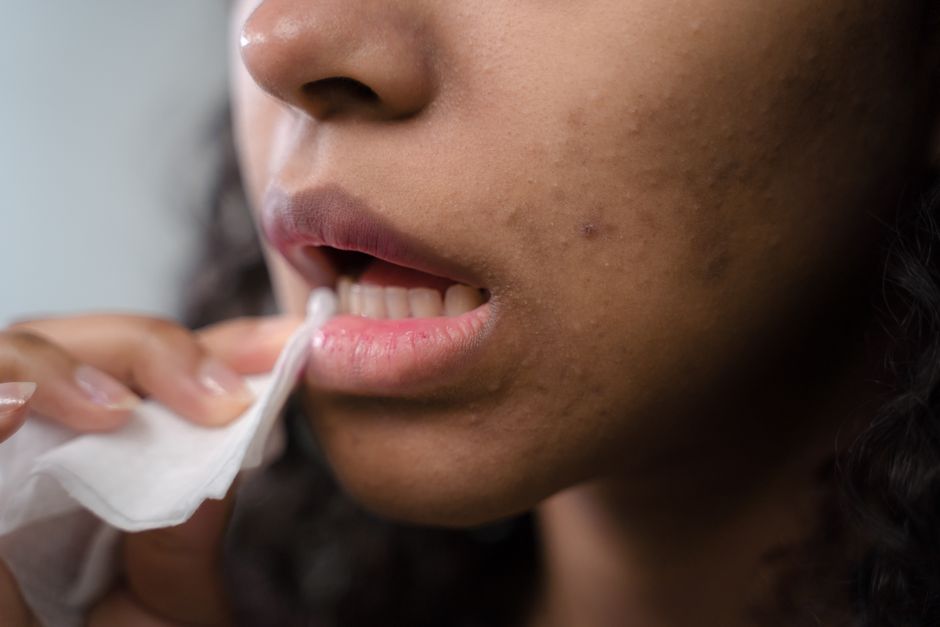
Baby acne is caused by exposure to the mother’s hormones before birth. These hormones cross the placenta in late pregnancy and stay in the baby’s bloodstream for a while after delivery. They trigger the small oil glands in the baby’s skin to become active, which leads to tiny red bumps on the face. No outside product, food, or parenting choice causes it.
The bumps usually show up in the first few weeks of life and fade on their own. Understanding what is actually happening in the skin helps separate normal newborn rashes from things that need a doctor’s attention.
What Is Baby Acne Caused By?
The direct cause is maternal hormone transfer. In the last part of pregnancy, hormones pass from mother to baby through the placenta. After birth, the baby’s body clears these hormones slowly.
During that window, the hormones act on the sebaceous glands — the small oil-producing glands in the skin. These glands respond by producing more oil. In some babies, that extra oil plugs the tiny pores on the face and creates the small bumps doctors call neonatal acne.
A few points about this process are worth knowing:
- The hormone transfer is a normal part of pregnancy, not a sign that anything went wrong.
- Both breastfed and formula-fed babies get baby acne. Feeding method is not the cause.
- Boys and girls are affected at similar rates.
- The bumps are not an infection and are not contagious.
One detail that surprises many parents: baby acne is not the same as the acne that shows up in the teen years. Teenage acne involves different hormone changes, different skin activity, and often different treatment. The name is similar, but the biology is not.
When Does Baby Acne Usually Appear and Go Away?
Most cases appear between two and four weeks after birth. Some babies show bumps a little earlier, and a few show them a bit later.
The timing lines up with the hormone-clearing process. As the mother’s hormones leave the baby’s system, the oil glands settle down and the bumps fade. Most cases clear within a few weeks to a few months without any treatment.
It is normal for the rash to look worse on some days and better on others. Heat, crying, and rubbing the face can make the bumps look redder for a short time. That does not mean the condition is getting worse.
If bumps are still present and spreading well past the first few months, that is worth mentioning to a pediatrician. It may still be harmless, but a longer course is one reason to check that something else is not going on.
What Does Baby Acne Look Like?
Baby acne shows up as small red or skin-colored bumps, mainly on the cheeks, nose, and forehead. Some babies also get them on the chin, scalp, or upper back.
The bumps are usually tiny and scattered. They may have a small white or yellowish center. The surrounding skin can look mildly pink, but true baby acne does not usually form large cysts or deep nodules.
It is easy to confuse baby acne with other newborn rashes. Here is how the common ones differ:
| Condition | Typical look | Where it appears | When it shows up |
|---|---|---|---|
| Baby acne (neonatal acne) | Small red bumps, sometimes with tiny white centers | Cheeks, nose, forehead | 2 to 4 weeks after birth |
| Erythema toxicum | Red blotches with small yellow-white bumps | Anywhere, often trunk and limbs | First few days |
| Milia | Tiny firm white dots, no redness | Nose, cheeks, chin | At birth or soon after |
| Infantile acne | Larger inflamed bumps, sometimes cysts | Cheeks, chin | Several weeks to months after birth |
These rashes can look similar, and telling them apart is not always possible from a photo or a quick look. If you are unsure what your baby has, a pediatric visit is the reliable way to find out.
Is Baby Acne a Sign of an Allergy or Something Else?
Baby acne is not an allergy. It is a normal response of the skin to hormones, not an immune reaction to food, soap, or laundry detergent.
That said, allergies and other conditions can cause rashes on a baby’s face. The features below are reasons to have a doctor look rather than assume it is baby acne:
- The rash appears suddenly and spreads quickly.
- Your baby has a fever, is feeding poorly, or seems unwell.
- The skin is crusted, weeping, or looks infected.
- The bumps are large, deep, or leave scars.
- The rash is very itchy and your baby is distressed.
- It starts in the first day or two of life and looks like red blotches with yellow centers — this is more typical of erythema toxicum, which is also harmless but different.
None of these automatically means something serious. They simply mean the picture is not a clear case of baby acne, and a clinician should take a look.
Should You Treat Baby Acne?
In most cases, no treatment is needed. Baby acne clears on its own as the hormones leave the baby’s system. The main job is gentle skin care while it fades.
General guidance from pediatric care sources is consistent on a few points:
- Wash the face gently with plain water or a mild baby cleanser, once a day or so.
- Pat dry — do not rub.
- Avoid scrubbing, picking, or squeezing the bumps.
- Skip lotions, oils, and creams on the affected area unless a doctor advises one.
- Do not use adult acne products. These are not tested or approved for newborns and can irritate or harm a baby’s skin.
Some clinicians recommend keeping the skin clean and dry and avoiding heavy ointments that can clog pores. That is common practice rather than a strongly proven treatment, because baby acne resolves without treatment anyway.
No clinical guidelines recommend specific acne medications for typical baby acne. If a doctor does prescribe something for a more persistent case, follow their instructions exactly rather than borrowing advice from adult acne care.
What Does Not Cause Baby Acne
Several claims about baby acne causes circulate widely and are not supported. It helps to know which ones to set aside.
Diet during pregnancy. No evidence shows that what a mother ate while pregnant causes baby acne. The mechanism is hormone transfer, not diet.
Breastfeeding. Breast milk does not cause baby acne. Formula feeding does not prevent it. Feeding choice is not a cause.
Hygiene. Baby acne is not a sign of poor cleaning. Over-washing can actually irritate a baby’s skin more.
Laundry detergent or baby products. These can cause irritation or contact reactions, but they are not the cause of true baby acne.
Something the mother did or did not do in pregnancy. The hormone transfer is a normal part of pregnancy. It is not a mistake or a sign of anything the mother got wrong.
Parents often carry guilt about newborn skin issues. In this case, there is nothing to feel responsible for — the process is built into normal pregnancy.
When to See a Doctor
Most baby acne needs no medical visit. A pediatrician should see your baby if the rash looks different from typical baby acne, if it is getting worse rather than fading, or if your baby has other symptoms.
Specifically, contact a doctor if:
- Your baby has a fever, is feeding poorly, or seems unwell.
- The bumps are large, deep, or leaving marks.
- The skin looks infected — spreading redness, warmth, pus, or crusting.
- The rash is very itchy or your baby is clearly uncomfortable.
- The rash appears in the first day or two of life and you are unsure what it is.
- Bumps persist well past the first few months.
These are general signs to check in, not a diagnosis. A pediatrician can tell the difference between baby acne and other newborn rashes that need different care.
Frequently Asked Questions
What is baby acne caused by?
Baby acne is caused by hormones passed from mother to baby before birth, which briefly make the baby’s oil glands more active. It is not caused by diet, hygiene, or feeding method.
How long does baby acne last?
Most cases fade within a few weeks to a few months without treatment. If bumps are still spreading well past the first few months, have a doctor take a look.
Should I put anything on baby acne?
No. Most cases need only gentle washing with water or a mild baby cleanser and patting dry. Adult acne products should never be used on a newborn unless a doctor specifically prescribes them.
Does breast milk or formula cause baby acne?
Neither causes it. Baby acne happens in both breastfed and formula-fed babies because the cause is hormone transfer before birth, not feeding.
