
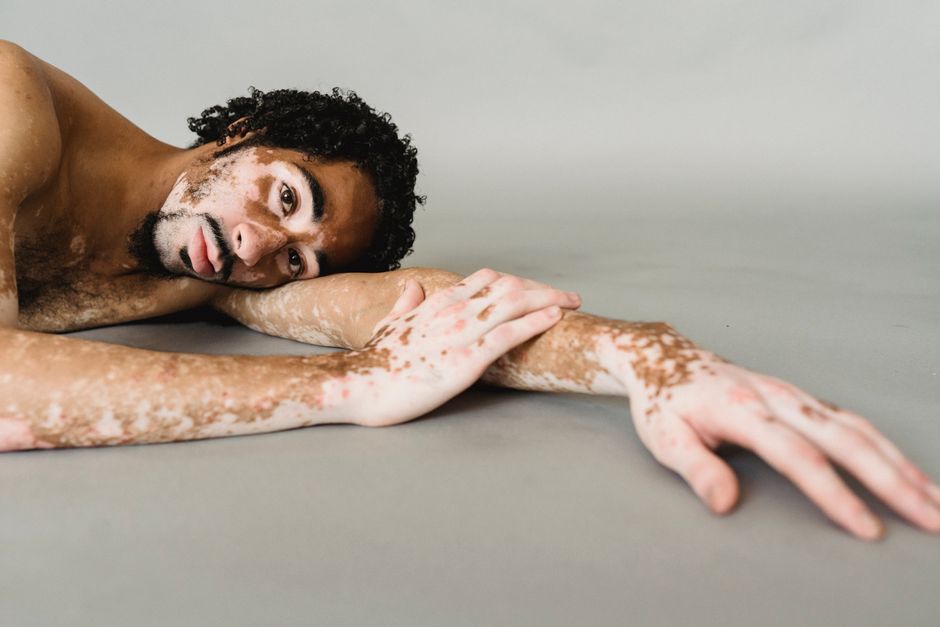
Vitiligo is a condition in which the immune system attacks melanocytes — the cells that make skin pigment — causing patches of skin to lose color. It is not contagious and not dangerous, but it can change how a person looks and how they feel about it. Symptoms are usually white patches on the skin, and sometimes in the hair. Treatment cannot guarantee a cure, but several options can help slow the spread and restore some color in some people.
What Is Autoimmune Vitiligo?
Vitiligo is widely classified as an autoimmune disease. The body’s immune system, which normally defends against infection, mistakenly targets its own melanocytes. When those cells are damaged or destroyed, the skin stops producing melanin in that area. Melanin is the pigment that gives skin, hair, and eyes their color. Without it, the affected skin appears white or much lighter than the surrounding skin.
Vitiligo is not rare. It affects people of all skin tones, though it is often more noticeable on darker skin. It can begin at any age, but it frequently starts before age 30. The condition itself does not cause pain, itching, or other physical symptoms in most cases. Some people report mild itching when new patches appear, but this is not universal.
One point that is often misunderstood: vitiligo is not the same as albinism. Albinism is a genetic condition present from birth that affects melanin production across the entire body. Vitiligo is an acquired condition that develops over time and usually affects specific areas.
What Are the Symptoms of Vitiligo?
The main symptom is loss of skin color in patches. These patches can appear anywhere on the body, but they most often show up on areas exposed to sun, such as the hands, feet, arms, face, and lips. They also commonly appear in skin folds, like the armpits and groin, and around body openings such as the eyes, mouth, and genitals.
Other signs can include:
- White or lighter patches of skin that may spread over time
- Premature whitening or graying of hair on the scalp, eyebrows, eyelashes, or beard
- Loss of color inside the mouth or nose
- Changes in the color of the retina, the light-sensitive layer at the back of the eye
The pattern of vitiligo varies. Some people have a few small patches that stay the same for years. Others have patches that spread quickly. In some cases, the patches stop spreading on their own. Doctors describe different patterns, including generalized vitiligo, which affects both sides of the body, and segmental vitiligo, which affects only one side or one part of the body.
It is important to note that the appearance of white patches does not always mean vitiligo. Other conditions can cause similar skin changes, including certain fungal infections, eczema, and a condition called pityriasis alba. A doctor or dermatologist can tell the difference using a skin exam and, sometimes, a special lamp called a Wood’s lamp.
What Causes Vitiligo and Who Is at Risk?
The exact cause is not fully understood, but research points to a combination of factors. The immune system’s attack on melanocytes is the central mechanism. Genetics also play a role. People with a family history of vitiligo are more likely to develop it, though most people with vitiligo do not have a relative with the condition.
Vitiligo is often linked with other autoimmune conditions. These include thyroid disease, type 1 diabetes, and rheumatoid arthritis. Having one autoimmune condition raises the chance of having another, but it does not mean you will develop a second one. Some research suggests that emotional stress or physical injury to the skin, such as a sunburn or cut, may trigger new patches in people who are already prone to the condition. This is called the Koebner phenomenon, and it is well documented in dermatology.
Vitiligo is not caused by poor hygiene, diet, or anything a person did. It is not contagious. You cannot catch it from someone, and you cannot spread it to others.
How Is Vitiligo Diagnosed?
A doctor usually diagnoses vitiligo by examining the skin. There is no single blood test that confirms it. In many cases, the diagnosis is based on the appearance and pattern of the patches alone.
Doctors may use a Wood’s lamp, which is a handheld device that shines ultraviolet light on the skin. Under this light, areas affected by vitiligo appear differently than surrounding skin, which can help confirm the diagnosis and reveal patches that are hard to see. A skin biopsy, where a small sample of skin is removed and examined under a microscope, is sometimes used if the diagnosis is unclear.
Because vitiligo is linked with other autoimmune conditions, a doctor may also order blood tests to check for thyroid problems or other related conditions. This is not done to diagnose vitiligo itself, but to look for conditions that often occur alongside it.
What Treatment Options Exist for Vitiligo?
There is no cure for vitiligo, and no treatment works for everyone. The goal of treatment is usually to slow the spread of the condition, restore some skin color, and improve how the skin looks. Results vary widely. Some people respond well to treatment, while others see little change. This is an important point that is often downplayed: treatment outcomes are unpredictable, and what works for one person may not work for another.
Common treatment approaches include:
- Topical corticosteroids: These are creams or ointments applied to the skin. They can help restore color in some people, especially when used on the face. They are usually used for a limited time because long-term use can thin the skin.
- Topical calcineurin inhibitors: These are non-steroid creams that may help restore color, particularly on the face and neck. They are sometimes used when steroids are not suitable.
- Phototherapy: This involves exposing the skin to controlled ultraviolet light, often narrowband UVB. It is usually done in a doctor’s office or at home with a prescribed device. It can help restore color, but it often requires many sessions over months.
- Excimer laser: This is a focused type of UVB light used on specific patches. It may be used when vitiligo affects small areas.
- Surgical options: In some cases, doctors may recommend procedures such as skin grafting or blister grafting, where healthy pigment cells are moved to affected areas. These are usually considered when other treatments have not worked and the vitiligo is stable.
- Depigmentation: For people with widespread vitiligo, a doctor may recommend removing the remaining color from unaffected skin to make the skin tone more even. This is a permanent step and is only done after careful discussion.
Newer treatments are being studied. Some research has focused on medications that affect the immune system, including a class of drugs called JAK inhibitors. Some of these are being used in clinical practice for vitiligo, but their long-term effectiveness and safety are still being evaluated. If you are considering any treatment, it is important to talk with a dermatologist about the potential benefits and risks.
Can Vitiligo Be Prevented or Slowed?
There is no proven way to prevent vitiligo. Because the exact cause is not fully understood, there is no known method to stop it from starting. However, some steps may help reduce the chance of new patches appearing or existing patches getting worse.
Protecting your skin from sunburn is one step. Sunburn can damage the skin and may trigger new patches in people who are prone to vitiligo. Using sunscreen with a high sun protection factor and wearing protective clothing can help. This is especially important for areas that have already lost color, because those areas have less melanin and are more vulnerable to sun damage.
Avoiding skin injuries, such as cuts, scrapes, and friction, may also help, based on the Koebner phenomenon. This does not mean you should avoid all activity, but being mindful of skin trauma may be useful for some people.
Managing stress is often mentioned, but the evidence linking stress to vitiligo flare-ups is not strong. Some people report that emotional stress precedes new patches, but this is based on personal reports rather than large studies. It is reasonable to manage stress for overall health, but it should not be presented as a proven way to control vitiligo.
What Is the Long-Term Outlook for Vitiligo?
Vitiligo is a chronic condition. For most people, it is a lifelong condition that can come and go. Some people have periods where the condition is stable, and other periods where it spreads. The course of vitiligo is unpredictable. Some people have only a few patches that never change much. Others have widespread loss of color over time.
Vitiligo does not affect life expectancy, and it does not cause physical disability. The main impact is often emotional and social. Many people with vitiligo report feeling self-conscious, anxious, or depressed. These feelings are real and worth addressing. Support groups, counseling, and talking with a doctor who understands the condition can help.
Research into vitiligo is ongoing. Scientists are learning more about the immune system’s role and are testing new treatments. While there is no cure today, the options for managing vitiligo are better than they were in the past, and more are being studied.
Frequently Asked Questions
Is vitiligo contagious?
No, vitiligo is not contagious. You cannot catch it from someone or spread it to others through contact.
Can vitiligo be cured?
There is currently no cure for vitiligo. Treatment can help slow the spread and restore some color in some people, but results vary and are not guaranteed.
What is the main cause of vitiligo?
Vitiligo is considered an autoimmune condition in which the immune system attacks melanocytes, the cells that produce skin pigment. Genetics and other factors also play a role.
Does vitiligo affect only dark-skinned people?
No, vitiligo affects people of all skin tones. It is often more noticeable on darker skin because of the contrast between affected and unaffected areas.
