
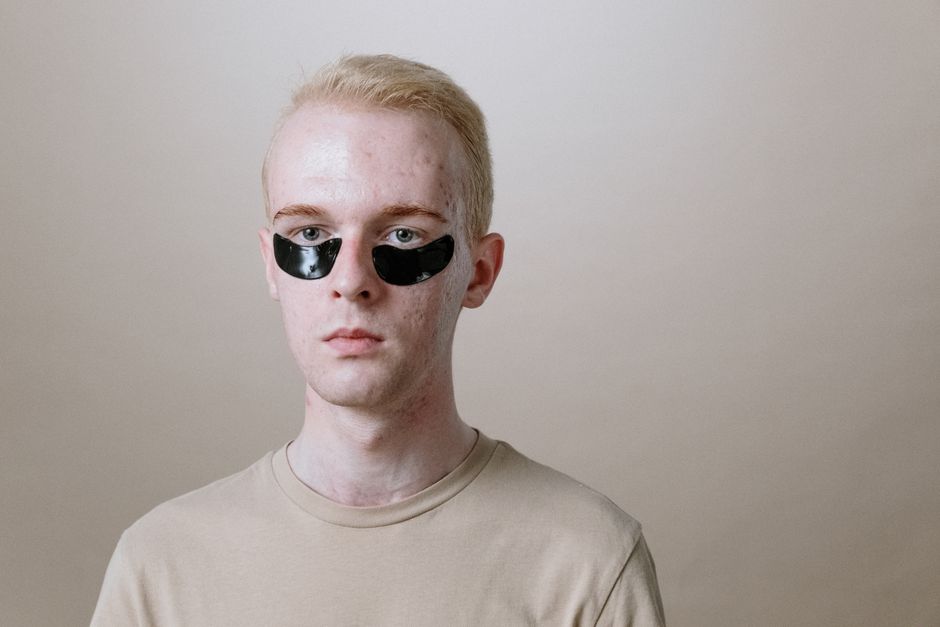
An underground pimple is a blind, deep, often painful bump that forms below the skin’s surface without a visible head. Unlike a typical whitehead or blackhead, it develops deep within the dermis and feels like a firm, tender nodule. Getting rid of one requires reducing inflammation, encouraging it to surface naturally, and resisting the urge to squeeze it.
What Exactly Causes An Underground Pimple?
These deep bumps start the same way all pimples do. A hair follicle becomes blocked with oil and dead skin cells. Bacteria that normally live on your skin, particularly Cutibacterium acnes, multiply inside that blocked pore. The body’s immune system responds with inflammation.
In a regular pimple, that inflammation stays close to the surface and forms a visible head. In an underground pimple, the blockage and inflammation happen deeper in the skin. The pore opening may not be completely sealed, but the material is trapped too far down to push out easily. The result is a tender, swollen lump that can take days or weeks to resolve.
Hormones play a major role. Androgens stimulate oil production, which increases the chance of blockages. Stress can also worsen inflammation. Certain products, like heavy moisturizers or oily makeup, can contribute to the problem by adding more oil to the skin’s surface.
Why You Should Never Pop Or Squeeze It
Squeezing an underground pimple is the worst thing you can do. The infection is deep, and pressing on it from the outside pushes the contents sideways and deeper into the skin. This spreads bacteria and inflammation to surrounding tissue.
The result is often a larger, angrier bump that takes much longer to heal. It also significantly raises the risk of scarring. The skin over a deep nodule is fragile, and aggressive squeezing can damage collagen. A dark spot or permanent indent can remain for months or even years after the original pimple is gone.
There is no way to safely pop a pimple that has no head. Dermatologists have specialized tools and techniques to drain deep lesions, but attempting this at home is risky and rarely effective.
How To Reduce Swelling And Pain Quickly
Ice is your first line of defense. Applying a cold compress for 10 to 15 minutes at a time can reduce blood flow to the area, which lowers swelling and numbs the pain. Wrap the ice in a clean cloth — never apply it directly to the skin, as that can cause frostbite.
Benzoyl peroxide is one of the most effective over-the-counter treatments for deep pimples. It kills the bacteria inside the follicle and helps clear the blockage. A 2.5% or 5% gel applied directly to the bump once daily is usually sufficient. Higher concentrations work faster but cause more irritation.
Warm compresses can help after the first day or two. Once the initial swelling has calmed, applying a warm, damp cloth for 10 minutes a few times a day can help draw the contents closer to the surface. This encourages the pimple to form a head on its own, which is the natural resolution process.




What Is An Underground Pimple And How To Get Rid Of It With Topical Treatments
Salicylic acid is another useful option. It works by dissolving the dead skin cells and oil that clog the pore. It is less effective on deep inflammation than benzoyl peroxide, but it can help prevent the pore from closing over completely.
Sulfur is a gentler alternative. It has mild antibacterial properties and helps break down oil. It is a good option for sensitive skin that cannot tolerate benzoyl peroxide.
Adapalene gel, previously available only by prescription, is now sold over the counter. It is a retinoid that normalizes skin cell turnover, which helps keep pores clear. It works slowly — it takes at least 8 to 12 weeks for full results — and it is not a spot treatment. It is best used consistently over the entire face to prevent future breakouts, not just on the current bump.
Hydrocolloid patches are popular, but they work best on pimples that have already come to a head. On a deep, underground pimple, they do little to reduce inflammation. They can, however, act as a physical barrier that keeps you from touching or picking at the area.
When To See A Dermatologist
Most underground pimples resolve on their own within one to two weeks. If a single pimple lasts longer than that, or if it is extremely painful, it may need professional treatment.
A dermatologist can inject a corticosteroid directly into the bump. This dramatically reduces inflammation within 24 to 48 hours. This is the fastest and most effective way to shrink a deep, painful pimple, especially before a big event.
You should also see a doctor if you get these deep bumps frequently or in clusters. Recurrent nodules can be a sign of a more serious form of acne called nodular or cystic acne. These conditions often do not respond to over-the-counter products and may require prescription medications like oral antibiotics, spironolactone, or isotretinoin.
Any pimple that is warm to the touch, rapidly growing, or accompanied by fever or spreading redness may be infected and requires medical evaluation.
How To Prevent Underground Pimples From Forming
Consistency matters more than intensity. Washing your face twice daily with a gentle cleanser removes excess oil without stripping the skin. Over-washing or using harsh scrubs irritates the skin and can actually worsen acne.
Choose non-comedogenic products. This label means the product is formulated to not block pores. It applies to moisturizers, sunscreens, and makeup. Even if a product is labeled non-comedogenic, it may still break you out — everyone’s skin responds differently.
Do not pick at your skin. Touching your face transfers bacteria and oils from your hands. Picking at minor blemishes can turn a small spot into a deep, inflamed nodule.
Change your pillowcase regularly. It collects oil, dead skin, and bacteria over time. Washing it weekly is a simple step that reduces the chance of transferring those materials back onto your skin.
Diet plays a smaller role than many people think. Some research suggests that high-glycemic foods and dairy may worsen acne in some people, but the evidence is not strong enough to recommend eliminating these foods for everyone. If you notice a pattern between what you eat and your breakouts, it may be worth adjusting your diet. If not, do not stress about it.
How Long Does It Take To Heal?
A typical underground pimple lasts 7 to 14 days. With early treatment using ice and benzoyl peroxide, it may resolve faster. Without treatment, the bump may take up to three weeks to fully flatten.
The visible redness and swelling can fade within a week. The underlying firmness may linger longer. Even after the pimple is gone, a dark spot called post-inflammatory hyperpigmentation can remain for several weeks to months. This is not a scar, and it will fade on its own with time and sun protection.
True scarring is more likely if you squeeze or pick at the pimple. Deep nodules that are left alone generally heal without permanent marks.
Frequently Asked Questions
Can toothpaste get rid of an underground pimple?
No. Toothpaste can irritate the skin and cause more inflammation, making the pimple worse. Stick to proven treatments like benzoyl peroxide or ice.
Will a warm compress bring an underground pimple to a head?
Sometimes. Applying a warm compress for 10 minutes a few times a day can help draw the contents closer to the surface. It may help the pimple form a head naturally, but it does not work for every deep pimple.
Is it a pimple or a boil?
Boils are deeper infections that usually form around a hair follicle and are caused by staph bacteria. They are often larger, more painful, and may cause fever. If you are unsure, see a doctor for an accurate diagnosis.
How long does a blind pimple last without treatment?
Most last 7 to 14 days. Some can take up to three weeks to fully resolve. Early treatment with ice and benzoyl peroxide can shorten the duration.
