
An oral hygiene routine is the set of daily habits you use to keep your mouth clean and limit the buildup of bacteria on your teeth and gums. It usually centers on brushing twice a day with fluoride toothpaste, cleaning between your teeth once a day, and seeing a dentist for regular checkups. Everything else — mouthwash, tongue scraping, whitening products — is optional and supports those core habits rather than replacing them.
The daily habits matter because the two most common dental diseases, cavities and gum disease, are largely preventable. They develop slowly, often without pain, and by the time you feel something wrong, the damage is usually well established. A routine works best when it is simple enough to repeat every day.
What Is An Oral Hygiene Routine?
It is a repeatable daily practice aimed at removing dental plaque before it causes harm. Plaque is a sticky film of bacteria that forms on teeth within hours of brushing. If it sits long enough, it hardens into tartar, which you cannot remove with a toothbrush. Tartar above the gumline gives plaque more surface to cling to, and that drives both decay and gum inflammation.
The routine has two parts. The first is what you do at home, every day. The second is what a dental professional does, on a schedule your dentist sets based on your risk. Home care handles the plaque you can reach. Professional care handles what you cannot — the tartar, the deep pockets around gums, and early problems you may not notice.
What separates a real routine from occasional effort is consistency. Brushing thoroughly once is far less useful than brushing adequately twice a day, every day. Dental disease is a cumulative process, not a single event.
What Should a Daily Oral Hygiene Routine Include?
The evidence-based core is short: fluoride toothpaste, a soft-bristled brush, cleaning between the teeth, and spit-don’t-rinse after brushing. The American Dental Association recommends brushing twice a day for two minutes with a fluoride toothpaste and cleaning between the teeth once a day.
Fluoride is the one ingredient with the strongest evidence behind it. It reduces decay by helping enamel resist acid and by supporting remineralization — the repair of early, minor mineral loss. This is why fluoride toothpaste is the default recommendation from major dental and health organizations, not a marketing preference.
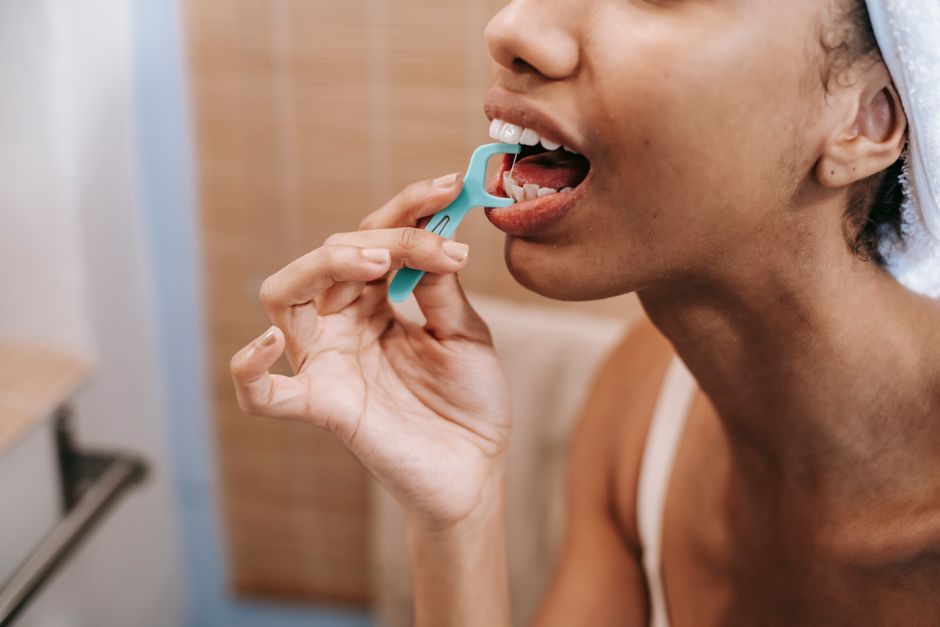
Cleaning between teeth matters because a toothbrush cannot reach the tight spaces where teeth touch. Food and plaque collect there, and that is where a large share of cavities start. Options include floss, interdental brushes, and water flossers. Floss and interdental brushes physically scrub the sides of teeth. Water flossers use a stream of water and can help people who struggle with floss, though the evidence for them is generally weaker than for floss or interdental brushes.
A workable routine looks like this:
- Brush twice a day for two minutes with a fluoride toothpaste and a soft brush.
- Clean between your teeth once a day, ideally before brushing so the fluoride can reach those spaces.
- Spit out the toothpaste after brushing. Do not rinse with water — rinsing washes away the fluoride.
- Limit sugary drinks and snacks, especially between meals.
- See a dentist on the schedule they recommend for your risk level.
Does Brushing Technique Really Matter?
Yes, and it matters more than most people expect. Brushing hard with a stiff brush does not clean better — it damages enamel and irritates gums. Over time, aggressive brushing can wear down tooth structure and cause gums to recede, exposing the softer root surface underneath.
The better approach is gentle and thorough. Hold the brush at about a 45-degree angle toward the gumline and use short, soft strokes. Cover every surface: the outside, the inside, and the chewing tops of your teeth. Do not forget the back molars, which are easy to miss and prone to decay.
An electric toothbrush can help people who brush too hard or who have trouble reaching certain areas. Some evidence suggests oscillating-rotating electric brushes remove more plaque than manual brushing. That said, a manual brush used well is still effective. The technique matters more than the tool.
Replace your brush or brush head every three to four months, or sooner if the bristles look frayed. Worn bristles clean less effectively.





How Does Diet Affect Oral Hygiene?
What you eat and drink shapes your risk as much as how you brush. The bacteria in plaque feed on sugar and refined carbohydrates and produce acid as a byproduct. That acid attacks enamel for a period after you eat or drink. Repeated acid attacks throughout the day wear enamel down faster than the total amount of sugar alone would suggest.
This is why frequency matters. Sipping a sugary drink slowly over an hour is harder on teeth than drinking it quickly with a meal. Constant snacking keeps your mouth in a near-constant acid state, giving saliva less time to neutralize the acid and repair early damage.
Saliva is your mouth’s natural defense. It washes away food, neutralizes acid, and carries minerals that help repair enamel. Anything that reduces saliva flow — some medications, certain medical conditions, mouth breathing — raises cavity risk. If your mouth feels persistently dry, that is worth raising with a dentist or doctor.
Water is the simplest choice for your teeth, especially fluoridated water. In the United States, community water fluoridation is considered one of the main public health measures credited with reducing tooth decay.
Is Mouthwash Necessary?
For most people, no. Mouthwash is an add-on, not a substitute for brushing and flossing. It can reach some areas a brush cannot, and some rinses help with specific problems, but it does not remove plaque the way mechanical cleaning does.
There is a real caveat about timing. If you use a fluoride mouthwash right after brushing and then rinse, you may be washing away the fluoride from your toothpaste. Some dentists suggest using mouthwash at a different time of day, such as after lunch, rather than immediately after brushing.
Not all mouthwashes are equal. Cosmetic rinses mainly freshen breath. Therapeutic rinses contain active ingredients such as fluoride, antiseptics, or antiplaque agents, and some require a prescription. If you have gum disease or a specific condition, a dentist may recommend a particular type. For a healthy mouth, a rinse is optional.
One honest note on marketing: many products claim to whiten, protect, or “deep clean.” Whitening toothpastes can remove surface stains but do not change the underlying color of teeth the way professional bleaching does. Claims about “detoxifying” the mouth have no established clinical basis.
How Often Should You See a Dentist?
There is no single interval that fits everyone. The common advice of a checkup and cleaning every six months is a long-standing convention, but the evidence does not show that a fixed six-month schedule is right for every person. People at higher risk — those with a history of cavities, gum disease, dry mouth, or certain medical conditions — often need more frequent visits. People at low risk may safely go longer.
Professional cleanings remove tartar that home care cannot. A dentist can also catch early decay and gum problems before they cause pain or require major treatment. Early cavities can sometimes be reversed with fluoride and improved hygiene; once a cavity breaks through the enamel, it needs a filling.
The practical answer is to ask your dentist what interval fits your risk, rather than assuming one number applies to you.
What Are the Warning Signs You Should Not Ignore?
Gum disease and cavities can progress quietly. Early gum disease, called gingivitis, often shows up as gums that bleed when you brush or floss, or that look red and puffy. Gingivitis is reversible with good hygiene and professional cleaning. If it advances to periodontitis, it damages the bone and tissue that hold teeth in place, and that damage is not reversible.
Signs worth acting on include:
- Gums that bleed regularly when brushing or flossing.
- Persistent bad breath that does not improve with hygiene.
- Red, swollen, or tender gums.
- Gums pulling away from teeth, or teeth that look longer.
- Loose teeth or a change in how your teeth fit together.
- Pain when chewing or sensitivity to hot and cold that lingers.
Bleeding gums are not normal, even if they are common. Many people assume a little blood is fine. It is usually a sign of inflammation that should be addressed.
There is a connection between oral health and overall health worth understanding, though it is often overstated. Gum disease is associated with conditions such as diabetes and heart disease. Whether gum disease causes those conditions, or simply shares risk factors with them, is not fully settled. What is clear is that diabetes and gum disease worsen each other, and managing one helps the other.
Do Oral Hygiene Habits Change With Age?
They do, mostly because risk changes. Gums tend to recede with age, exposing root surfaces that are softer than enamel and more prone to decay. Many older adults take medications that reduce saliva flow, which raises cavity risk. Fillings, crowns, and bridges create edges where plaque collects, so cleaning around them takes extra care.
Dry mouth from medication is one of the more underrecognized factors in adult tooth decay. If your mouth feels dry much of the time, mention it to a dentist or doctor. There are ways to address it, from adjusting medications to using saliva substitutes.
For children, the routine starts as soon as the first tooth appears, with a small amount of fluoride toothpaste and help from an adult. Because dosing guidance for children differs by age and is set by pediatric and dental organizations, follow your dentist’s or pediatrician’s specific instructions rather than applying adult amounts.
Frequently Asked Questions
How often should you brush your teeth?
Twice a day for two minutes each time with a fluoride toothpaste. Brushing once a day leaves too much time for plaque to build and acid to attack enamel.
Is it better to floss before or after brushing?
Cleaning between your teeth before brushing is generally recommended so fluoride can reach those spaces afterward. The most important thing is doing it once a day, regardless of order.
Can you reverse a cavity with good oral hygiene?
Very early mineral loss in enamel can sometimes be repaired with fluoride and improved hygiene. Once a cavity has broken through the enamel, it cannot be reversed and needs a filling.
Does mouthwash replace flossing?
No. Mouthwash does not remove plaque the way floss or interdental brushes do, so it cannot take the place of cleaning between your teeth.
