
An optical sensor is a device that converts light rays into an electronic signal to measure a physical quantity or gather information about its environment. The basic job is simple: the sensor sends out light or receives incoming light, then measures how that light changes. Those changes are translated into data a machine can read and act on. You interact with optical sensors constantly — when your phone screen auto-brightens, when a garage door reverses, or when a grocery store scans your items at checkout.
What Is An Optical Sensor And How Does It Work?
An optical sensor works by using a light source and a detector. The light source, often an LED or a laser, shines light onto a target area. The detector, typically a photodiode or phototransistor, measures the light that comes back or passes through. The sensor’s electronics then interpret the intensity, angle, or color of that light to make a decision or record a measurement.
The core mechanism depends on the type of sensor. Some sensors measure the amount of light reflected off a surface. Others measure light that is blocked by an object. More advanced sensors measure the time it takes for light to bounce back, which is exactly how laser rangefinders work. In every case, the sensor is translating a physical property of light into an electrical signal that a processor can understand.
What Are The Main Types Of Optical Sensors?
Optical sensors fall into a few broad categories based on what they measure and how they are built. Understanding these types helps clarify why one sensor works for a phone screen while another works for a medical device.
Photoelectric sensors are the most common. They use a light beam and a receiver. When an object breaks the beam, the receiver detects the change and triggers a response. These are everywhere in industrial automation, like on assembly lines where a package needs to stop a conveyor belt.
Ambient light sensors measure the brightness of surrounding light. They are the reason your phone adjusts its screen brightness when you walk from a dark room into sunlight. They also help smart home devices decide when to turn lights on or off.
Proximity sensors detect the presence of an object without touching it. They emit infrared light and measure the reflection. When you hold your phone to your ear during a call, a proximity sensor turns the screen off so your cheek does not accidentally press buttons.
Imaging sensors capture a full picture of light, not just a single reading. These are the sensors inside digital cameras, including the cameras on your phone. They use millions of tiny light-sensitive cells arranged in a grid to form an image.
Fiber optic sensors use thin strands of glass or plastic to transmit light over distance. They are used in medical devices to measure pressure inside the body and in industrial settings to monitor temperature in hazardous areas where electrical sensors would be dangerous.
Where Are Optical Sensors Used In Everyday Life?
Optical sensors are not exotic technology. They are built into the infrastructure of modern daily life. Once you start noticing them, you will see them everywhere.
In consumer electronics, optical sensors control screen brightness, enable facial recognition, and make optical mouse tracking work. The optical mouse on your computer uses a tiny camera to take thousands of pictures per second of the surface beneath it. It compares those images to detect movement and moves your cursor accordingly.
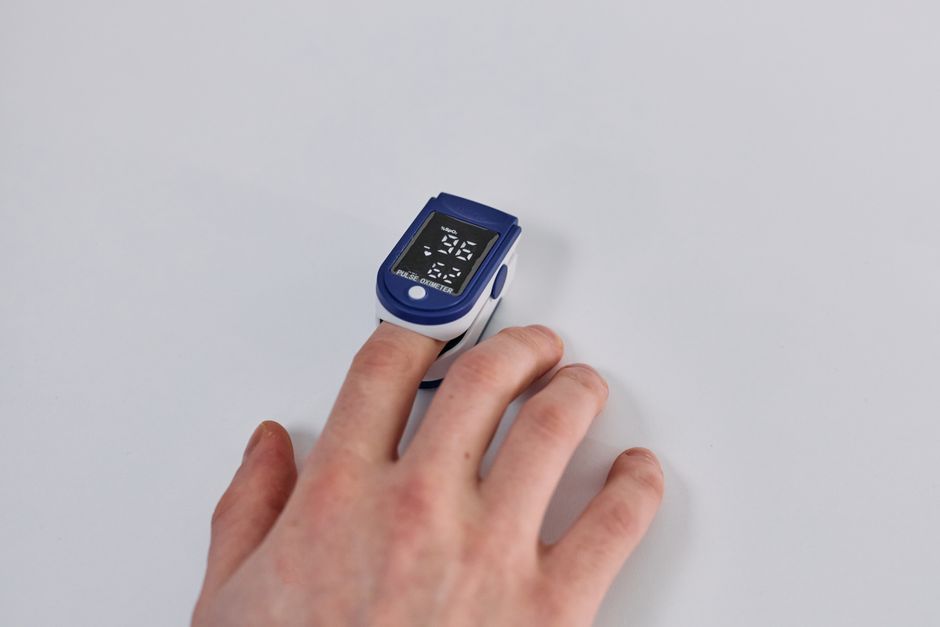
In healthcare, optical sensors measure blood oxygen levels. A pulse oximeter clips onto your finger and shines light through the skin. Oxygenated blood and deoxygenated blood absorb red and infrared light differently, so the sensor can calculate oxygen saturation from the light that passes through. This is a well-established clinical measurement used in hospitals and at home.
In vehicles, optical sensors detect rain on windshields to trigger wipers automatically. They also play a role in backup cameras and lane departure warning systems. Some modern vehicles use LiDAR, which is an optical sensing technology that measures distance with laser light to support driver assistance features.
In security systems, optical sensors detect motion by monitoring changes in infrared light patterns. They also read fingerprints for biometric access. In retail, barcode scanners and QR code readers are optical sensors that decode patterns of reflected light.
What Is The Difference Between Optical Sensors And Photoelectric Sensors?
The terms are often used interchangeably, but there is a technical distinction. A photoelectric sensor is a specific type of optical sensor. All photoelectric sensors are optical sensors, but not all optical sensors are photoelectric sensors.
Photoelectric sensors specifically use a light source and a receiver to detect the presence or absence of an object. The light is typically in the infrared or visible spectrum. They are designed for one main job: detecting whether something is there.
Optical sensors is the broader category. It includes photoelectric sensors, but it also includes imaging sensors that capture pictures, ambient light sensors that measure brightness, and fiber optic sensors that transmit light for various measurements. If a device measures light in any form, it qualifies as an optical sensor.
What Are The Advantages And Limitations Of Optical Sensors?
Optical sensors have distinct strengths that make them the preferred choice in many applications. They are non-contact, meaning they can measure without physically touching the object. This is critical in medical applications where contamination is a concern and in manufacturing where parts may be moving at high speed.
They respond quickly. Light travels fast, and modern detectors can measure changes in microseconds. This makes optical sensors ideal for high-speed automation and safety systems that must react instantly.
They are highly accurate for many measurements. Optical sensors can detect tiny changes in light intensity, which translates to precise measurements of position, distance, or chemical concentration.
But optical sensors have real limitations. They depend on a clear line of sight. Dust, fog, condensation, or dirt on the lens can interfere with readings. Bright sunlight can overwhelm some sensors, causing false readings. Dark or highly reflective surfaces can confuse sensors that rely on reflected light.
They also consume power. The light source must be powered continuously or pulsed frequently, which is a consideration for battery-operated devices. Some optical sensors are also sensitive to temperature changes, which can shift their readings.
For certain applications, other sensing technologies work better. Capacitive sensors detect touch without light. Ultrasonic sensors use sound waves and work in dirty or dusty environments where optical sensors fail. The choice depends on the specific conditions and requirements of the task.
How Do Optical Sensors Compare To Other Sensor Types?
Comparing sensor types helps clarify when optical technology is the right choice. Each sensing method has a physical basis that determines its strengths and weaknesses.
- Optical sensors use light and are fast, accurate, and non-contact, but they need a clean line of sight.
- Ultrasonic sensors use high-frequency sound waves and work well in dusty or smoky conditions, but they are slower and less precise at short ranges.
- Capacitive sensors detect changes in electrical capacitance and can sense through non-metallic materials, but they are affected by humidity and temperature.
- Inductive sensors detect metallic objects using magnetic fields and are extremely durable, but they only work on metal targets.
Each type solves a different problem. An optical sensor is rarely the only option, but it is often the best option when speed, accuracy, and non-contact measurement matter most.
What Does The Future Hold For Optical Sensor Technology?
Optical sensors are getting smaller, cheaper, and more capable. The sensors in modern smartphones are dramatically more advanced than those in early digital cameras, and the trend continues.
LiDAR is expanding beyond vehicles. It is used in robotics, agriculture, and mapping. Drones use optical sensors to avoid obstacles and create detailed terrain maps. Agricultural equipment uses optical sensors to assess crop health by measuring the light reflected from plants, which indicates chlorophyll levels and water stress.
Wearable health devices increasingly rely on optical sensors. Smartwatches use optical heart rate monitors that measure blood flow beneath the skin. Some emerging devices use optical sensing to estimate blood pressure and hydration levels, though these technologies are still being validated for clinical accuracy.
Research is also focused on making optical sensors more robust in challenging environments. Self-cleaning lens coatings, better algorithms for filtering out ambient light interference, and more sensitive detectors are all under active development.
Frequently Asked Questions
What is an optical sensor used for?
An optical sensor measures light to detect objects, measure distance, monitor brightness, or capture images. Common uses include phone screen dimming, pulse oximeters, barcode scanners, and automatic doors.
Do optical sensors need a power source?
Yes, optical sensors require electrical power to operate the light source and detector. The power requirement is modest, but it is a real consideration for battery-powered devices.
Can optical sensors work in the dark?
Active optical sensors can work in total darkness because they generate their own light. Passive optical sensors that rely on ambient light, such as standard camera sensors, cannot function without some light source.
Are optical sensors accurate?
Optical sensors are highly accurate for most applications, often measuring within fractions of a millimeter for distance. Their accuracy depends on clean optics, stable temperature, and proper calibration for the specific surface or material being measured.
