
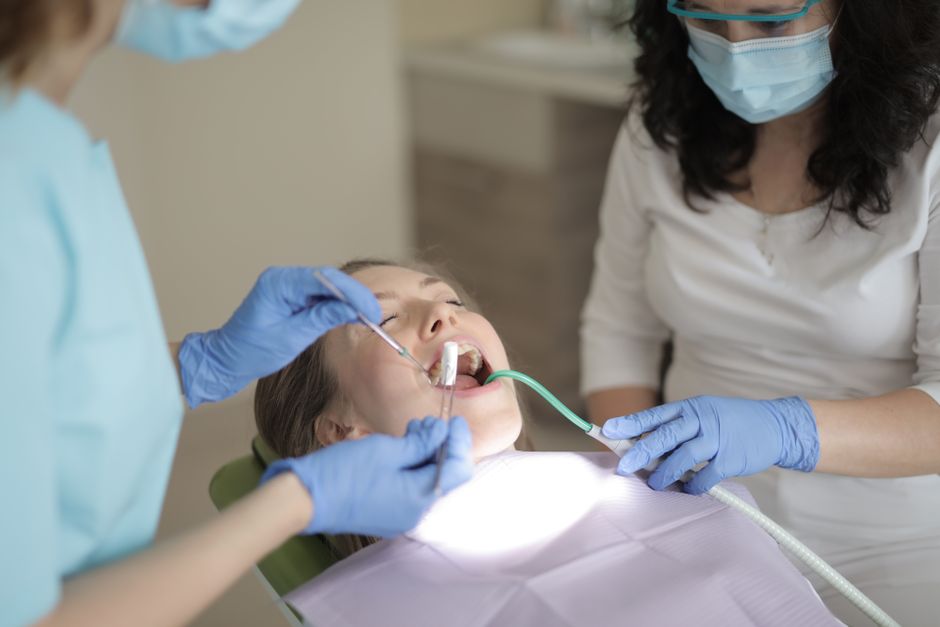
An NHS dentist is a dental practice in the United Kingdom that provides care funded by the National Health Service rather than paid for privately. NHS dental treatment is not free for most adults. Patients pay fixed charges set by the government, and access depends on finding a practice that is accepting new NHS patients — which, in many parts of the UK, has become genuinely difficult.
This article explains what the charges are, what they cover, who is exempt, and why access has become a common problem. It is written for readers who want a clear picture of how the system actually works, not a sales pitch.
What Is An NHS Dentist Treatment Costs And Access?
NHS dentistry in England operates on a banded charging system. There are three treatment bands, and the charge depends on which band your treatment falls into — not on how many appointments it takes.
The band structure in England is:
- Band 1 — covers examination, diagnosis, and preventive advice, including scaling and polishing. One charge applies.
- Band 2 — covers everything in Band 1 plus fillings, root canal treatment, and extractions. One charge applies regardless of how many fillings you need.
- Band 3 — covers everything in Bands 1 and 2 plus crowns, bridges, and dentures. One charge applies.
Urgent treatment is charged at a separate, lower rate. A course of NHS treatment is generally completed within two months, and you pay one charge per course — not per visit. That detail surprises many people. If you need three fillings over two appointments, you still pay a single Band 2 charge.
Charges are reviewed annually and have risen over time. Rather than rely on a figure from memory, check the current charges on the NHS website before you go, because the exact amounts change.
Scotland, Wales, and Northern Ireland run their own systems. Wales and Scotland have different charging structures and, in some cases, different exemption rules. Do not assume an English charge applies if you live elsewhere in the UK.
Who Gets Free NHS Dental Treatment?
Some groups pay nothing at all. In England, NHS dental treatment is free for:
- People under 18, and under 19 if in full-time education
- Pregnant women and women who have given birth in the last 12 months
- People receiving certain benefits, including Income Support, income-based Jobseeker’s Allowance, and Universal Credit in some circumstances
- People named on a valid HC2 certificate under the NHS Low Income Scheme
- NHS inpatients whose treatment is carried out by a hospital dentist
The pregnancy exemption is worth flagging. It applies to the whole course of treatment, and it covers check-ups as well as treatment. Many eligible women do not know it exists.
If you are on a low income but do not qualify automatically, the NHS Low Income Scheme may help. Whether you qualify depends on your assessed income and savings, not just your benefit status.
If you are unsure whether you qualify, ask at the practice before treatment starts. Claiming an exemption you are not entitled to can result in a penalty charge, even if the mistake was honest.
Why Is It So Hard to Find an NHS Dentist?
Access is the bigger problem than cost for many people. NHS dental practices are independent businesses that hold an NHS contract. The contract pays them a fixed sum for a set amount of work. Once that work is done, the practice has no financial reason to take on more NHS patients — and taking on more can actually cost them money.
That structure is the root of the access problem. It is not simply a shortage of dentists. The way NHS dental contracts pay practices creates a cap on how much NHS work each practice will do.
In recent years, many practices have handed back their NHS contracts entirely or reduced the proportion of NHS work they do. Some practices list as private-only. Others keep a waiting list that runs for months or years.
What this means in practice:
- You may need to call several practices, not one
- You may need to travel outside your immediate area
- You may be placed on a waiting list with no clear timeline
- You may find that a practice accepts children on the NHS but not adults
NHS 111 can sometimes direct you to practices accepting patients, and some regional health boards maintain lists. There is no guarantee of a place. In some areas, particularly rural areas and parts of the country with historically fewer dentists, the wait can be long.
One clarification that matters: if you are already registered with an NHS dentist, you generally keep access. The access crisis mainly affects people trying to find a new NHS dentist — new patients, people who have moved, or people whose practice has gone private.
What Happens If You Cannot Get an NHS Appointment?
If you cannot find an NHS dentist and you have a dental problem, the options are limited. You can pay privately, wait, or seek urgent care if the situation becomes an emergency.
Urgent NHS dental care is available in most areas through urgent dental access centres, often reached via NHS 111. These centres generally treat the immediate problem — pain, infection, trauma, a broken tooth — rather than providing ongoing care. They are not a substitute for a regular dentist.
Private treatment is an option for those who can afford it. Private charges are set by the practice and vary widely. There is no standard private fee. A private check-up may cost considerably more than the NHS Band 1 charge, and complex treatment can cost many times more.
Some practices offer a hybrid model — NHS care for some treatments, private for others. Ask directly what is available on the NHS and what is not before agreeing to anything.
If you have dental pain and cannot access care, do not ignore it. Dental infections can spread, and in rare cases they become serious. Seek urgent advice rather than waiting for a routine appointment.
What Does an NHS Dental Check-Up Actually Include?
An NHS check-up is a clinical examination, not just a look at your teeth. It typically includes an assessment of your teeth, gums, and soft tissues, and a discussion of your risk of future problems.
Depending on your needs, your dentist may also take X-rays, check your bite, and examine your mouth for signs of disease. The National Institute for Health and Care Excellence (NICE) publishes guidance on how often check-ups should happen, based on a person’s risk of dental disease. People at low risk may be recalled at longer intervals. People at higher risk may need more frequent checks.
The check-up itself falls into Band 1. If the dentist finds something that needs treatment, that treatment may move you into Band 2 or Band 3 — and you pay the higher charge for that course of treatment.
This is one reason it pays to ask what a proposed treatment will cost before it starts. You are entitled to a written treatment plan and an estimate of the NHS charge before you agree.
How Do NHS and Private Dental Costs Compare?
NHS charges are fixed and set by government. Private charges are set by the practice and are not regulated in the same way. The gap between them is usually significant, especially for complex treatment.
A simple comparison helps show the difference in structure, though exact figures change and should be checked:
| Type of care | NHS | Private |
|---|---|---|
| Check-up | Band 1 fixed charge | Set by practice, usually higher |
| Fillings, extractions, root canal | Band 2 fixed charge | Often charged per tooth or per procedure |
| Crowns, bridges, dentures | Band 3 fixed charge | Set by practice, often substantially higher |
The key difference is not just the amount. NHS charges are capped per band — one charge covers all the work in that band for that course of treatment. Private charges are usually itemised, so the more work you need, the more you pay.
Private dentistry is not inherently better or worse. It may offer faster access, more choice of materials, or treatments not routinely available on the NHS. But it costs more, and the difference is not always explained clearly. Ask what is available on the NHS before paying privately for something that could be covered.
What Should You Do Before Booking?
Confirm the practice is accepting NHS patients before you book. Ask whether the appointment is NHS or private. Ask for the band and the charge before treatment begins.
If you think you may be exempt, check your eligibility before you claim it. Keep any evidence, such as a maternity exemption certificate or benefit letter.
If you cannot find an NHS dentist, contact NHS 111 for guidance on local access, and consider whether you can travel to a neighbouring area. The situation varies a great deal by region, and a practice a few miles away may have space when one nearby does not.
Frequently Asked Questions
How much does an NHS dental check-up cost?
An NHS check-up falls under Band 1, which has a single fixed charge set by the government. The exact amount is reviewed annually, so check the current figure on the NHS website before you go.
Is NHS dental treatment free for everyone?
No. Most adults pay fixed charges, but treatment is free for certain groups including under-18s, pregnant women and those who gave birth in the last 12 months, and people on qualifying benefits. Eligibility rules differ across the UK nations.
Why can’t I find an NHS dentist taking new patients?
NHS dental contracts pay practices a fixed amount for a set volume of work, which caps how many NHS patients they can take on. Many practices have reduced or handed back their NHS contracts, leaving long waits or no availability in some areas.
Can I get emergency NHS dental care without a regular dentist?
Yes, urgent dental access centres exist in most areas and are often reached through NHS 111. They usually treat the immediate problem rather than providing ongoing care.
