
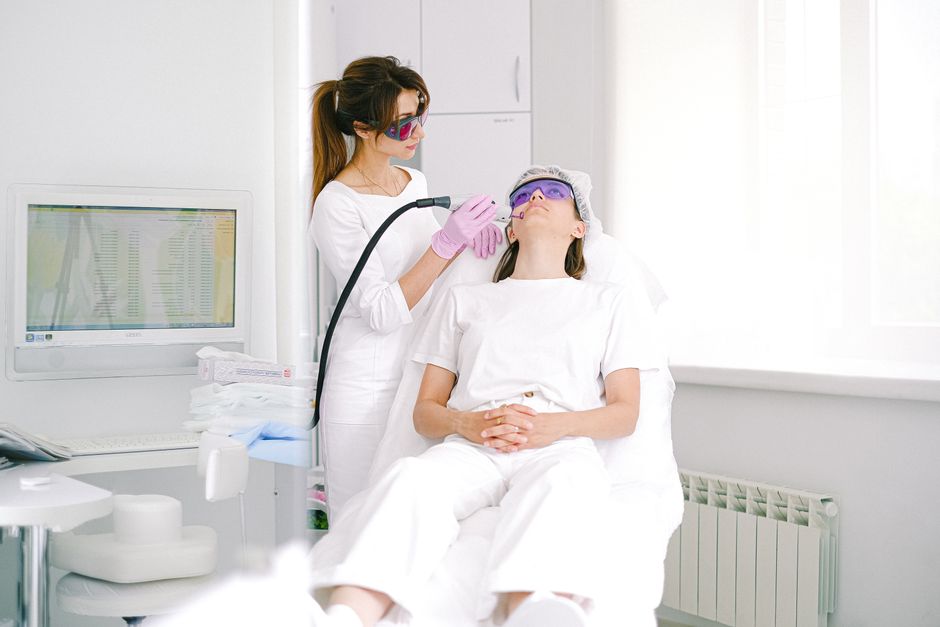
An IPL photo facial is a non-invasive skin treatment that uses intense pulsed light to target pigment, redness, and sun damage. A handheld device delivers brief flashes of broad-spectrum light through a clear gel on your skin. The light is absorbed by melanin (pigment) and hemoglobin (the red pigment in blood vessels), which heat up and break down. Your body then clears the damaged cells over the following weeks.
It is not a laser. That distinction matters more than most marketing suggests, and we will get to why. Sessions typically take 20 to 30 minutes, and most people need a series of treatments rather than one. Results build gradually and are rarely dramatic after a single visit.
What Is An IPL Photo Facial How It Works What To Expect?
IPL stands for intense pulsed light. Unlike a laser, which emits a single wavelength of light, an IPL device emits a broad range of wavelengths — usually somewhere in the 500 to 1200 nanometer range depending on the device and filter used. Different wavelengths are absorbed by different targets in the skin.
That broad output is the defining feature of IPL. It is also its main limitation. A laser can be tuned precisely to one target. IPL spreads its energy across several, which means it can address multiple concerns at once but with less selectivity per target.
Here is the mechanism in plain terms. Melanin in sun spots and freckles absorbs light strongly. Hemoglobin in dilated capillaries and broken vessels also absorbs light, particularly in the yellow-to-green part of the spectrum. When these pigments absorb the light energy, they heat up. The heat damages the pigment-containing cells and the small vessels. Over the next days to weeks, your immune system clears the debris.
That is why dark spots often darken slightly before they flake off, and why redness fades gradually rather than immediately. The treatment does not remove pigment. It triggers your body to remove it.
What Does an IPL Photo Facial Actually Treat?
IPL has reasonable evidence for a handful of specific concerns. It is not a general-purpose skin rejuvenation tool, despite how it is often marketed.
The best-supported uses are sun damage and pigment irregularities in people with lighter skin types. Freckles, sun spots, and the diffuse mottled pigmentation sometimes called poikiloderma of Civatte respond to IPL in many patients. Some studies indicate improvement in facial redness from rosacea and in small dilated blood vessels. The evidence for these uses is generally positive but varies by device, settings, and operator skill.
What IPL does not reliably do is as important as what it does. It is not a wrinkle treatment in any meaningful sense. Some clinicians report modest texture improvement, but the evidence for collagen remodeling from IPL is weaker than for fractional lasers or other resurfacing methods. It does not treat deep scarring. It does not remove hair permanently, though IPL devices are used for hair reduction. It does not tighten loose skin.
Anyone marketing IPL as a solution for acne scarring, pore size, or significant skin laxity is stretching the evidence well past what studies support.
Who Is a Good Candidate — and Who Should Avoid It?
Skin type is the single biggest factor. IPL works best on lighter skin tones — roughly Fitzpatrick types I through III — because the device needs contrast between the pigment it is targeting and the surrounding skin. On darker skin, the melanin in normal skin absorbs the light too, which raises the risk of burns, blisters, and post-inflammatory hyperpigmentation.
This is not a minor caveat. Some practitioners will treat darker skin types with adjusted settings, and some devices are designed with longer wavelengths that penetrate past surface pigment. But the margin for error is narrower, and outcomes are less predictable. Anyone with a medium-to-dark skin tone should have a frank conversation with a clinician experienced in treating that skin type specifically — not just any clinic offering the service.
People who should generally avoid IPL include:
- Anyone with active sunburn or a recent tan, including a fake tan
- People taking isotretinoin, or who have taken it recently
- Anyone with a photosensitive condition or taking photosensitizing medications
- People with active skin infections or open wounds in the treatment area
- Pregnant or breastfeeding women — not because harm is proven, but because IPL has not been studied in these groups
- Anyone with a history of keloid scarring or poor wound healing
That pregnancy point deserves honesty. No clinical guidelines currently establish IPL safety during pregnancy or breastfeeding. The absence of evidence is not proof of safety. Most clinicians defer treatment during pregnancy as a precaution, and that is a reasonable position given the lack of data.
What Happens During and After a Session?
A session starts with a consultation and usually a patch test on a small area, especially if you have not had IPL before. On treatment day, your skin is cleaned and a thick layer of clear gel is applied. You wear protective eyewear — the light flashes are intense and you should never look at them directly.
The practitioner presses the handpiece against your skin and delivers a flash. Most people describe the sensation as a rubber band snap against the skin. It is uncomfortable but generally tolerable without numbing cream, though some clinics offer it. A full face takes roughly 20 to 30 minutes.
Immediately afterward, skin is typically pink or red, like a mild sunburn. This usually settles within hours to a day or two. Dark spots may look darker for several days before flaking off. Some people notice mild swelling around the eyes if that area was treated.
Aftercare is straightforward but matters. Sun protection is not optional — treated skin is more vulnerable to pigment problems, and unprotected sun exposure can undo the results or cause new dark spots. Most clinicians advise broad-spectrum sunscreen and avoiding direct sun for a period after treatment. Gentle skincare, no harsh exfoliants, and no waxing or threading in the treated area for a short window are common instructions, though specific timelines vary by clinic.
How Many Sessions Will You Need, and What Do Results Look Like?
Most treatment plans involve a series of sessions spaced several weeks apart. A common range is three to five sessions, though this varies with the concern being treated, the device, and how your skin responds. Some people need more. Maintenance sessions once or twice a year are often suggested to keep results.
Results are gradual. Pigment fading typically becomes visible over the weeks following each session as your body clears the damaged cells. Redness reduction follows a similar timeline. Improvement is usually partial rather than complete — IPL often lightens sun damage substantially without erasing it entirely.
Individual results vary widely. Skin type, the depth and type of pigmentation, sun exposure between sessions, hormonal factors, and the skill of the operator all affect outcomes. Anyone promising a specific result or a fixed number of sessions before examining your skin is guessing.
What Are the Risks and Side Effects?
Common side effects are temporary and expected: redness, mild swelling, and darkening of treated spots before they clear. These are part of the mechanism, not complications.
More serious risks exist and are worth naming plainly. Burns and blisters can occur, particularly with incorrect settings or on skin that has recently been tanned. Post-inflammatory hyperpigmentation — dark patches caused by the treatment itself — is a real risk, and it is more common in darker skin types and in people who do not protect treated skin from the sun. Hypopigmentation, where treated skin loses color, is less common but can be lasting. Scarring is rare but possible. Eye injury is a genuine concern if protective eyewear is not worn, which is why it is standard practice.
The operator matters enormously. IPL devices vary in quality and power, and settings must be adjusted for skin type, concern, and sensitivity. A treatment performed by someone without proper training on a device set too high is where many bad outcomes originate. Regulation of who can perform IPL varies by state, and in some places the requirements are minimal. Asking about a practitioner’s training and experience with your specific skin type is not rude. It is sensible.
How Does IPL Compare to Lasers and Other Treatments?
IPL and laser treatments are often lumped together, but they work differently. A laser emits one precise wavelength, which makes it more targeted and often more effective for a single specific concern. Pigment-specific lasers, for example, can treat certain pigmented lesions with more precision than IPL. Vascular lasers can target blood vessels more selectively.
IPL’s advantage is breadth. One device can address pigment and redness at the same time, which is convenient for people with mixed sun damage and facial redness. It also tends to be less expensive per session than many lasers and involves less downtime than resurfacing procedures.
Its disadvantage is that same breadth. Less selectivity means less precision per target and a higher chance of affecting surrounding skin. For a single stubborn concern, a targeted laser is often the better tool. For diffuse sun damage with some redness, IPL is a reasonable option with a long track record.
Topical treatments are another route entirely. Prescription retinoids and ingredients like hydroquinone address pigment through different mechanisms, work more slowly, and require consistent use, but they carry no burn risk. For some people, that is the better trade-off. A clinician can help weigh these options against your skin and goals.
Frequently Asked Questions
Is an IPL photo facial the same as a laser treatment?
No. IPL uses broad-spectrum light across many wavelengths, while a laser emits a single precise wavelength. That makes lasers more targeted for a specific concern and IPL better suited to addressing several concerns at once.
How long does it take to see results from an IPL photo facial?
Pigment typically begins to fade over the days to weeks following each session as your body clears the damaged cells. Most people need a series of sessions before results are clearly visible.
Can you get an IPL photo facial with dark skin?
It is possible but riskier, because melanin in normal skin absorbs the light and raises the chance of burns and dark patches. Anyone with a medium-to-dark skin tone should see a clinician experienced with that skin type before deciding.
How long should you avoid sun after an IPL photo facial?
Specific timelines vary by clinic and device, and no single standard applies to everyone. Most practitioners advise strict sun protection for at least the first couple of weeks and consistent daily sunscreen afterward.
