
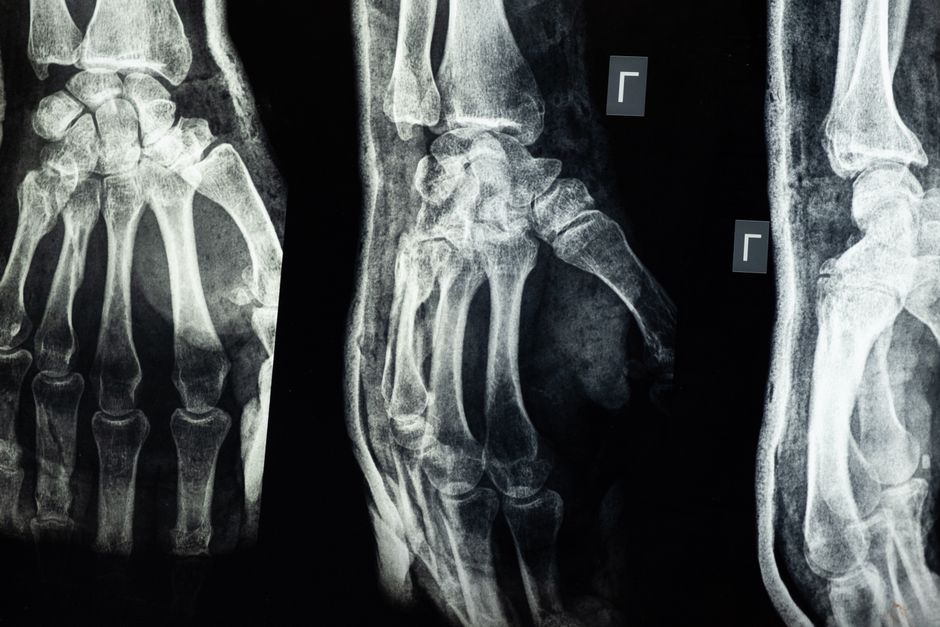
A bone that cracks but does not break all the way through is called an incomplete fracture. The break stops partway across the bone, so the two ends stay connected instead of separating. These fractures are most common in children, whose bones are softer and more flexible than adult bones, but they can happen at any age. Treatment usually involves protecting the bone with a cast, splint, or brace while it heals, though the exact approach depends on which type of incomplete fracture it is and where it sits in the body.
What Is an Incomplete Fracture?
An incomplete fracture is a partial break in a bone. The crack travels through part of the bone’s width but does not divide it into two separate pieces. A complete fracture, by contrast, goes all the way through, and the bone may shift out of alignment.
This distinction matters for treatment. Because the bone is still in one piece, incomplete fractures tend to be more stable. They usually need less aggressive treatment than complete fractures. Many heal well with simple immobilization.
The term covers several different break patterns. Some look like a hairline crack. Others bend or buckle the bone. Doctors group them by how the break looks on an X-ray, because that shape tells them how stable the injury is and how it should be managed.
What Are the Types of Incomplete Fractures?
There are four main types of incomplete fractures. Each has a distinct appearance and its own typical treatment path.
- Greenstick fracture: The bone bends and cracks on one side but stays intact on the other. It looks like what happens when you try to snap a fresh green twig. The break does not cross the full width of the bone.
- Buckle (torus) fracture: The bone’s outer layer crumples or bulges on itself rather than forming a clean crack. This happens when the bone is compressed lengthwise. It is very common in young children.
- Hairline fracture: A thin crack that runs through part of the bone without separating it. The bone keeps its normal shape. These can be easy to miss on an X-ray.
- Fissure fracture: A narrow split in the bone surface, similar to a hairline fracture. The terms overlap and are sometimes used interchangeably.
Greenstick and buckle fractures are the two most often seen in children. The reason comes down to bone structure. Children’s bones contain more flexible tissue and have a thick outer layer that resists breaking cleanly. Adult bones are more brittle, so they tend to crack all the way through instead.
Why Are Incomplete Fractures More Common in Children?
Children’s bones are built differently from adult bones. They are more porous and more flexible, and they are still growing. That flexibility means a child’s bone can bend under force that would snap an adult bone in two.
Growing bones also have areas of softer tissue near the ends, called growth plates. These plates are the last part of the bone to harden. They are a common site of injury, and they need careful evaluation because damage there can affect how the bone grows.
This is not a reason to treat childhood fractures casually. A greenstick fracture still hurts, still needs medical care, and still needs time to heal. The difference is in the break pattern and how it is managed, not in whether it matters.





What Causes an Incomplete Fracture?
Incomplete fractures come from a force that bends or compresses a bone rather than snapping it. Common causes include:
- Falls onto an outstretched arm, which is a frequent cause of wrist and forearm fractures in children
- Sports injuries, especially in contact sports or activities with a risk of falling
- Direct blows to a bone
- Twisting injuries
The location often hints at the cause. Forearm and wrist fractures commonly follow a fall on an outstretched hand. Buckle fractures in particular cluster around the wrist and forearm for this reason.
In adults, incomplete fractures are less common from a single fall. When they do appear, they are more often stress-related. A stress fracture is a small crack that develops over time from repeated loading rather than one sudden impact. Runners, dancers, and military recruits are among those at higher risk, because their activities load the same bones again and again.
What Are the Symptoms of an Incomplete Fracture?
Pain is the main symptom. It usually starts right after the injury and gets worse when the bone is used or pressed. Swelling and tenderness around the area are common. The skin may bruise.
One feature that separates incomplete fractures from complete ones is appearance. The limb usually keeps its normal shape. There is no obvious deformity, no bone poking at an odd angle. That can make the injury seem less serious than it is.
Function is often reduced. A child with a buckle fracture of the wrist may avoid using that hand or cry when it is moved. An adult with a stress fracture may notice a dull ache that builds during activity and eases with rest.
Because the bone stays in line, incomplete fractures can be easy to dismiss as a sprain or a bruise. If pain and tenderness are focused over a bone rather than a joint, and they do not settle within a day or two, an evaluation is reasonable.
How Is an Incomplete Fracture Diagnosed?
Diagnosis starts with a physical exam. A doctor will check for tenderness, swelling, and whether the bone is stable under gentle pressure. They will also ask how the injury happened.
X-rays are the standard imaging test. They show the break pattern and confirm whether the fracture is partial or complete. For buckle and greenstick fractures, the X-ray findings are usually clear.
Hairline fractures can be harder to spot. Sometimes they are not visible on the first X-ray. If the exam strongly suggests a fracture but the X-ray looks normal, a doctor may treat it as a fracture anyway or repeat the imaging later. In some cases, other imaging such as an MRI may be used, particularly for suspected stress fractures that do not show up on plain X-rays.
How Are Incomplete Fractures Treated?
Most incomplete fractures are treated by holding the bone still while it heals. The goal is to prevent the partial break from becoming a complete one and to keep the bone in proper alignment.
Common treatment options include:
- Cast: A rigid shell that fully surrounds the limb. Used when more support is needed.
- Splint: Provides support but can be adjusted or removed. Often used early on when swelling is still changing.
- Brace or removable support: Sometimes used for stable fractures like buckle fractures, allowing some movement.
- Rest and activity limits: Avoiding the activity that caused the injury so the bone can heal.
Buckle fractures are often treated with a removable splint or a short period in a cast. Some research suggests that for certain stable buckle fractures, a removable splint works as well as a cast and is more convenient. Greenstick fractures may need a cast and sometimes a procedure to make sure the bone is properly aligned, because the bent bone can heal in the wrong position if it is not corrected.
Surgery is rarely needed for incomplete fractures. It is more likely if the break is unstable, involves a growth plate, or does not stay in place with a cast alone.
Healing time varies. It depends on the person’s age, the bone involved, and the severity of the break. Children generally heal faster than adults. A doctor will set a follow-up schedule and decide when the cast or splint can come off.
Can an Incomplete Fracture Get Worse?
Yes, if it is not protected. A partial break can extend into a complete one if the bone keeps taking stress. That is the main reason these injuries are immobilized even when they look minor.
Ignoring the injury and pushing through the pain is the biggest risk. Continued use can widen the crack, shift the bone, or delay healing. In children, an untreated fracture near a growth plate carries an added concern, because it can affect future bone growth.
With proper care, most incomplete fractures heal well. The key is to follow the treatment plan and not return to full activity too soon, even if the pain fades before healing is complete.
When Should You See a Doctor?
See a doctor after any injury where bone pain is focused, tenderness is pinpoint, or the limb cannot be used normally. This is especially true for children, who may not be able to describe the pain clearly.
Seek care right away if there is obvious deformity, the limb looks bent or out of line, the skin is broken near the injury, or there is numbness or tingling. These signs point to a more serious injury than a simple incomplete fracture.
A stress fracture should also be evaluated. Ongoing pain during activity that eases with rest, especially in a high-impact sport, deserves a medical look rather than continued training.
Frequently Asked Questions
What is an incomplete fracture?
It is a partial break in a bone where the crack does not go all the way through, so the bone stays in one piece. This makes it more stable than a complete fracture, which divides the bone into separate parts.
What are the types of incomplete fractures?
The main types are greenstick, buckle (torus), hairline, and fissure fractures. Greenstick and buckle fractures are the most common in children because their bones are more flexible.
How long does an incomplete fracture take to heal?
Healing time varies by age, the bone involved, and the severity of the break, and children generally heal faster than adults. A doctor will set a follow-up schedule and decide when the cast or splint can be removed.
Can an incomplete fracture heal without a cast?
Some stable incomplete fractures, such as certain buckle fractures, can be treated with a removable splint or brace instead of a full cast. Whether a cast is needed depends on the specific break, so this should be decided by a doctor.
