
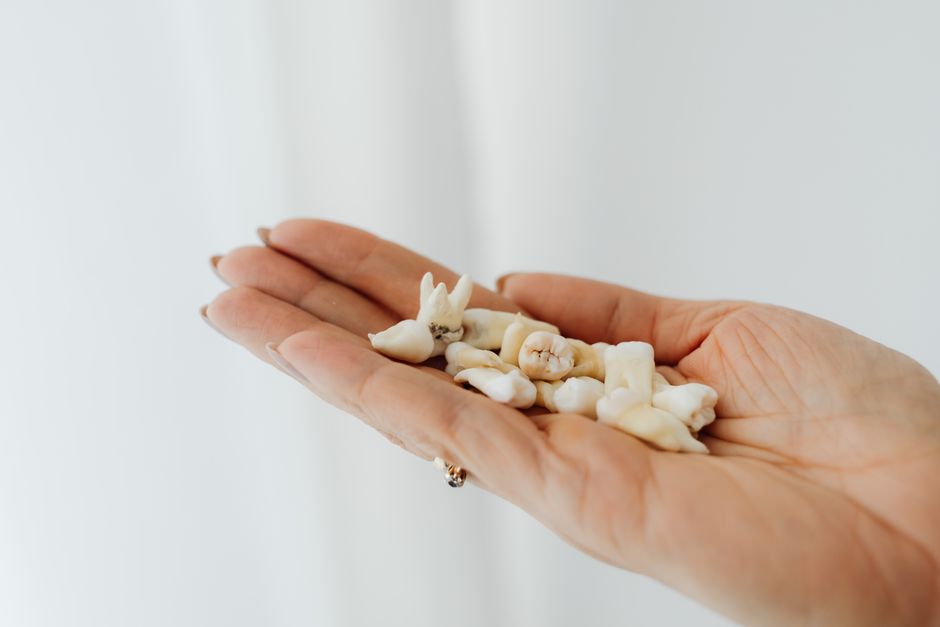
An impacted tooth is a tooth that has failed to erupt into its normal position in the mouth and is instead blocked by another tooth, bone, or dense gum tissue. The most familiar example is the wisdom tooth, but any tooth can become impacted. Some impacted teeth cause no problems at all, while others lead to pain, infection, or damage to neighboring teeth. Treatment ranges from careful monitoring to surgical removal, depending on the type, location, and symptoms.
What Is An Impacted Tooth and Why Does It Happen?
Teeth normally move through the jawbone and break through the gums on a predictable schedule. An impacted tooth never completes that journey. It stays lodged in the jaw or sits partially under the gum line because something is physically in the way.
The mechanism is usually a lack of space. The jaw may be too small to hold all the teeth in their proper positions, so the last tooth to arrive has nowhere to go. This is why wisdom teeth — the third molars — are by far the most commonly impacted teeth. They are the final teeth to develop, typically emerging in the late teens or early twenties, long after the rest of the mouth is already crowded.
Impaction is not always about crowding, though. Other causes include:
- Genetics that shape jaw size and tooth development
- Extra (supernumerary) teeth blocking the path
- Dense, fibrous gum tissue that the tooth cannot push through
- Delayed loss of baby teeth, which can leave a permanent tooth stuck
- Certain medical conditions that affect bone growth, though these are uncommon
Impacted teeth are common. Wisdom teeth in particular are the most frequently impacted teeth in the mouth. Estimates vary widely depending on the population studied and how impaction is defined, so a single universal figure would be misleading. What is clear is that a large share of young adults have at least one wisdom tooth that never fully erupts.
What Are the Different Types of Impacted Teeth?
Dentists classify impacted teeth by how deeply they sit in the jaw and the angle at which they are blocked. The angle matters because it often predicts what problems the tooth will cause.
The main types based on depth are:
- Fully impacted: The tooth remains completely covered by gum and bone. It cannot be seen without imaging.
- Partially impacted: Part of the crown has broken through the gum, but the tooth cannot move into its correct position. This type tends to cause more problems because the exposed edge is hard to clean.
Dentists also describe the angle of impaction, most often for wisdom teeth:
- Mesial: The tooth tilts forward toward the front of the mouth, often pressing against the molar in front of it.
- Distal: The tooth tilts backward toward the back of the jaw.
- Vertical: The tooth points straight up but cannot rise fully into place.
- Horizontal: The tooth lies sideways, fully on its side within the jaw.
A partially impacted tooth that has broken through the gum is the type most likely to develop decay and gum problems, because the gap between the tooth and the gum creates a pocket that traps food and bacteria. A fully impacted tooth, by contrast, is sealed off from the mouth and usually cannot decay from the outside — but it can still push on other teeth or form a cyst around its crown.
What Are the Symptoms of an Impacted Tooth?
Many impacted teeth produce no symptoms at all and are discovered only on a dental X-ray. When symptoms do appear, they usually fall into a few recognizable patterns.
Common symptoms include:
- Pain or tenderness in the back of the jaw or gums
- Swelling around the gum where the tooth is stuck
- Red, bleeding, or tender gums near the site
- Bad breath or an unpleasant taste in the mouth
- Difficulty opening the mouth fully
- Jaw pain or a dull ache that spreads toward the ear
A particularly important complication is a condition called pericoronitis. This is inflammation and infection of the soft tissue around the crown of a partially erupted tooth. It happens when bacteria and food become trapped under the flap of gum that covers part of the tooth. Pericoronitis can cause significant pain, swelling, and difficulty chewing. In more serious cases, the infection can spread into the surrounding tissues of the face and neck, which is a medical concern that needs prompt care.
An impacted tooth can also damage the tooth next to it. A tilted wisdom tooth can press against the adjacent molar and create a hard-to-clean space where decay begins. In some cases, a cyst or tumor can form around an impacted tooth, though these growths are uncommon and typically benign.




How Is an Impacted Tooth Diagnosed?
Diagnosis usually starts with a visual exam, but X-rays are what confirm it. A dentist can see a partially erupted tooth by looking in the mouth, but a fully impacted tooth is hidden and only shows up on imaging.
Dental X-rays — often a type called a panoramic X-ray — reveal the position, angle, and depth of the tooth, along with its relationship to nearby roots and nerves. This matters for treatment planning because it shows whether the tooth is close to structures that could be injured during removal. In some cases, a dentist may recommend a more detailed scan, such as a cone-beam CT, when the anatomy is complex or the tooth sits near a nerve.
Your dentist will also ask about symptoms and may check for signs of infection, swelling, or damage to neighboring teeth. Sometimes an impacted tooth is found by chance during a routine checkup for an unrelated reason.
How Is an Impacted Tooth Treated?
Treatment depends on whether the tooth is causing problems, the type of impaction, and the person’s overall health. There is no single correct answer, and not every impacted tooth needs to come out.
The main options are:
- Monitoring: If an impacted tooth is fully buried, causes no symptoms, and shows no signs of harming nearby teeth, a dentist may simply watch it over time with periodic X-rays. This is a common approach for some fully impacted wisdom teeth.
- Surgical removal: When a tooth causes pain, infection, decay, or damage to other teeth, removal is often recommended. This is the most common treatment for problematic wisdom teeth. The procedure is usually done by a dentist or oral surgeon, often under local anesthesia, with sedation options available for more complex cases.
- Managing infection first: If pericoronitis or another infection is present, it is typically treated before any surgery. This may involve antibiotics, rinsing, and cleaning the area. Some clinicians also recommend removing the gum flap over a partially erupted tooth, though this is less common than removal.
- Orthodontic guidance: In some cases, an impacted tooth that has not yet fully formed its root can be guided into place with braces and a minor surgical procedure to expose it. This is more often an option for impacted canine teeth than for wisdom teeth.
The timing of removal is a genuine area of debate. Some clinicians recommend removing wisdom teeth early, before the roots are fully formed, because the surgery tends to be simpler and recovery faster in younger patients. Others argue that impacted teeth that are not causing problems can be left alone, since surgery carries its own risks. The evidence does not clearly favor one approach for every case, so the decision is usually made case by case with a dentist or oral surgeon.
What Are the Risks of Leaving an Impacted Tooth Untreated?
An impacted tooth that causes no symptoms may stay harmless for years. But when problems do develop, they tend to be the kind that get worse rather than better on their own.
Potential complications include:
- Repeated episodes of pericoronitis and gum infection
- Tooth decay in the impacted tooth or the molar next to it
- Damage to the roots of neighboring teeth
- Cyst formation around the crown of the tooth
- Shifting or crowding of other teeth
The key point is that a symptom-free impacted tooth is not automatically a problem tooth, and a problematic one is not automatically an emergency. What matters is whether it is causing active harm. That is why regular dental checkups and X-rays matter — they catch changes before they become painful or harder to treat.
When Should You See a Dentist?
See a dentist if you have ongoing pain or swelling in the back of your jaw, trouble opening your mouth, or a bad taste near a partially erupted tooth. These can be signs of infection that need treatment.
Seek prompt care if swelling spreads to your face or neck, you have difficulty swallowing or breathing, or you develop a fever alongside jaw swelling. These signs suggest the infection may be spreading beyond the tooth, which requires urgent medical attention.
If you have no symptoms but know you have an impacted tooth, routine checkups are still worthwhile. A dentist can track it over time and flag any changes that warrant action.
Frequently Asked Questions
Do all impacted teeth need to be removed?
No. A fully impacted tooth that causes no symptoms and shows no signs of harming nearby teeth can often be monitored instead of removed. Removal is usually recommended when the tooth causes pain, infection, decay, or damage to other teeth.
What is the most common impacted tooth?
The wisdom teeth, also called third molars, are the most commonly impacted teeth. They develop last, often in the late teens or early twenties, when there is little room left in the jaw.
Can an impacted tooth cause problems years later?
Yes. An impacted tooth that is quiet for years can later cause infection, decay, or damage to neighboring teeth. Regular dental checkups and X-rays help catch these changes early.
What does pericoronitis feel like?
Pericoronitis typically causes pain, swelling, and tenderness in the gum around a partially erupted tooth, sometimes with a bad taste or difficulty opening the mouth. It is an infection of the soft tissue and usually needs dental treatment.
