
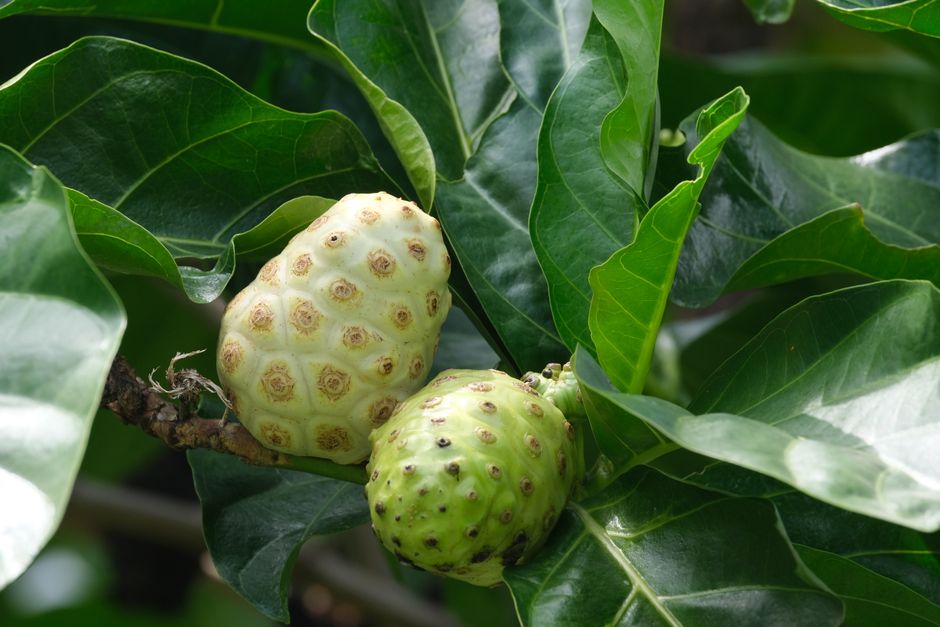
An accessory fruit is a fruit whose fleshy edible part develops not from the plant’s ovary, but from surrounding tissue such as the receptacle, the base of the flower, or the calyx. The ovary may still be present inside, but the tissue you actually eat comes from another part of the flower. Botanists also call these false fruits or pseudocarps, and the distinction is purely about which plant tissue swells after flowering.
This is why a strawberry can carry its seeds on the outside and an apple’s core looks nothing like its crisp outer flesh. In both cases, the ovary develops into something small while nearby tissue becomes the part we recognize as the fruit.
What Is An Accessory Fruit The Botanical Definition?
The botanical definition rests on one question: which tissue becomes fleshy? In a true fruit, the ovary wall — called the pericarp — develops into the edible portion. In an accessory fruit, tissue outside the ovary does the swelling, and the ovary either stays small or contributes only a minor part.
Flowers have several parts arranged in rings. The ovary sits at the center and holds the ovules, which become seeds after fertilization. Around it are the petals, sepals, and the receptacle — the expanded tip of the stem that supports the whole flower. In an accessory fruit, hormones released after fertilization cause one or more of these surrounding tissues to enlarge dramatically.
The result can be confusing. The structure looks and tastes like fruit. It functions as fruit, protecting and dispersing seeds. But its origin is different, and that origin is what botanists classify.
The key distinction in plain terms
- True fruit: the edible flesh develops from the ovary wall. Examples include tomatoes, grapes, blueberries, and citrus.
- Accessory fruit: the edible flesh develops from tissue outside the ovary. Examples include apples, pears, strawberries, figs, and pineapples.
This is not a judgment about nutrition or quality. Accessory fruits are just as nutritious as true fruits. The label describes anatomy, not health value.
Which Fruits Are Accessory Fruits?
Several everyday fruits fall into this category, and the list surprises most people. Each one develops its edible tissue from a specific flower part.
- Apples and pears: the crisp flesh develops from the receptacle, the tissue that surrounds the ovary. The core is the true ovary. Pomes are the botanical term for this type of fruit.
- Strawberries: the red flesh is the enlarged receptacle. The tiny “seeds” on the surface are actually individual small fruits, each containing a real seed. Botanists call this an aggregate accessory fruit.
- Figs: the fleshy part is a hollow stem structure called the syconium that encloses many tiny flowers. The true fruits are the small structures inside.
- Pineapples: the edible portion forms from many individual flowers fused together with their surrounding tissue, which is why the outside has that segmented pattern.
- Cashews: the cashew nut is the true fruit, and the swollen stalk below it — the cashew apple — is accessory tissue.
- Rose hips: the fleshy covering develops from the receptacle and encloses the true fruits inside.
Some fruits sit in a gray zone. Botanists debate how to classify certain structures, and textbooks do not always agree. The categories are useful tools, not rigid laws of nature.
How Do Accessory Fruits Form After Pollination?
Fertilization triggers a hormonal shift that redirects the flower’s resources. The plant hormone auxin, produced by developing seeds, signals surrounding tissue to expand. Cells in the receptacle or another nearby structure divide and enlarge, drawing in water and sugars.
This is why the process usually depends on successful pollination. If seeds do not develop, the accessory tissue often does not swell. Gardeners see this when a strawberry flower is not visited by pollinators — the flower drops without producing fruit.
Some plants have found workarounds. Certain cultivated bananas and some citrus varieties develop fruit without fertilization, a process called parthenocarpy. The fruit grows without seeds, or with only tiny undeveloped ones. In these cases, the hormonal signal comes from the plant tissue itself rather than from developing seeds.
Here is a less obvious point: the seed-to-flesh signaling is not just a botanical curiosity. It explains why fruit quality depends on pollination. Poor pollination can mean smaller, misshapen fruit even when the plant is otherwise healthy.





Why Does the Accessory Fruit Definition Matter?
The distinction matters most in plant science and agriculture, not in the kitchen. Botanists use fruit classification to understand plant relationships and evolution. Knowing which tissue forms the fruit helps researchers trace how different plant families developed their seed-dispersal strategies.
For growers, the anatomy has practical consequences. The structure of an accessory fruit affects how it ripens, stores, and handles damage. An apple’s flesh, being receptacle tissue rather than ovary wall, has a different cellular makeup than a tomato’s. That difference influences texture, how the fruit responds to cold storage, and how it bruises.
Plant breeders also use this knowledge. Understanding which tissue forms the edible part helps breeders target traits like firmness, sugar content, and shelf life in the right tissue at the right stage of development.
For the rest of us, the definition is mostly a satisfying piece of trivia. It clears up a common confusion: the seeds are not always where you expect them, and the flesh is not always what it appears to be.
Are Accessory Fruits Nutritionally Different From True Fruits?
No. The botanical classification says nothing about nutrient content. Accessory fruits and true fruits both supply vitamins, minerals, fiber, and plant compounds, and their nutritional profiles vary by species rather than by category.
Apples, for example, provide fiber and vitamin C, with much of the fiber concentrated in the skin. Strawberries are notably high in vitamin C. Pineapple contains bromelain, an enzyme mixture, though claims about its health effects in the body go well beyond what clinical evidence supports. The human digestive tract breaks down most of the enzyme before it can act as it does in a test tube.
The one practical takeaway is about edible parts. In some accessory fruits, the true fruit is the part you discard or the part you eat. With a cashew, the true fruit is the nut and the accessory tissue is the cashew apple. With a strawberry, the true fruits are the tiny surface structures and the accessory tissue is the red flesh. Knowing which is which helps when reading about a fruit’s composition.
Do People Commonly Confuse Accessory Fruits With True Fruits?
Yes, and the confusion is understandable. The word “fruit” in everyday language means something sweet and edible that comes from a plant. Botany uses a stricter definition: a fruit is a mature ovary, with or without associated parts.
That stricter definition produces some strange-sounding results. A tomato is a true fruit. A cucumber is a true fruit. So is a green bean pod. Meanwhile, the strawberry — which almost everyone would call a fruit without hesitation — is an accessory fruit by the botanical definition.
This is the same definitional gap that makes people argue about whether a tomato is a fruit or a vegetable. In 1893, the United States Supreme Court weighed in on that question for tariff purposes and ruled the tomato a vegetable, based on how people cook and eat it rather than on botany. The case, Nix v. Hedden, is a well-documented example of culinary and botanical language pulling in different directions.
Both frameworks are valid. Culinary language describes how we use food. Botanical language describes plant anatomy. Neither is wrong; they simply answer different questions.
Frequently Asked Questions
Is a strawberry a true fruit or an accessory fruit?
A strawberry is an accessory fruit because its red flesh develops from the receptacle, not the ovary. The tiny structures on the surface are the true fruits, each containing a seed.
Is a banana an accessory fruit?
No, a banana is a true fruit because its edible flesh develops from the ovary wall. It is classified as a berry in botanical terms, despite its elongated shape.
Why are apples and pears called accessory fruits?
The fleshy part of an apple or pear develops from the receptacle, the tissue surrounding the ovary, rather than from the ovary itself. The core is the true ovary, and the seeds inside it are the true seeds.
Does being an accessory fruit affect how healthy a fruit is?
No, the classification describes plant anatomy only and says nothing about nutrition. Accessory fruits like apples and strawberries provide fiber, vitamins, and plant compounds just as true fruits do.
