
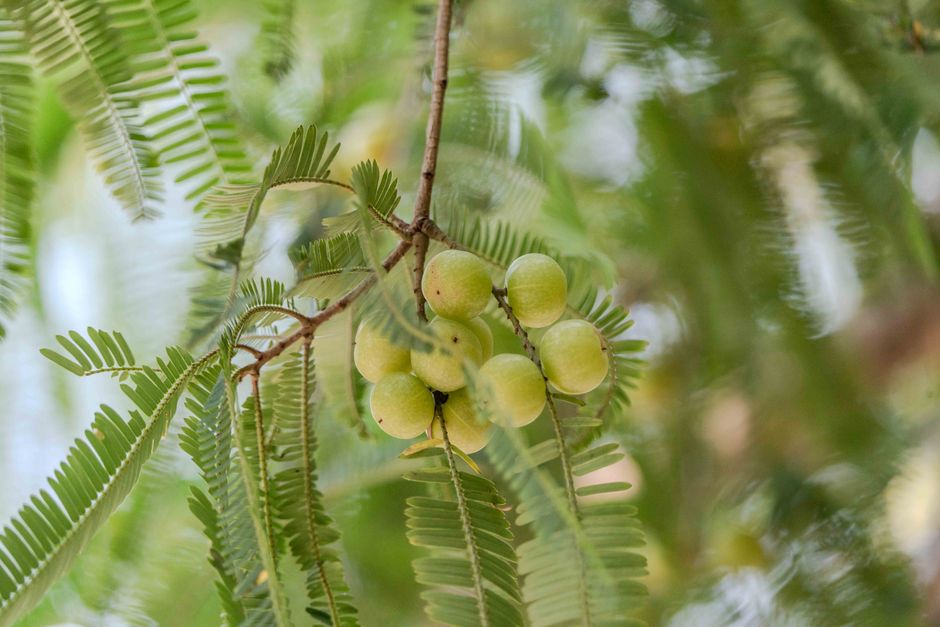
Amla oil comes from the fruit of the Indian gooseberry tree, and it has been used in traditional Indian medicine for centuries. For hair, it is used mainly to support scalp health and reduce breakage. For skin, it is used as an antioxidant-rich oil that may help with dryness and uneven tone. The evidence behind most of these uses is a mix of traditional practice, laboratory research, and a small number of human studies.
The fruit itself is the source of the benefit. Amla is unusually high in vitamin C and also contains tannins and other plant compounds with antioxidant activity. Much of the marketing around amla oil goes further than the research does. Here is what the evidence actually supports, what it suggests, and what remains unproven.
What Is Amla Oil Good For Hair And Skin Benefits?
For hair, amla oil is most often used to condition the scalp and reduce breakage. The strongest case rests on the fruit’s antioxidant content and on traditional use in hair oils across South Asia. For skin, it is used as a moisturizing oil with antioxidant properties.
What the research does not show is that amla oil regrows hair, reverses graying, or treats skin disease. Some laboratory studies have found that amla extracts have antioxidant and antimicrobial activity in a dish. That is not the same as a demonstrated benefit when applied to human skin or scalp. This gap between lab findings and real-world results is where most amla marketing lives.
One clarification worth making: amla oil is not a single product. Traditional amla hair oil is usually a base oil, often coconut or mineral oil, infused with amla fruit. Some products are mostly base oil with very little amla. The benefits you get depend heavily on what is actually in the bottle.
What Does Amla Oil Do for Hair?
Amla oil works mainly as a conditioning treatment. Oils coat the hair shaft, which reduces friction and makes hair easier to comb. Less friction means less breakage during detangling. This is a mechanical effect that any well-formulated oil can provide, and it is well established.
The amla fruit brings antioxidants, including vitamin C and tannins. In laboratory studies, amla extracts have shown antioxidant activity. Whether these compounds penetrate the hair shaft or scalp in meaningful amounts from a topical oil is not well established. Vitamin C is water-soluble and degrades with heat and light, which raises fair questions about how much survives in an oil preparation.
What amla oil can reasonably do:
- Reduce friction and breakage during combing
- Add shine and a smoother feel to the hair shaft
- Support a moisturized scalp when the scalp is dry
What it has not been shown to do in controlled human trials:
- Regrow hair lost to pattern baldness
- Stop or reverse graying
- Treat dandruff caused by a fungal overgrowth
Some traditional practice and small studies suggest amla may support scalp health, but no large, well-controlled human trial has confirmed hair regrowth from amla oil. If you are losing hair, the cause matters. Pattern hair loss, thyroid problems, iron deficiency, and medication side effects all look different and respond to different treatments. An oil is unlikely to change the course of any of them.
What Does Amla Oil Do for Skin?
Amla oil is used on skin as a moisturizer with antioxidant content. Like other plant oils, it can help seal in moisture and soften dry skin. The antioxidants in the fruit are the reason it is marketed for skin, but the evidence for specific skin benefits is thin.
Some laboratory research suggests amla extracts have antioxidant and anti-inflammatory activity. A small number of studies have looked at amla in skin care, but they are limited in size and design. No clinical evidence currently confirms that amla oil lightens dark spots, treats acne, or slows skin aging. Those claims are common in marketing and not supported by strong human trials.
For dry skin, amla oil behaves like most plant oils. It sits on the surface and reduces water loss. That is a real but modest effect. For oily or acne-prone skin, a heavy oil can clog pores in some people, so patch testing matters.
Is Amla Oil Safe to Use?
Amla oil is generally well tolerated when applied to skin and hair. Reactions are uncommon but possible, especially in people with sensitive skin or allergies to the base oil. Coconut oil, a common base, causes reactions in some people.
Do a patch test first. Apply a small amount to the inner forearm and wait 24 to 48 hours before using it more widely. Stop if you see redness, itching, or swelling.
Two cautions are worth stating plainly. First, avoid getting amla oil in the eyes. Second, no clinical guidelines currently exist for using amla oil during pregnancy or breastfeeding, or on infants and young children. Traditional use is not the same as tested safety in these groups. If you are pregnant, breastfeeding, or considering amla oil for a child, ask a clinician before using it.
If you have a scalp condition that is inflamed, oozing, or spreading, see a doctor rather than treating it with oil. Some scalp problems get worse when covered with oil.
How Do You Use Amla Oil?
Amla oil is typically applied to the scalp and hair, left on for a period of time, then washed out. There is no established clinical protocol for how long to leave it on or how often to use it. Traditional practice varies widely, and no official guideline sets a duration or frequency.
A reasonable approach based on general hair-oil practice:
- Start with a small amount and build up
- Massage into the scalp and work through the ends
- Leave it on briefly at first, then wash out with a gentle shampoo
- Use it as a pre-wash treatment rather than leaving it on overnight if your scalp is oily or acne-prone
Check the ingredient list. A product that lists mineral oil first and amla far down the list is mostly mineral oil. If you want the amla content, look for products where amla is a prominent ingredient.
How Does Amla Oil Compare to Other Hair Oils?
Amla oil is one option among many, and the differences are smaller than marketing suggests. Most hair oils work through the same basic mechanism: coating the shaft to reduce friction and seal in moisture.
| Oil | Main use | Evidence note |
|---|---|---|
| Amla oil | Scalp and hair conditioning; traditional scalp health | Antioxidant content shown in lab; limited human trials for specific claims |
| Coconut oil | Conditioning; reduces protein loss from hair | Well studied for reducing hair protein loss |
| Argan oil | Shine and smoothness | Some evidence for improving hair feel and appearance |
| Jojoba oil | Scalp moisture; resembles skin’s natural oils | Common in practice; limited controlled trials |
Coconut oil has the strongest research base for reducing protein loss from hair during washing. That is a specific, measurable effect. Amla oil’s case rests more on its antioxidant content and long traditional use. Neither oil has been shown to regrow hair in controlled trials.
The Bottom Line on Amla Oil
Amla oil is a reasonable conditioning treatment for hair and a modest moisturizer for skin. Its antioxidant content is real, and traditional use is long. But the specific claims you see most often, like hair regrowth, gray reversal, and dark spot fading, are not supported by strong human evidence.
Use it for what oils reliably do: reduce friction, add shine, and support a moisturized scalp. Treat the rest with healthy skepticism. If you have a hair loss or skin concern that matters to you, a clinician can help you find the cause, which is more useful than any single oil.
Frequently Asked Questions
Does amla oil really help hair grow?
No controlled human trial has shown that amla oil regrows hair. It can reduce breakage by making hair easier to comb, which may help hair look fuller.
Can I leave amla oil on my hair overnight?
Some people do, but no guideline sets a safe duration. If your scalp is oily or acne-prone, a shorter pre-wash treatment is less likely to clog pores.
Is amla oil good for acne-prone skin?
Heavy oils can clog pores in some people, so it is not a first choice for acne-prone skin. Patch test first and stop if you notice new breakouts.
Can I use amla oil while pregnant or breastfeeding?
No clinical guidelines currently exist for using amla oil during pregnancy or breastfeeding. Ask a clinician before using it if you are pregnant or nursing.
