
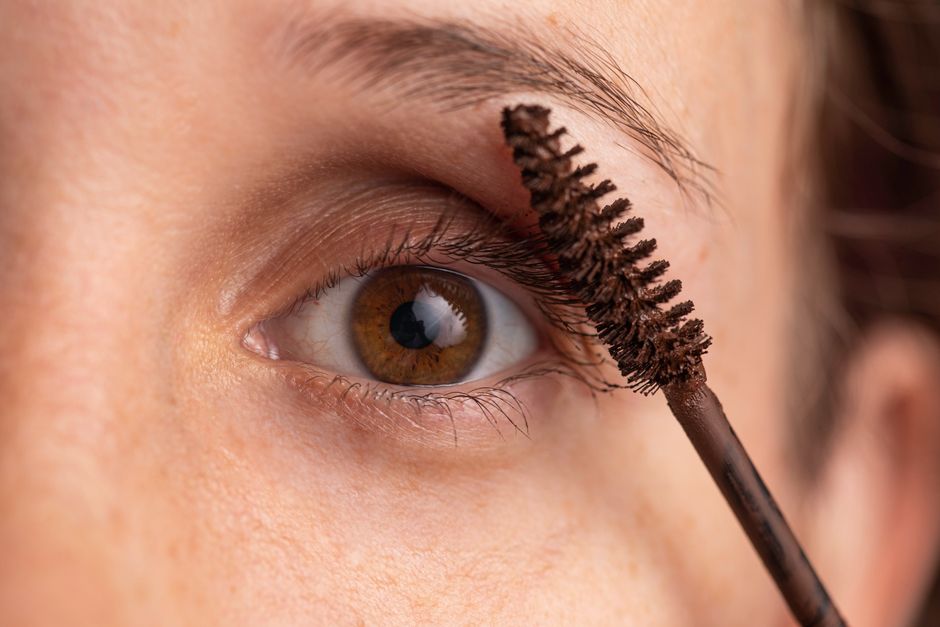
Tubing mascara is a type of mascara that wraps each lash in flexible polymers instead of coating it with waxes and oils. When you remove it, the coating slides off the lash in small tube-like pieces, usually with just warm water and gentle pressure. It is not a new category of cosmetic ingredient so much as a different formulation strategy — one built around film-forming polymers rather than traditional wax-and-pigment emulsions.
What Is A Tubing Mascara and How Does It Work?
A tubing mascara is a mascara whose formula is built around water-soluble polymers that dry into a flexible film around each lash. That film is the “tube.” Traditional mascaras rely on waxes, oils, and pigments to darken and thicken lashes. Tubing formulas rely on long-chain polymers — often acrylic copolymers or similar film-formers — that create a continuous sheath.
The mechanism matters because it explains almost everything else about the product. Because the polymer film surrounds the lash rather than sitting on top of it as a soft waxy layer, tubing mascaras tend to resist smudging and flaking from oil and moisture on the skin. The film is also why removal works the way it does. Warm water softens the polymer, and gentle pressure causes the film to slide off in pieces that look like tiny tubes or fibers.
That removal method is the defining feature. You do not need eye makeup remover, oil cleansers, or vigorous rubbing. For people who find traditional mascara removal irritating to the eyes or lashes, that difference is often the main reason they switch.
How Is Tubing Mascara Different From Regular Mascara?
The core difference is the film former versus the wax base. Everything else — the brush, the pigment, the marketing claims — is secondary.
Traditional mascara coats the lash with a waxy emulsion. It builds volume by adding physical material to the lash surface. It can smudge under the eyes over the course of a day, especially in humid conditions or on oily skin. Removal typically requires an oil-based cleanser or makeup remover to break down the waxes.
Tubing mascara builds a polymer film that adheres to the lash and dries in place. It tends to hold up better against moisture and oil on the skin. It also tends to come off with water alone. That said, “comes off with water” does not mean it dissolves in rain or tears — the film is designed to stay intact through normal moisture exposure and break down only with warm water plus friction.
There is a tradeoff. Tubing formulas are often praised for length and definition but are frequently described as less effective at dramatic volume compared to wax-based volumizing mascaras. That is a formulation reality, not a marketing failure. The polymer film adds length and separation; it does not pile on bulk the way waxes can.
What Are the Benefits of Tubing Mascara?
The benefits that are well established come down to wear behavior and removal.
- Smudge resistance. The polymer film resists oil and moisture better than wax coatings for many wearers, which can mean less raccoon-eye smudging.
- Easier removal. Warm water and gentle pressure are usually enough. No oil cleanser required.
- Less rubbing. Because removal is gentler, there is less mechanical friction on the lash line and eyelid skin, which some people find less irritating.
- Lash definition. The film tends to separate lashes and add length rather than clump them.
These are the claims that hold up across most tubing formulas. What does not hold up as reliably is the idea that tubing mascara is universally “better for your lashes.” There is no strong clinical evidence that tubing mascara strengthens lashes, prevents lash loss, or promotes growth. Those are marketing claims, not established findings. What can be said is that gentler removal means less tugging, and less tugging is generally kinder to lashes and the delicate skin around the eyes.
Does Tubing Mascara Actually Stay On All Day?
For many wearers, yes — but the honest answer is that it depends on your skin, the climate, and the specific formula.
Tubing mascaras are generally formulated to resist sweat, humidity, and the natural oils produced by the skin around the eyes. That is the point of the polymer film. People with oily eyelids often report that tubing formulas smudge less than traditional ones. People in humid climates often report the same.
But no mascara is truly waterproof in all conditions. Heavy sweating, swimming, crying, or rubbing your eyes can compromise any formula, including tubing ones. Some tubing mascaras are marketed as water-resistant rather than waterproof, and those two terms are not interchangeable. If you need mascara that survives a swim, check the label rather than assuming tubing means waterproof.
There is also variation between products. Some tubing formulas hold up for a full day with no issues. Others flake or lose definition by evening. This is a formulation difference, not a category-wide guarantee. Reviews and personal trial are the realistic way to find one that works for your skin.
How Do You Remove Tubing Mascara?
Removal is the part people most often get wrong, and getting it wrong can cause irritation.
The standard method is warm water and gentle pressure. Wet your lashes with warm — not hot — water. Then, using your fingertips or a soft cloth, apply light pressure and slide downward along the lash. The tubes should slip off. You may see small dark pieces on your fingers or cloth. That is normal.
What you should not do is rub hard, pull at the lashes, or assume you need an oil-based remover. Oil can actually make some tubing formulas more difficult to remove because it interferes with the water-based film breakdown. If warm water alone is not working, a gentle cleanser formulated for the eye area is a reasonable next step. If a product resists removal even then, that is a sign to stop rather than scrub.
If you wear contact lenses, remove them before taking off tubing mascara, and wash your hands first. Small polymer pieces near the eye are not something you want to risk trapping under a lens.
Who Should Consider Tubing Mascara?
Tubing mascara tends to suit people who have specific frustrations with traditional mascara. If you deal with smudging under the eyes by mid-day, tubing formulas are worth trying. If your eyes water easily or you find makeup remover stings, the water-based removal is a real advantage. If you wear contacts and find traditional mascara flakes irritating, tubing formulas may cause less trouble for some wearers.
It is less likely to satisfy you if dramatic volume is your main goal. Wax-based volumizing mascaras generally deliver more bulk. Tubing formulas tend to excel at length, separation, and a clean, defined look.
For anyone with sensitive eyes, a history of styes, or blepharitis, the gentler removal is a reasonable consideration — but it is not a treatment for any eye condition. If you have an active eye infection or persistent irritation, that is a medical issue, not a mascara issue, and it warrants a doctor’s attention.
Are There Downsides or Limitations?
Yes, and they are worth knowing before you buy.
Volume is the most common complaint. Tubing formulas rarely match the thick, dramatic look of wax-based volumizing mascaras. If you want full, bold lashes, tubing may feel like a compromise.
Flaking can still happen. A polymer film is not indestructible. Some formulas flake or crumble by the end of a long day, especially if you rub your eyes or if the product is old. Mascara generally should be replaced every three months, and tubing formulas are no exception. Beyond that window, the film can behave unpredictably.
Removal can be messy. The tubes come off as small dark pieces, and if you are not expecting that, it can be alarming the first time. It is not a sign that something is wrong.
And the “better for your lashes” claim is not well supported. Gentler removal is a genuine plus. Lash growth or strengthening is not something tubing mascara has been shown to do.
Frequently Asked Questions
Is tubing mascara waterproof?
Not necessarily — tubing and waterproof are different properties, and many tubing formulas are water-resistant rather than fully waterproof. Check the specific product label if you need mascara that survives swimming or heavy sweating.
Does tubing mascara damage your lashes?
There is no strong evidence that tubing mascara damages lashes, and its gentler removal means less tugging than traditional formulas. Any mascara can irritate the eyes if it flakes into them or if you rub aggressively during removal.
Can you wear tubing mascara with contacts?
Many people do, and some find it less irritating than traditional mascara because it tends to flake less. Remove your contacts before taking off the mascara, and wash your hands first.
How long does tubing mascara last?
Most tubing formulas are designed to last through a normal day, though wear varies by skin type, climate, and formula. Like all mascara, it should be replaced about every three months.
