

A strawberry hemangioma is a common, benign birthmark made of extra blood vessels in the skin. It usually appears within the first few weeks of life, grows rapidly for several months, and then slowly shrinks on its own. Most do not need treatment, but some require medical care depending on their size, location, or complications.
What Causes a Strawberry Hemangioma?
The exact cause is not fully understood. Researchers know that hemangiomas form when blood vessel cells multiply faster than normal. This happens during fetal development or shortly after birth. It is not caused by anything a mother did or did not do during pregnancy.
There is no evidence that foods, medications, or environmental exposures cause these birthmarks. They are not genetic in the typical sense, though there are rare families where more than one child has them. Girls are affected more often than boys, and they are more common in premature babies and babies with low birth weight.
The growth pattern follows a predictable timeline. Most hemangiomas appear between two and five weeks after birth. They grow fastest during the first five months. Growth usually stops by 12 months. After that, the hemangioma begins a slow involution phase, which means it shrinks and fades over several years.
What Are the Symptoms and Appearance?
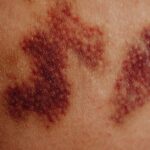
A strawberry hemangioma starts as a flat, red patch. It may look like a small scratch or a bruise. Over the first few months, it becomes raised, bumpy, and bright red. The name comes from its appearance — it looks like the surface of a strawberry.
Some hemangiomas are deeper in the skin. These may appear as a bluish lump with a smooth surface. Others are a mix of both superficial and deep components. The size varies widely. Some are as small as a pea. Others cover large areas of the face, scalp, chest, or limbs.
Most hemangiomas are harmless and cause no symptoms. However, certain locations can create problems. A hemangioma near the eye can interfere with vision. One inside the airway can cause breathing difficulty. One around the mouth or nose can affect feeding or breathing. Ulceration is another concern — the skin over the hemangioma can break down, causing pain, bleeding, or infection.
When Should a Doctor Evaluate a Hemangioma?
All new parents should have their pediatrician look at any birthmark that appears after birth. Most hemangiomas are diagnosed by physical exam alone. Imaging is rarely needed unless the doctor suspects a deeper hemangioma or one involving internal organs.
Prompt evaluation is especially important in certain situations. If the hemangioma is on the face, near the eye, nose, or mouth, seek medical advice early. If it grows very rapidly — faster than expected — a doctor should assess it. If it bleeds, becomes painful, or shows signs of infection, medical attention is needed.
There is also a rare condition called hemangiomatosis, where many hemangiomas appear on the skin and also involve internal organs like the liver. This requires specialist care. Most pediatricians will refer to a pediatric dermatologist or a vascular anomalies center when the situation is complex.




What Is the Treatment for Strawberry Hemangiomas?
Most hemangiomas need no treatment at all. The standard approach is active observation. The doctor monitors growth and checks for complications, but no medication or procedure is used. Parents are guided on what to watch for and when to call.
Treatment is reserved for hemangiomas that cause problems or are likely to cause problems. The decision is based on location, size, growth rate, and age of the child. The most common reasons to treat include vision obstruction, airway compromise, ulceration, bleeding, or significant disfigurement on the face.
The first-line medical treatment is a class of medications called beta-blockers. Propranolol is the most widely studied and used. It works by constricting blood vessels and reducing growth signals. It is given orally, usually twice daily, and is most effective when started during the growth phase — typically before 6 months of age.
Propranolol is well tolerated by most infants, but it is a medication with real effects. Blood pressure, heart rate, and blood sugar can be affected. Treatment is usually initiated under medical supervision, and dosing is adjusted based on weight. Common side effects include sleep disturbances, cool hands and feet, and mild gastrointestinal upset.
Topical beta-blockers like timolol gel are used for thin, superficial hemangiomas. These are applied directly to the skin and have fewer systemic effects. They are not appropriate for thick or deep hemangiomas.
Surgery is rarely the first choice. It may be considered for hemangiomas that do not respond to medication, for those that leave significant excess skin after involution, or for lesions that obstruct vital structures. Laser therapy can help with superficial redness or ulceration but does not stop deep growth.
No home remedies or over-the-counter treatments are proven to shrink hemangiomas. Some internet sources suggest herbal creams or essential oils. No clinical evidence supports these claims, and some can irritate the skin or cause harm.
What Happens If a Hemangioma Is Left Untreated?
The natural history is favorable for most children. After the growth phase ends, the hemangioma begins to shrink. This process is slow. By age 5, about half of hemangiomas have fully resolved. By age 10, most have resolved completely or nearly so.
Resolution does not mean the skin returns to normal in every case. Some children are left with a small mark. The skin may be slightly lighter or darker than the surrounding area. There may be a subtle change in texture. Large hemangiomas can leave loose, sagging skin, especially on the face or neck.
Ulcerated hemangiomas can leave scars. The risk of scarring is higher when ulceration occurs. Early treatment of ulceration — with wound care, pain management, or medication — can reduce this risk.
Parents often worry about the appearance of a hemangioma on a visible part of the body. It is important to know that most will fade substantially over time. Waiting is a legitimate strategy when there is no functional risk.
Are There Complications Parents Should Watch For?
Ulceration is the most common complication. It occurs in about 10% of hemangiomas, most often during the rapid growth phase. The surface breaks down, forming a sore. This can be painful and may bleed. Infection is possible but uncommon. If you notice a sore, crust, or bleeding, contact your pediatrician.
Hemangiomas around the eye require close monitoring. Even a small lesion can press on the eyeball or block vision. This can lead to amblyopia, or lazy eye, if left untreated. An ophthalmologist should evaluate any hemangioma affecting the eye area.
Hemangiomas on the nose, lips, or chin can interfere with feeding. Those in the beard distribution — the lower face and neck — have a higher risk of being associated with airway hemangiomas. Noisy breathing, stridor, or difficulty breathing warrants immediate medical attention.
Large facial hemangiomas can occasionally be part of a syndrome called PHACE syndrome. This involves structural abnormalities of the brain, arteries, eyes, and chest. It is rare. A specialist will assess for this if the hemangioma is large and segmental on the face.
Do Hemangiomas Recur After Treatment or Resolution?
Once a hemangioma has fully involuted, it does not regrow. This is true whether it resolved on its own or with treatment. The blood vessels that formed the lesion are gone.
However, some residual skin changes can persist. A faint red stain, a slight depression, or textural change may remain. These are cosmetic issues, not medical problems. They can be addressed later in childhood if desired, but many fade with time.
There is no evidence that having a strawberry hemangioma increases the risk of cancer or any other disease later in life. These are entirely benign vascular lesions.
Frequently Asked Questions
Can a strawberry hemangioma be prevented?
No. There is no known way to prevent a strawberry hemangioma from forming. It is not related to anything the mother did during pregnancy.
At what age do strawberry hemangiomas go away?
Most hemangiomas stop growing by 12 months and then begin to shrink. About half are fully resolved by age 5, and most are gone or nearly gone by age 10.
Is propranolol safe for infants with hemangiomas?
Propranolol is an FDA-approved treatment for infantile hemangiomas and is widely used with a good safety record. It requires medical supervision because it can affect blood pressure, heart rate, and blood sugar.
When should treatment for a hemangioma start?
Treatment is most effective when started during the growth phase, usually before 6 months of age. Earlier treatment is considered when the hemangioma threatens vision, breathing, or feeding.
