
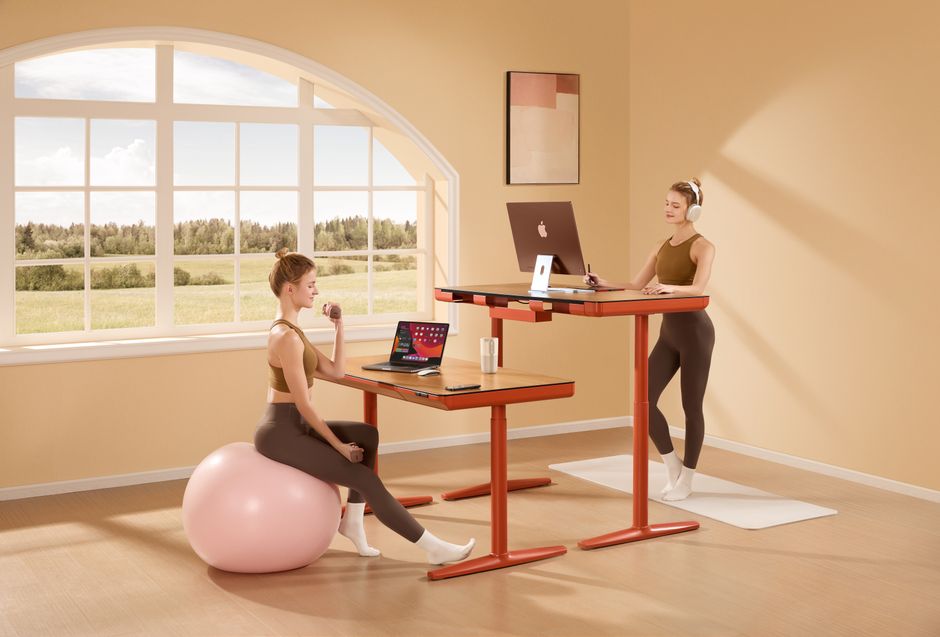
A standing desk is a desk designed to be used while standing rather than sitting. Most modern versions are adjustable, letting you switch between sitting and standing positions throughout the day. The idea behind them is simple: humans did not evolve to sit for eight hours straight, and changing posture regularly may reduce some of the strain that long sitting places on the body.
That said, standing desks are not a cure for a sedentary lifestyle. Research on their health effects is still developing, and the evidence is stronger for some benefits than others. Here is what is actually known.
What Is A Standing Desk and How Does It Work?
A standing desk raises the work surface so you can type and read while on your feet. The simplest models are fixed-height and set permanently at standing level. Adjustable models use a crank, a pneumatic lift, or an electric motor to move the surface up and down.
Electric sit-stand desks are the most common type sold today. Most use a dual-motor system and memory presets so you can return to a saved height with one button press. Height range matters: a desk that does not rise high enough forces you to hunch, which defeats the purpose.
For most adults, a standing work surface should sit at roughly elbow height when the arms hang relaxed at the sides. The forearms should rest parallel to the floor. If you are tall or short, a fixed desk may not fit you at all, which is one practical argument for an adjustable model.
Standing desks do not burn a meaningful number of extra calories on their own. A commonly cited figure is that standing burns somewhat more energy than sitting per hour, but the difference is small. Standing all day will not replace exercise, and no desk design changes that.
What Does the Research Actually Show About Standing Desks?
The strongest evidence for standing desks relates to discomfort, not disease prevention. Several studies have found that sit-stand desk users report less back and neck discomfort than people who sit all day. The effect is modest and varies between people.
The evidence for weight loss, heart health, or longevity is much weaker. Some research suggests that breaking up long sitting periods is associated with better metabolic markers, but it is difficult to separate the desk itself from other habits. People who use standing desks may also exercise more, eat differently, or have jobs that allow more movement.
There is a specific caution worth knowing. A large study of office workers in Australia found that people whose jobs involved mostly standing had a higher risk of heart disease than those who mostly sat. That finding does not apply directly to desk workers who alternate positions, but it undercuts the idea that standing is automatically better. Prolonged static standing carries its own risks, including varicose veins and foot problems.
One clarification that gets lost in marketing: the goal is not to stand more. The goal is to move more and sit less continuously. A standing desk is one tool for that. It is not a treatment for any medical condition, and no large trial has shown that standing desks reduce mortality or prevent chronic disease.
What Are the Potential Benefits of Using a Standing Desk?
The benefits that show up most consistently in studies are about comfort and posture.
- Less low back discomfort during the workday, based on self-reported measures in several studies
- Reduced neck and shoulder tension for some users
- More frequent posture changes, which may ease muscle fatigue
- Easier incorporation of movement breaks, since standing makes it simpler to step away
Some people also report better focus while standing, though this is anecdotal and not well studied. Others find the opposite, especially for tasks that require deep concentration. Individual response varies enough that no single recommendation fits everyone.
It is worth separating what a standing desk does from what exercise does. Regular physical activity has strong evidence for reducing risk of heart disease, type 2 diabetes, and several cancers. A standing desk does not substitute for that. If you replace sitting with standing but change nothing else, the health impact is likely small.





What Are the Risks of Standing All Day?
Standing for long stretches without moving is not harmless. The main concerns reported in occupational health research include:
- Foot and heel pain, including plantar fasciitis
- Lower leg swelling and discomfort
- Varicose veins, particularly with a genetic predisposition
- Low back pain from prolonged static standing
- Increased risk of carotid artery disease in occupations that require mostly standing, based on that Australian study
The pattern that emerges from this research is that static posture of any kind, sitting or standing, is the problem. The body seems to do better with frequent position changes than with any single “best” posture.
People with certain conditions should talk to a clinician before switching to prolonged standing. This includes anyone with existing vein problems, foot or ankle conditions, or pregnancy-related circulation changes. No clinical guidelines specifically address standing desk use during pregnancy, so individual medical advice is the appropriate source here.
How Should You Use a Standing Desk?
Alternating between sitting and standing is the approach most often recommended by ergonomics professionals. The exact ratio is not established by strong evidence, but a common suggestion is to start with short standing periods and build up gradually.
Practical steps that reduce the downsides:
- Start with 20 to 30 minutes of standing at a time, then sit again
- Use an anti-fatigue mat if you stand on a hard floor
- Wear supportive shoes rather than going barefoot or wearing flat dress shoes
- Adjust the desk so your elbows rest at about 90 degrees
- Keep the monitor at eye level whether sitting or standing
- Shift weight between feet and move around rather than standing rigidly
The 20 to 30 minute starting range is a common ergonomic suggestion, not a figure from a clinical trial. There is no established dose of standing that has been shown to produce specific health outcomes. Treat any specific number you see online with that context.
If you feel pain in your feet, legs, or back while standing, that is a signal to sit down and reassess, not to push through. Discomfort during standing desk use is not a sign that you need to try harder.
Are Standing Desks Worth It?
For people who sit for many hours a day and experience back or neck discomfort, a sit-stand desk may help. The evidence for comfort improvement is reasonable, though not overwhelming. The evidence for disease prevention is weak.
If your main goal is better health, the more reliable path is regular physical activity, not a piece of office furniture. A standing desk can support that goal by making it easier to break up long sitting periods, but it does not replace exercise.
Cost varies widely. Basic fixed-height converters cost far less than full electric desks. If you are unsure whether you will use one, a converter that sits on top of your existing desk is a low-risk way to test the idea before investing in a full replacement.
What matters most is not which desk you choose. It is how often you change position, how much you move, and whether you get regular exercise outside of work. A standing desk is a small supporting tool, not a solution on its own.
Frequently Asked Questions
Do standing desks help you lose weight?
No meaningful weight loss has been demonstrated from standing desk use alone. Standing burns slightly more energy than sitting, but the difference is small and unlikely to produce measurable weight change without other changes.
How long should you stand at a standing desk each day?
No clinical guideline establishes a specific duration. A common ergonomic suggestion is to start with 20 to 30 minute standing periods and alternate with sitting, adjusting based on comfort.
Is standing all day bad for you?
Yes, prolonged static standing carries risks including foot pain, leg swelling, varicose veins, and back discomfort. Research on mostly-standing occupations has also found higher rates of some circulatory problems compared with mostly-sitting work.
Can a standing desk replace exercise?
No. Standing at a desk does not provide the cardiovascular and metabolic benefits of regular physical activity. It is best viewed as a way to reduce continuous sitting, not as a substitute for exercise.
