
A shea nut is the seed of the shea tree, a slow-growing tree native to the savanna belt of West Africa. Inside that nut is a fat-rich kernel that people have pressed into a solid vegetable fat for centuries. Today you will find shea butter in skin creams, lip balms, hair products, and even some chocolate. True allergy to shea nut is considered rare, but it is not impossible, and it matters most for people with a known tree nut allergy.
What Is A Shea Nut And Where Does It Come From?
The shea tree is known scientifically as Vitellaria paradoxa. It grows wild across a band of Africa that stretches from Senegal in the west to Sudan and Uganda in the east. The tree does not produce fruit until it is roughly 10 to 15 years old, and it can live for two centuries or more.
The fruit looks a little like a small green plum. Inside the fleshy pulp sits a single hard-shelled seed. That seed is the shea nut. Crack the shell and you find the kernel, which is where the fat comes from.
Harvesting is largely done by hand, mostly by women, and the work is seasonal. The fruit falls from the tree and is gathered from the ground. The kernels are then boiled, dried, cracked, and roasted. From there the fat is extracted, either by grinding and whipping the kernels into a paste or by pressing them.
The result is shea butter. Unrefined versions keep a nutty smell and a pale yellow or cream color. Refined versions are white and nearly odorless because processing has stripped out most of the natural compounds.
What Is Shea Butter Used For?
Shea butter has two very different lives: one in food and one in skincare.
In food, it has been used as a cooking fat in West Africa for generations. It also shows up in the global food supply as a cocoa butter equivalent. Because shea butter and cocoa butter have similar melting and texture properties, manufacturers can blend shea into chocolate and confectionery products. Food labeling rules in many countries allow this under specific categories, so shea may be present in a product without the word “shea” appearing on the front of the package.
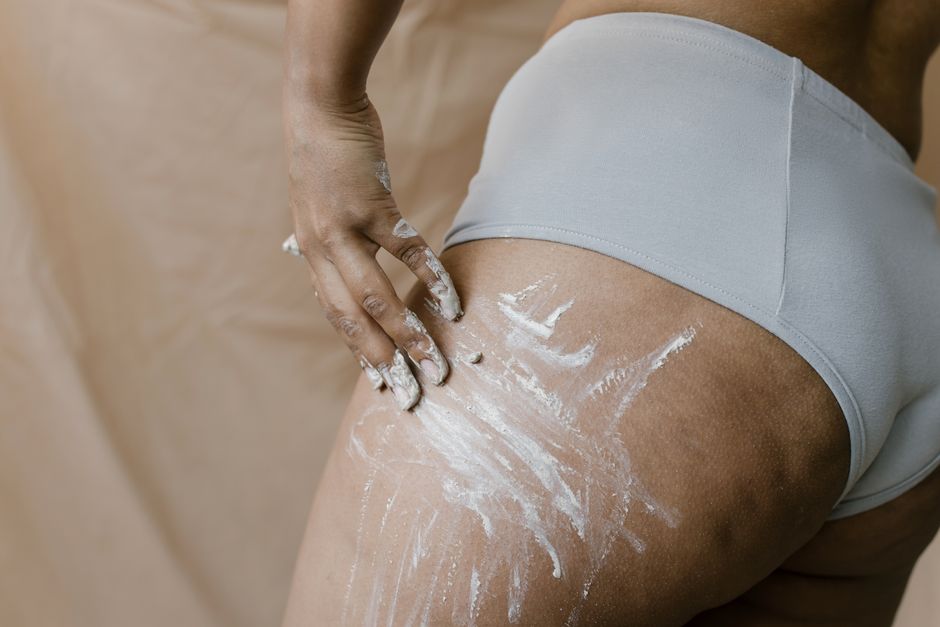
In skincare, shea butter works mainly as an occlusive and emollient. That means it sits on the skin surface and slows water loss, and it fills in the tiny gaps between skin cells to make the surface feel smoother. It contains fatty acids such as oleic and stearic acid, along with vitamin E and plant sterols.
What shea butter does well is moisturize and soften. That much is straightforward and well supported.
What it does beyond that is where the evidence thins out. You will see claims that shea butter reduces inflammation, fades scars, treats eczema, or reverses stretch marks. Some laboratory studies have looked at anti-inflammatory compounds in shea extracts. But lab findings in cells or animals do not automatically translate into a benefit when the product is rubbed on human skin. No large human trials have confirmed that shea butter treats eczema or erases scars. It can make dry, cracked skin feel better, and that is a real benefit — just a narrower one than marketing often suggests.
Is Shea Nut Allergy Common?
Reported cases of true shea nut allergy are rare. This is worth stating plainly, because the fear is more common than the allergy.
Part of the confusion comes from how shea is categorized. In the United States, the eight major tree nuts that must be declared on food labels are almonds, walnuts, pecans, cashews, pistachios, hazelnuts, Brazil nuts, and macadamia nuts. Shea is not on that list. The Food and Drug Administration has treated shea nut as a tree nut for some labeling purposes, but it is not one of the eight major allergens that trigger the strictest labeling requirements.
Botanically, shea belongs to the Sapotaceae family. That makes it a distant relative of sapodilla and mamey sapote, not a close cousin of almonds or cashews. Cross-reactivity — where the immune system mistakes one protein for another — is more likely between closely related plants. Shea sits far from the major tree nuts on the family tree.
That said, rare does not mean never. Case reports in the medical literature have described allergic reactions to shea nut, including skin reactions after topical use and, in at least some reports, reactions after eating foods containing shea. Because these are individual case reports rather than large studies, the true prevalence is unknown.





Who Should Be Careful With Shea Products?
The people who need to pay attention are those with a confirmed tree nut allergy, and especially those who have had a severe reaction to any nut.
The reasoning is cautious rather than definitive. Because shea is a nut-derived ingredient and because a small number of reactions have been reported, some allergists advise their tree-nut-allergic patients to avoid shea until they know how they respond. Others consider the risk low enough that avoidance is not necessary. This is a genuine difference of clinical opinion, not a settled question.
If you have a tree nut allergy, the practical step is to ask your allergist about shea specifically. Do not assume your allergy to one nut automatically extends to shea, and do not assume it does not. Your own history and testing are what matter.
For people with eczema or sensitive skin, shea butter is generally well tolerated. Irritation can still happen, as it can with almost any topical product. If a product stings, burns, or causes a rash, stop using it.
One more point worth knowing: shea butter is not the same as shea nut. The extraction process removes most proteins, and proteins are what trigger allergic reactions. Highly refined shea butter contains very little protein, which is one reason reactions to it are uncommon. Unrefined shea butter retains more of the original material.
How Does Shea Compare To Other Nut Butters And Oils?
Shea butter is often grouped with cocoa butter, coconut oil, and other plant fats in conversation, but they behave differently.
| Product | Source | Main use | Texture at room temp |
|---|---|---|---|
| Shea butter | Shea tree kernel | Skincare, some foods | Solid, melts on skin |
| Cocoa butter | Cacao bean | Chocolate, skincare | Solid, melts near body temp |
| Coconut oil | Coconut meat | Cooking, skincare | Solid when cool, liquid when warm |
| Almond oil | Almond | Cooking, skincare | Liquid |
The key difference for allergy purposes is the source. Almond oil comes from a major tree nut. Shea butter comes from a nut that is not in that major allergen group. Coconut is botanically a fruit, not a tree nut, though the FDA labels it as a tree nut for regulatory reasons — a labeling quirk that has confused people for years.
Does Shea Butter Have Any Real Downsides?
For most people, shea butter is well tolerated. The most common issue is simply that it does not suit every skin type. It is heavy, and on acne-prone or oily skin it can feel greasy or contribute to clogged pores in some users.
People with a known allergy to shea should avoid it, in both skincare and food. Because shea can appear in chocolate and confectionery without obvious labeling, reading ingredient lists matters if you have a confirmed reaction.
There is also an ethical dimension some buyers care about. Shea is a major source of income for women in West Africa, and the supply chain has faced concerns about fair pricing and labor practices. That is not a health issue, but it is part of why some brands highlight sourcing.
What Should You Take Away From This?
Shea nut is the seed of a West African tree, and shea butter is the fat pressed from it. It is a genuinely useful moisturizer and a long-standing cooking fat in its home region. Its role in chocolate and cosmetics is real and widespread.
Shea nut allergy is rare but documented. If you have a tree nut allergy, this is a question for your allergist rather than a decision to make on your own. If you do not, shea butter is a low-risk ingredient for most people, with the main caveat being that its bigger health claims — scar healing, eczema treatment, inflammation reduction — are not backed by strong human evidence.
Frequently Asked Questions
Is shea nut the same as shea butter?
No. The shea nut is the seed inside the fruit, and shea butter is the fat extracted from the kernel inside that seed. The extraction process removes most of the proteins, which is one reason reactions to refined shea butter are uncommon.
Can you be allergic to shea butter if you have a nut allergy?
It is possible but considered rare, and clinical opinions differ on whether avoidance is needed. If you have a confirmed tree nut allergy, ask your allergist about shea specifically rather than deciding on your own.
Is shea nut one of the major tree nuts?
No. The major tree nuts that require strict labeling in the US are almonds, walnuts, pecans, cashews, pistachios, hazelnuts, Brazil nuts, and macadamia nuts. Shea is not among them, though the FDA has treated it as a tree nut for some labeling purposes.
Does shea butter actually heal scars or eczema?
No large human trials have confirmed that shea butter heals scars or treats eczema. It works well as a moisturizer by slowing water loss from the skin, which is a real but narrower benefit than many marketing claims suggest.
