
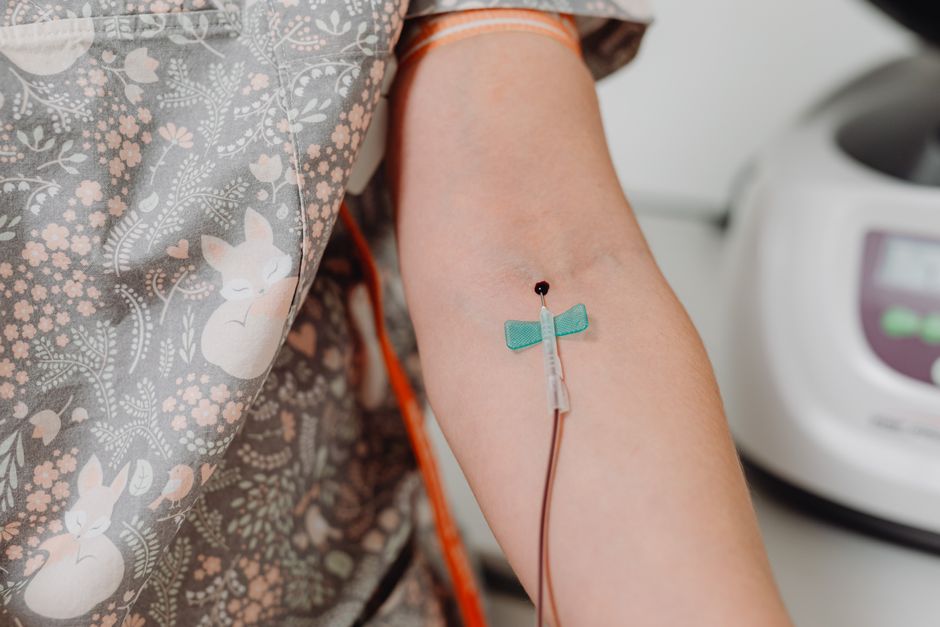
A rare blood group is a blood type that is unusually uncommon in a population, or one that is missing a red blood cell antigen that almost everyone else carries. Most people know their ABO type and whether they are Rh positive or negative. But those two systems are only the beginning. Red blood cells carry hundreds of antigens, and the way they combine in any one person is nearly unique.
That is why “rare” has two meanings in transfusion medicine. It can mean a blood type that is scarce in a region, like B negative in parts of Asia. Or it can mean a type so uncommon worldwide that only a handful of donors are known to have it. Both matter, but for different reasons.
What Is A Rare Blood Group?
The precise definition is not about how many people share your blood type. It is about how hard that blood type is to replace.
A blood group is generally called rare when a patient who needs it cannot be reliably matched from the local donor pool, and no alternative blood product will work safely. The International Society of Blood Transfusion recognizes more than 40 blood group systems and over 350 red cell antigens. A person’s full antigen profile is a combination that may occur in only a tiny fraction of the population.
The American Rare Donor Program, run jointly by the American Red Cross and AABB, defines a rare donor as someone whose blood type occurs in fewer than 1 in 1,000 people, or who lacks a high-prevalence antigen that more than 99% of people carry. That second category is where things get genuinely difficult.
High-prevalence antigens are the key concept here. Some antigens, like Vel or Jr(a), are present on the red cells of nearly everyone. A person who lacks one of them can only receive blood from another person who also lacks it. Those donors are extraordinarily scarce.
What Are the Main Blood Group Systems Besides ABO?
ABO and Rh are the two systems that matter most in routine transfusion, which is why they are the ones on your donor card. But they are far from the whole picture.
The Rh system alone includes dozens of antigens beyond the D antigen that determines positive or negative status. The Kell, Kidd, Duffy, MNS, and Lutheran systems each contribute their own antigens. The Diego system is notable because it is far more common in people of East Asian and some Indigenous American ancestry than in people of European descent.
Some blood types are rare in one population and common in another. This is a critical point that gets lost in general discussions. U-negative blood is rare globally but more frequent in people of African ancestry. The Bombay phenotype, which is an ABO variant rather than a separate system, is extremely rare overall but appears more often in parts of India.
This is why rare blood is not one global list. It is a patchwork of regional and ancestral patterns.
Why Does Your Blood Group Matter for Transfusions?
Your immune system treats foreign antigens on red blood cells as threats. If you receive blood carrying an antigen your body has never seen, your immune system can build antibodies against it.
The first exposure may cause no obvious problem. The danger comes later. If you are exposed to that same antigen again, the antibodies can trigger a reaction that destroys the transfused red cells. This is called a delayed hemolytic transfusion reaction, and it can range from mild to life-threatening.
People who need repeated transfusions face the highest risk. This includes people with sickle cell disease, thalassemia, and some cancers. Each transfusion is a chance to develop a new antibody. Over years, a patient can become “alloimmunized” against many antigens, narrowing the pool of blood that is safe for them.
For these patients, finding compatible blood is not a convenience issue. It is the difference between a safe transfusion and a serious reaction.





How Common Are Rare Blood Types?
Truly rare blood types are far less common than most people assume. The famous ones are famous precisely because they are so scarce.
The Rh-null phenotype, sometimes called “golden blood,” is one of the rarest. People with it lack all Rh antigens. Fewer than 50 individuals worldwide have been identified in the medical literature, though the true number may be higher because not everyone is tested. The Bombay phenotype (Oh) is also extremely rare, estimated at roughly 1 in 10,000 people in parts of India and far rarer elsewhere.
These numbers are estimates, and estimates in rare blood research are often based on limited screening. It is fair to say the exact global counts are not known.
How Is Rare Blood Identified and Matched?
Standard blood typing only checks for ABO and the Rh D antigen. That is enough for most routine transfusions. It does not reveal whether you carry or lack the hundreds of other antigens.
Finding rare blood requires more detailed testing. A process called antibody screening and identification looks for unexpected antibodies in a patient’s plasma. When a patient has multiple antibodies or an antibody against a high-prevalence antigen, the blood bank escalates to antigen typing and crossmatching against a wider panel of donors.
For the hardest cases, laboratories use frozen blood banks. Rare donor units are collected, frozen in glycerol, and stored for years so they are available when a matching patient appears. The American Rare Donor Program and similar registries worldwide coordinate this search, sometimes flying units across the country or between countries.
One non-obvious point: your blood type being rare does not mean you are unhealthy. Rare blood groups are almost always normal variations, not diseases. They only become medically significant when a transfusion is needed.
What Are the Risks for People With Rare Blood Groups?
The main risk is not having compatible blood available when you need it. This is most acute in emergencies, where there is no time for an extended search.
For planned procedures, hospitals can identify a match in advance. For emergencies, or for patients who have developed many antibodies, the situation is harder. In extreme cases, clinicians may use autologous transfusion, where a patient’s own blood is collected and stored ahead of a planned surgery. This only works when surgery is scheduled and the patient is healthy enough to donate.
Pregnancy adds another layer. A fetus can inherit a blood type from the father that differs from the mother’s. If the mother has been sensitized to an antigen the fetus carries, the resulting antibodies can attack the fetal red blood cells. This is the same mechanism behind Rh disease, and it can occur with other antigens too. It is one reason antibody screening is part of routine prenatal care.
Can You Donate Blood If You Have a Rare Blood Group?
Yes, and rare donors are especially valuable. If you have a rare type, your blood may be the only match for a patient somewhere in the country.
Rare donors are often encouraged to donate regularly and may be asked to give a larger volume or a specific component, such as red cells only. Some blood centers keep rare donors on a contact list so they can be called when a matching patient is identified.
If you have ever been told your blood type is unusual, or you have received a letter from a blood center about a rare antigen, it is worth following up. That information can be registered so it is available when it is needed.
How Can You Find Out Your Blood Group?
Standard blood donation is the easiest way. When you donate, your blood is typed, and many centers will tell you your ABO and Rh type.
That tells you your basic type, not whether you carry a rare antigen profile. Full antigen typing is not part of routine donation screening and is generally only done when there is a clinical reason.
If you have a family history of a rare blood type, have received many transfusions, or have had a transfusion reaction, ask your doctor whether more detailed testing is warranted. In most cases, it is not necessary. But when it is, the information can be important for your future care.
Frequently Asked Questions
What is the rarest blood type in the world?
Rh-null, often called golden blood, is widely considered the rarest, with fewer than 50 people identified in the medical literature. The Bombay phenotype is also extremely rare.
Is O negative the rarest blood type?
No. O negative is uncommon but not rare, and it is important because it can be given to many patients in emergencies. Truly rare types like Rh-null are far scarcer than O negative.
Can two parents have a child with a rare blood group?
Yes, if both parents carry the genetic variants for a rare type, a child can inherit it. Many rare blood groups follow recessive inheritance, meaning both parents must pass on the trait.
Does having a rare blood group affect your health?
Generally no. Rare blood groups are normal variations and do not cause disease on their own. They only become medically important when a transfusion or pregnancy is involved.
