
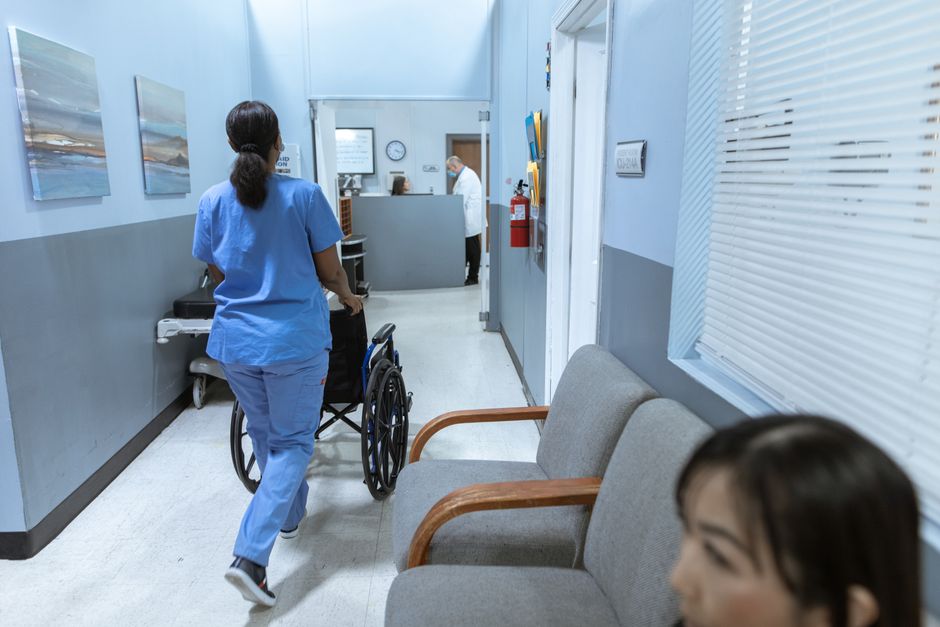
Psychiatric nurses are registered nurses (RNs) or advanced practice nurses who specialize in mental health care. They treat people with conditions like depression, anxiety, bipolar disorder, and schizophrenia. Psychiatric nurses can work in hospitals, clinics, or private practices. Their duties include assessing patients, managing medications, providing therapy, and coordinating care. Pay varies by role and location, but the median annual salary for psychiatric RNs is around $80,000–$90,000, while psychiatric nurse practitioners (PMHNPs) earn over $120,000. To become one, you need a nursing degree, an RN license, clinical experience in mental health, and often a graduate degree for advanced practice roles.
What Exactly Is a Psychiatric Nurse?
A psychiatric nurse is a registered nurse (RN) or an advanced practice registered nurse (APRN) who focuses on mental health. The most common advanced role is a Psychiatric-Mental Health Nurse Practitioner (PMHNP). Psychiatric RNs work under the supervision of doctors or nurse practitioners. PMHNPs have more independence—they can diagnose mental health conditions, prescribe medications, and provide therapy in many states.
This field combines medical nursing with psychological care. Psychiatric nurses are trained to understand both the physical and emotional aspects of mental illness. They often work in psychiatric hospitals, community mental health centers, correctional facilities, and outpatient clinics.
What Are the Duties of a Psychiatric Nurse?
Duties depend on the level of training and the work setting. Psychiatric RNs typically:
- Assess patients’ mental and physical health
- Administer and monitor psychiatric medications
- Provide crisis intervention and de-escalation
- Educate patients and families about mental health conditions
- Coordinate care with therapists, social workers, and doctors
- Document patient progress and changes in condition
Psychiatric nurse practitioners (PMHNPs) do everything above plus:
- Diagnose mental health disorders using DSM-5 criteria
- Order and interpret lab tests or psychological assessments
- Prescribe medications (including controlled substances in most states)
- Provide psychotherapy (individual, group, or family)
- Manage treatment plans independently or in collaboration with a psychiatrist
It’s important to note that psychiatric nursing is not the same as being a psychologist or a therapist. Nurses bring a medical perspective: they monitor vital signs, check for medication side effects, and address physical health conditions that can affect mental health.
How Much Does a Psychiatric Nurse Make?
Pay varies by role, experience, and location. According to the U.S. Bureau of Labor Statistics (BLS), the median annual wage for all registered nurses in 2023 was approximately $86,000. Psychiatric RNs often earn similar amounts, though some settings (like acute psychiatric hospitals) may pay more because of the demanding nature of the work.
For psychiatric-mental health nurse practitioners (PMHNPs), the BLS groups them under nurse practitioners, who had a median annual wage of about $126,000 in 2023. PMHNPs with experience or working in high-demand areas (such as rural mental health) may earn over $150,000.
Pay also depends on the employer. Hospitals, government agencies (Veterans Affairs), and private practices tend to pay more than community mental health centers. Geography matters too: states like California, New York, and Massachusetts have higher average wages, while rural areas often offer lower pay but may provide loan forgiveness incentives.
These figures are general. Actual salaries can differ based on certifications, overtime, and benefits. The BLS does not have a specific category for “psychiatric nurse,” so these estimates come from broader nursing and NP data.





How Do You Become a Psychiatric Nurse?
There are two main paths: becoming a psychiatric RN or becoming a psychiatric-mental health nurse practitioner (PMHNP). Both start with nursing education and licensure.
Path to Psychiatric RN
- Earn a nursing degree. Options: an Associate Degree in Nursing (ADN) takes 2–3 years; a Bachelor of Science in Nursing (BSN) takes 4 years. Many employers prefer BSN-prepared nurses.
- Pass the NCLEX-RN to get your registered nurse license.
- Gain experience in mental health nursing. Many new nurses start in inpatient psychiatric units. One to two years of experience is typical before seeking certification.
- Obtain certification (optional but recommended). The American Nurses Credentialing Center (ANCC) offers the Psychiatric-Mental Health Nursing (RN-BC) certification. Requires 2,000 hours of clinical practice in psychiatric nursing within 3 years.
Path to Psychiatric Nurse Practitioner (PMHNP)
- Earn a BSN from an accredited program.
- Pass the NCLEX-RN and get your RN license.
- Gain at least one year of RN experience (many PMHNP programs prefer two years of psychiatric nursing experience).
- Complete a graduate program: either a Master of Science in Nursing (MSN) or Doctor of Nursing Practice (DNP) with a specialization in psychiatric-mental health. Programs take 2–3 years full-time. Coursework includes advanced pharmacology, psychotherapy, and psychopathology.
- Complete clinical hours (typically 500–600 for MSN, 1,000+ for DNP) supervised by a preceptor.
- Pass the PMHNP certification exam (ANCC offers the Psychiatric-Mental Health Nurse Practitioner – Board Certified credential).
- Apply for state licensure as an APRN. Requirements vary by state—some require collaborative agreements with a physician; others grant full practice authority.
Total time: 4–6 years for RN path, 6–8 years for NP path. Accelerated programs exist for students with a prior degree in another field.
Psychiatric RN vs. Psychiatric NP: What’s the Difference?
This is a common point of confusion. Psychiatric RNs work under the direction of a doctor or NP. They cannot diagnose or prescribe. PMHNPs have advanced training and can work independently in many states. The NP role requires a graduate degree and national certification.
Key comparison:
| Role | Education | Scope of Practice | Median Salary (approx.) |
|---|---|---|---|
| Psychiatric RN | ADN or BSN | Assess, medicate per order, crisis intervention, education | $80,000–$90,000 |
| PMHNP | MSN or DNP | Diagnose, prescribe, provide therapy, independent practice (varies by state) | $120,000–$150,000 |
Both roles are essential. The RN handles day-to-day care and safety. The NP manages treatment plans and prescribes medications. Some hospitals also employ clinical nurse specialists (CNS) in psychiatry, a role that focuses more on system improvement and staff education.
Is Psychiatric Nursing a Good Career Choice?
Yes, for many people. Demand for mental health care is rising, and psychiatric nurses are in short supply. The BLS projects 6% growth for RNs and 45% growth for nurse practitioners through 2032—much faster than average. Job security is strong.
The work can be emotionally demanding. Psychiatric nurses deal with suicidal patients, trauma, and behavioral crises. Burnout rates are moderate compared to other nursing specialties, but self-care and support systems matter.
On the positive side, psychiatric nursing offers flexible hours, diverse work settings, and the ability to build long-term relationships with patients. It’s also one of the few nursing fields where you can use both medical and psychological skills every day.
If you are considering this career, it helps to have patience, empathy, and strong communication skills. Direct experience—volunteering or working as a mental health technician—can confirm if it’s the right fit.
Frequently Asked Questions
What qualifications do I need to become a psychiatric nurse?
You need a nursing degree (ADN or BSN) and a registered nurse license. For advanced practice, you need a graduate degree in psychiatric-mental health nursing and board certification.
How long does it take to become a psychiatric nurse?
Becoming a psychiatric RN takes 2–4 years. For a psychiatric nurse practitioner, add 2–3 years of graduate education after RN experience, totaling 6–8 years.
What is the difference between a psychiatric nurse and a psychologist?
Psychiatric nurses are medical professionals who can prescribe medications and manage physical health. Psychologists have doctoral degrees in psychology and provide therapy and testing but cannot prescribe in most states.
Do psychiatric nurses earn good money?
Yes. Psychiatric RNs earn a median salary around $86,000. Psychiatric nurse practitioners earn a median around $126,000, with experienced NPs in high-demand areas making more.
