
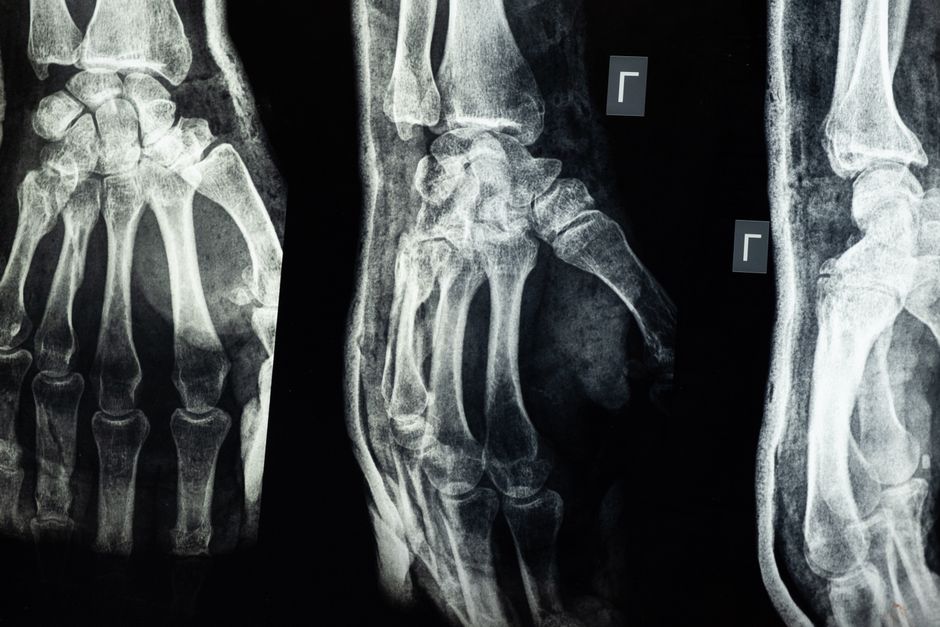
A periprosthetic fracture is a break in the bone that occurs around or near an artificial joint implant, most commonly a hip or knee replacement. These fractures typically happen when the bone surrounding the implant weakens over time or experiences a sudden impact, such as a fall. Treatment depends on the fracture’s location, the stability of the implant, and the quality of the patient’s bone, ranging from non-surgical management to complex revision surgery.
What Exactly Is a Periprosthetic Fracture?
Periprosthetic means “around a prosthesis,” which is the artificial joint. So a periprosthetic fracture is a broken bone next to or directly around a metal or plastic joint replacement. This is different from a regular fracture because the implant is already in the bone, which complicates healing and fixation.
The most common sites are around hip replacements (the femur) and knee replacements (the femur above the knee or the tibia below it). These fractures can happen during the initial surgery, but they are far more common years later as a result of minor trauma.
Because the implant occupies space within the bone, standard fracture treatments like casting or simple plating often do not work the same way. The surgeon must consider both the broken bone and the integrity of the joint replacement itself.
What Causes a Periprosthetic Fracture?
The leading cause is a low-energy fall from standing height. The bone around a joint replacement is often weaker than normal bone for several reasons. Stress shielding, where the implant takes over load-bearing and the surrounding bone loses density, is a major factor. Over time, this bone becomes thinner and more fragile.
Osteoporosis is a significant contributor. Many patients who receive joint replacements are older and may already have reduced bone density. This makes the bone more susceptible to breaking even with minimal force.
Osteolysis is another cause. Tiny particles of wear debris from the implant’s bearing surface can trigger an inflammatory response. This inflammation can silently destroy bone around the implant, creating voids or weakening the bone structure. In these cases, a fracture can occur with very little force.
Less commonly, a high-energy injury like a car accident can cause these fractures. Loosening of the implant itself can also predispose to fracture, as a loose implant creates stress risers in the bone.
How Are These Fractures Classified?
Surgeons use classification systems to decide on treatment. The most widely used system for hip periprosthetic fractures is the Vancouver classification. It divides fractures into three main types based on the location relative to the implant stem.
Type A fractures occur at or near the trochanters, the bony prominences at the top of the femur. Type B fractures occur around the stem of the implant or just below it. Type C fractures occur well below the tip of the implant stem.
For knee replacements, the location of the fracture relative to the implant and the integrity of the implant-bone interface are the key factors. The critical question is always whether the implant itself is still firmly attached to the bone or whether it has loosened.
If the implant is stable and well-fixed, the surgeon can usually fix the bone alone. If the implant is loose or unstable, the entire joint replacement may need to be revised.





What Are the Symptoms?
Sudden pain in the area of a joint replacement is the primary symptom. Patients often report hearing or feeling a pop or snap at the moment of injury. Swelling and bruising typically develop quickly.
In most cases, the patient cannot bear weight on the affected leg. The leg may appear shortened or rotated if the fracture is displaced. Any patient with a joint replacement who falls and experiences new pain should seek immediate medical attention.
Delayed treatment can turn a manageable fracture into a complex one. If the fracture shifts, it may damage the remaining bone stock, making future surgery more difficult.
What Are the Treatment Options?
Treatment is determined by three factors: the fracture location, whether the implant is stable, and the patient’s bone quality. Non-surgical treatment is reserved for stable, non-displaced fractures where the implant is secure.
Non-surgical management involves protected weight-bearing with crutches or a walker, sometimes combined with a brace. This approach carries risks of prolonged immobility, including blood clots and muscle wasting. It is typically only considered for very stable fracture patterns.
Surgical treatment is the standard for most periprosthetic fractures. The specific procedure depends on the fracture type.
- Open reduction and internal fixation (ORIF): The surgeon aligns the bone fragments and holds them in place with plates and screws. This is used when the implant is stable.
- Revision arthroplasty: If the implant is loose, the surgeon removes the old implant and places a new one, often with a longer stem that extends past the fracture site to stabilize the bone.
- Combined fixation and revision: Some complex fractures require both a new implant and additional plates or wires to secure the bone fragments.
Bone grafts or bone cement may be used to fill voids where bone has been lost. In severe cases with very poor bone quality, a distal femoral replacement (a large metal prosthesis replacing the end of the femur) may be necessary.
What Is the Recovery Like?
Recovery is generally slower and more complicated than the original joint replacement. Weight-bearing is often restricted for 6 to 12 weeks after surgery to allow the bone to heal. Physical therapy begins early but progresses cautiously.
Most patients require a walker or crutches for several weeks. Full recovery can take 3 to 6 months, and some patients never regain the same level of function they had before the fracture.
Complications are more common after periprosthetic fracture surgery than after primary joint replacement. Non-union, where the bone fails to heal, occurs in a significant percentage of cases. Infection and implant loosening are also concerns.
Mortality rates within the first year after a periprosthetic hip fracture are substantial, particularly in older patients with multiple health conditions. This is why these injuries are treated urgently, not as elective procedures.
Can Periprosthetic Fractures Be Prevented?
Prevention focuses on reducing fall risk and maintaining bone strength. Patients with joint replacements should prioritize balance exercises and muscle strengthening. Removing trip hazards at home and reviewing medications that cause dizziness can reduce fall risk.
Bone health is critical. Adequate calcium and vitamin D intake, along with weight-bearing exercise, help maintain bone density. Patients with diagnosed osteoporosis should discuss treatment options with their doctor, as medications can reduce fracture risk.
Regular follow-up with an orthopedic surgeon is also important. X-rays can detect silent bone loss or implant wear before a fracture occurs. Some patients may benefit from early intervention if bone loss around the implant is detected.
What Is the Prognosis?
The prognosis varies widely based on the fracture type and patient health. Stable fractures treated appropriately generally heal well. Complex fractures involving implant loosening have higher complication rates.
Studies show that most patients can return to walking, though many require ongoing use of a walker or cane. The goal of treatment is to restore the patient to their pre-fracture level of function, but this is not always achievable.
Patients who were active and healthy before the fracture have the best outcomes. Those with significant medical comorbidities face higher risks of complications and slower recovery.
Frequently Asked Questions
How serious is a periprosthetic fracture?
It is a serious injury that almost always requires surgery. Without treatment, the fracture can displace further, damage the implant, and significantly reduce the chance of a good outcome.
How long does it take to recover from a periprosthetic fracture?
Most patients need 3 to 6 months for bone healing and functional recovery. Weight-bearing restrictions typically last 6 to 12 weeks after surgery.
Can you walk on a periprosthetic fracture?
You should not walk on a suspected periprosthetic fracture. Bearing weight on an unstable fracture can cause further displacement and complicate surgical repair.
Is a periprosthetic fracture the same as a broken hip?
Not exactly. A broken hip usually refers to a fracture of the native hip joint. A periprosthetic fracture occurs specifically around an artificial joint implant, which changes the treatment approach significantly.
