
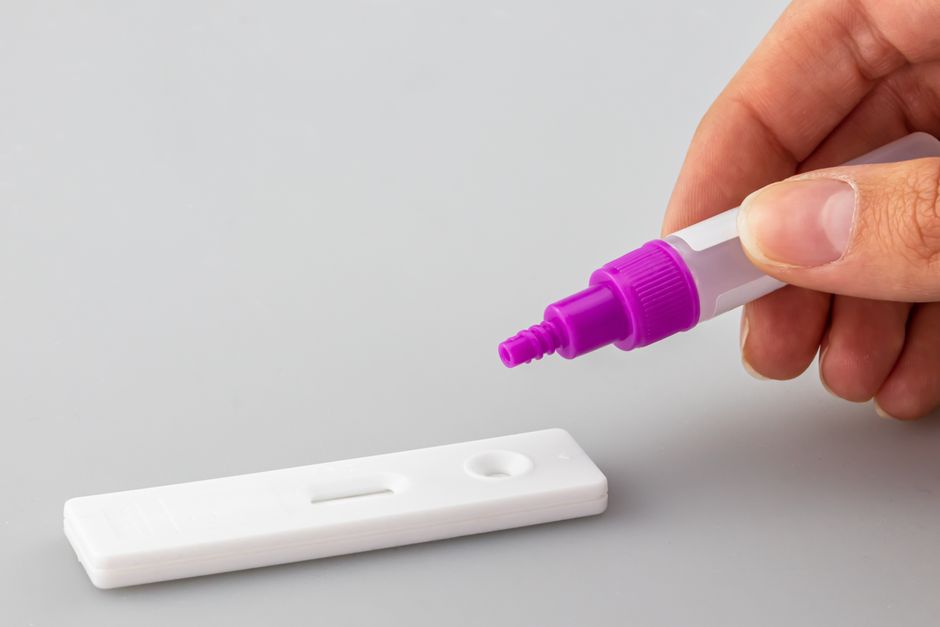
A PCR urine test is a lab test that looks for the genetic material of specific organisms in a urine sample. PCR stands for polymerase chain reaction, a technique that copies tiny amounts of DNA or RNA until they can be detected. Unlike a standard urine culture, which grows bacteria in a dish and takes days, a PCR test can identify a target organism directly and often within hours.
The test is used most often to detect sexually transmitted infections such as chlamydia and gonorrhea, and sometimes trichomoniasis or other organisms. It can also be used in some situations to look for viruses, certain bacteria that are hard to culture, or to check whether a treatment has cleared an infection. What it detects depends entirely on which targets the lab has been asked to look for.
What Is A PCR Urine Test And What Does It Detect?
A PCR urine test detects the DNA or RNA of a specific organism in your urine. It does not test your general health, kidney function, or hydration. It does not screen for “all infections.” It answers one narrow question: is the genetic material of this particular target present in this sample?
The polymerase chain reaction works by taking a small sample of genetic material and making millions of copies of it. If the target organism’s genetic sequence is there, even in very small amounts, the copying process amplifies it enough to be measured. If the target is not there, nothing gets amplified.
That design is why PCR is so sensitive. It can pick up an organism when a culture might miss it, especially if the organism is fragile, slow-growing, or present in low numbers. The trade-off is that PCR does not tell you whether the organism is alive. It detects genetic material, and genetic material can linger for a while after an infection is treated.
Most PCR urine tests ordered in routine care target one or more of the following:
- Chlamydia trachomatis, the bacterium that causes chlamydia
- Neisseria gonorrhoeae, the bacterium that causes gonorrhea
- Trichomonas vaginalis, a parasite that causes trichomoniasis
- Mycoplasma genitalium, a bacterium increasingly tested for in people with persistent urinary symptoms
Some labs offer combined panels that check several targets at once. Others offer tests for viruses such as herpes simplex or BK virus in specific clinical situations. The point is that “PCR urine test” describes a method, not a single test. The result only means something in the context of what was ordered.
How Is A PCR Urine Test Different From A Standard Urine Culture?
A urine culture grows whatever organisms are in the sample and then identifies them. PCR skips the growing step and looks directly for genetic material. That difference changes what each test can tell you.
A culture takes roughly two to three days for common bacteria and longer for slow growers. It shows which organisms are alive and growing, and it can test which antibiotics kill them. That last part matters, because antibiotic resistance is a real clinical problem and culture is still the standard way to check it for many infections.
PCR is faster, often same-day or next-day, and more sensitive for organisms that are hard to grow. Chlamydia is a good example. It is an intracellular bacterium that does not grow on standard culture media in a routine lab, so culture was never a practical option for it. PCR and similar nucleic acid tests became the standard because they detect what culture could not easily find.
What PCR cannot do is tell you which antibiotic will work. It does not test susceptibility. For infections where resistance patterns matter, such as many urinary tract infections caused by E. coli, culture remains the reference method. This is a common point of confusion. A negative PCR does not rule out every possible urinary infection, and a positive PCR does not automatically tell a clinician which drug to use.
When Is A PCR Urine Test Usually Ordered?
PCR urine testing is ordered most often when a sexually transmitted infection is suspected or when someone needs screening without symptoms. It is also used in specific situations where culture is unreliable or too slow.
Common reasons a clinician might order one include:
- Urinary symptoms such as burning, discharge, or frequent urination, especially in a sexually active person
- Routine screening for chlamydia and gonorrhea in certain age groups or in people with risk factors
- Checking whether an infection has cleared after treatment
- Evaluating persistent symptoms when earlier tests were negative
- Testing during pregnancy, where some infections carry risks to the pregnancy and newborn
For chlamydia and gonorrhea screening, a first-catch urine sample is often used. First-catch means the first part of the urine stream, not midstream. That detail matters because the organisms being tested for are more concentrated in the urethra, and the first portion of urine flushes them out. Collecting midstream, which is standard for a routine urinalysis, can reduce the chance of detection for these specific tests.
Some clinicians still order a PCR urine test when they suspect a routine bladder infection. The evidence for this is mixed. For uncomplicated urinary tract infections, culture with susceptibility testing generally remains the preferred approach because it guides antibiotic choice. PCR panels for urinary tract infection exist and are marketed widely, but their role in routine care is still being sorted out, and some professional guidance has cautioned against relying on them without clear evidence that they improve outcomes.
How Accurate Is A PCR Urine Test?
PCR is generally highly sensitive and specific for the organisms it targets, but accuracy depends on the target, the sample, and how the test is used. Sensitivity means how often the test correctly finds an infection that is present. Specificity means how often it correctly reports no infection when none is there.
For chlamydia and gonorrhea, nucleic acid amplification tests, which include PCR, are the standard of care. Research consistently shows they perform better than older methods for these organisms. That is a well-established point, not a marketing claim.
Accuracy drops when the sample is collected poorly, when the wrong specimen type is used, or when the test is ordered for a situation it was not designed for. A midstream sample instead of first-catch, or testing too soon after treatment, can produce a misleading result.
There is also the matter of what a positive result means after treatment. Because PCR detects genetic material rather than living organisms, a test done too soon after successful treatment can still come back positive. Guidelines generally advise waiting a specified period before a test-of-cure for certain infections, and the exact timing depends on the organism and the clinical situation. If you are being retested, ask your clinician when the retest should happen.
False negatives happen too. The test can miss an infection if the organism is present in low numbers, if the sample was collected incorrectly, or if the person has already taken antibiotics. A negative result in someone with clear symptoms is not always the end of the story.
What Do PCR Urine Test Results Mean?
A positive result means the genetic material of the target organism was detected. A negative result means it was not detected. That is the whole of what the raw result says. Interpretation depends on symptoms, history, and what was tested.
A positive result in someone with symptoms usually supports a diagnosis and prompts treatment. A positive result in someone without symptoms may indicate an infection that still needs treatment, or it may reflect residual genetic material from a past infection. The clinician has to sort that out.
A negative result in someone without symptoms is generally reassuring for the target tested. A negative result in someone with ongoing symptoms may mean the test missed something, the target was wrong, or the cause is not an infection at all. Urinary symptoms can come from many sources, including irritation, kidney stones, and other conditions that a PCR test will never detect.
One clarification worth keeping in mind: a PCR urine test is not a substitute for a full urinalysis. A urinalysis checks for things like white blood cells, red blood cells, protein, and glucose. It gives a broader picture. PCR answers a narrow question about a specific organism. They serve different purposes and are sometimes ordered together.
How Should You Prepare For A PCR Urine Test?
Preparation is mostly about collecting the sample correctly and timing it well. The specific instructions come from the lab or clinician ordering the test, and those instructions should be followed exactly.
For STI testing, a first-catch urine sample is usually requested. That means you start urinating into the collection cup and capture the first part of the stream, rather than waiting and collecting midstream. Many people are used to midstream collection from prior urine tests, so this is a common mix-up. If the instructions say first-catch, collect first-catch.
Other practical points:
- Avoid urinating for a period before the test if your instructions say so, since a full bladder makes collection easier
- Tell the clinician about any antibiotics you have taken recently, since they can affect results
- Follow any guidance about how long to wait after treatment before a retest
- Do not assume a “clean catch” instruction applies if the order is for STI testing
If you are unsure which collection method applies, ask before you collect. A sample collected the wrong way may need to be repeated.
What Are The Limitations Of PCR Urine Testing?
PCR is powerful, but it is not a general-purpose infection detector. It only finds what it is designed to find. If a clinician orders a chlamydia and gonorrhea panel, the test will not detect trichomoniasis, mycoplasma, or a urinary tract infection caused by E. coli. A negative result on that panel does not mean nothing is wrong.
PCR also cannot distinguish between living and dead organisms, as mentioned earlier. It cannot tell you which antibiotic will work. It does not assess whether an infection has spread or caused complications. Those questions require clinical evaluation and sometimes imaging or other tests.
Cost and access vary. Not every lab offers every target, and insurance coverage differs. Some direct-to-consumer tests use PCR and market themselves broadly. The evidence that these tests improve health outcomes compared with clinician-ordered testing is limited, and results from them should be discussed with a clinician rather than acted on alone.
The most useful way to think about a PCR urine test is as a precise tool for a specific question. It is excellent at what it does. It is not a full picture of your urinary health, and it was never meant to be.
Frequently Asked Questions
What does a PCR urine test detect?
It detects the genetic material of specific organisms, most often chlamydia, gonorrhea, trichomoniasis, or mycoplasma. It only detects the targets the lab was asked to look for, not all possible infections.
Is a PCR urine test the same as a urine culture?
No. A culture grows live organisms and can test which antibiotics work against them, while PCR detects genetic material directly and is faster but does not test antibiotic susceptibility.
Can a PCR urine test be positive after treatment?
Yes. Because PCR detects genetic material rather than living organisms, it can stay positive for a period after successful treatment. Clinicians generally recommend waiting a specified time before retesting, and that timing depends on the infection.
Do I need a first-catch urine sample for a PCR test?
For STI testing, a first-catch sample is usually requested because it improves detection of organisms in the urethra. Follow the specific instructions from your lab or clinician, since collection method affects accuracy.
