
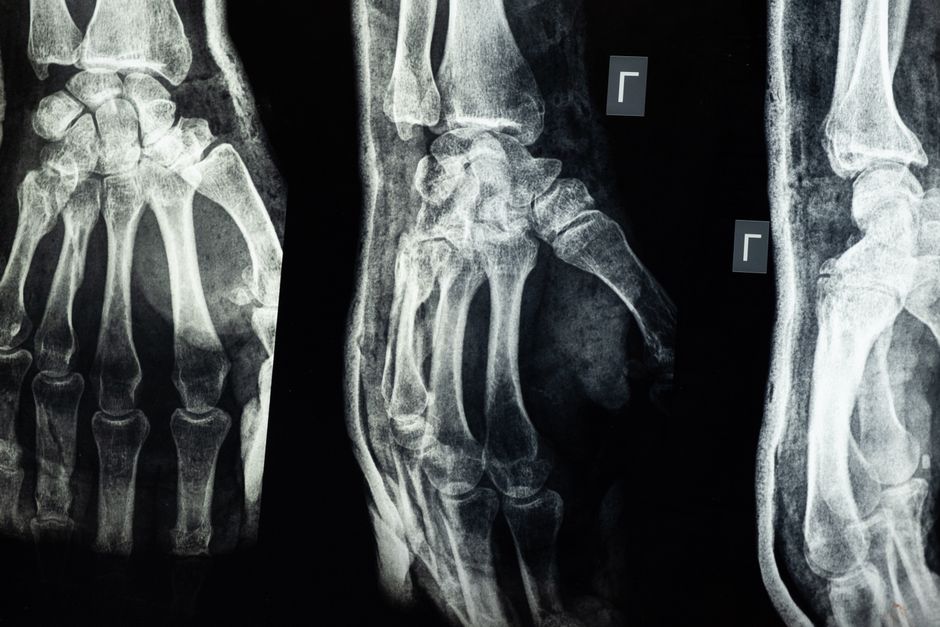
A pathological fracture is a bone break caused by disease rather than by injury. The bone gives way because it has been weakened from the inside — by a tumor, an infection, a metabolic condition, or another underlying disorder — so a break can happen during a movement that would never damage healthy bone. Sometimes there is no fall or impact at all.
That distinction matters. A fracture from a car crash or a stumble is a traumatic fracture. A fracture through bone that cancer or osteoporosis has already compromised is pathological. The two can look similar on an X-ray, but they are managed differently, and the underlying cause needs its own treatment.
What Is A Pathological Fracture And What Causes It?
A pathological fracture is defined by the state of the bone, not the force applied to it. The bone has lost enough structural integrity that normal or minor loading causes it to fail. Clinicians sometimes describe this as a fragility fracture when osteoporosis is the cause, and as a pathologic fracture when a focal lesion — usually a tumor — has created a weak spot.
The causes fall into a few broad groups:
- Metastatic cancer. Cancer that has spread to bone is the most common cause of pathological fracture in adults. Breast, prostate, lung, kidney, and thyroid cancers are the ones most likely to spread to bone. The lesions are often described as lytic (bone-destroying) or blastic (abnormal bone formation), and both types weaken the skeleton.
- Primary bone tumors. Cancers that start in bone itself — such as osteosarcoma, Ewing sarcoma, and chondrosarcoma — are far less common than metastatic disease but are an important cause, particularly in children and young adults.
- Osteoporosis. Loss of bone mineral density weakens the whole skeleton. Hip, spine, and wrist fractures in older adults are frequently fragility fractures of this kind.
- Bone infection (osteomyelitis). Infection can destroy bone locally and leave it mechanically weak.
- Benign bone lesions and cysts. Simple bone cysts, aneurysmal bone cysts, and benign tumors such as giant cell tumors can hollow out a section of bone enough to cause a break, especially in younger people.
- Metabolic and genetic bone disease. Conditions such as Paget’s disease of bone, hyperparathyroidism, osteogenesis imperfecta, and osteomalacia alter bone structure and can lead to fractures.
- Radiation therapy. Bone that has been irradiated can lose strength over time, a phenomenon called radiation-induced insufficiency.
In children, pathological fractures are more often linked to benign cysts, osteogenesis imperfecta, or, less commonly, primary bone cancers. In adults over 40, metastatic disease and osteoporosis account for the large majority.
How Do You Know a Fracture Is Pathological and Not From Injury?
Several clues point toward a pathological cause. The first is a fracture from a low-energy event — a break after a minor stumble, or after no identifiable event at all. The second is bone pain that was present before the break, which is common with tumors. The third is a fracture in an unusual location for the mechanism, such as a mid-shaft long bone break in an older adult with no significant trauma.
Imaging usually settles the question. On an X-ray, a pathological fracture often shows an abnormal area of bone — a lytic lesion, a blastic lesion, cortical thinning, or a “moth-eaten” appearance — near the break. Sometimes the fracture line passes directly through a visible tumor. In other cases, the underlying lesion is subtle, and a CT scan, MRI, or bone scan is needed to characterize it.
Blood tests can help. Elevated calcium, an abnormal alkaline phosphatase, or markers suggesting malignancy may prompt further investigation. A biopsy is sometimes needed to confirm the nature of the lesion, particularly if a primary bone tumor is suspected.
One point worth clarifying: not every fracture in an older adult is pathological in the strict sense, even if osteoporosis contributed. The term is used most precisely when a discrete lesion — usually a tumor — has created a focal weak point. Osteoporotic fractures are fragility fractures, and while the mechanism overlaps, the clinical pathway is different.
Which Cancers Most Often Cause Pathological Fractures?
Bone metastases are far more common than primary bone cancers. The cancers that most often spread to bone are breast, prostate, lung, kidney, and thyroid. Together they account for the majority of metastatic bone disease.
The sites where these metastases most often cause fracture are the ones that carry the most load and have the richest blood supply: the spine, the proximal femur (the top of the thigh bone near the hip), the pelvis, and the humerus (upper arm). A fracture through a metastasis in the proximal femur is one of the most clinically significant events in oncology, because it often requires surgery and can significantly affect mobility and quality of life.
Multiple myeloma deserves separate mention. It is a cancer of plasma cells that produces lytic bone lesions throughout the skeleton and is a well-recognized cause of pathological fracture, sometimes as the first sign of the disease.
Not every bone metastasis causes a fracture. Many are found on imaging before the bone fails. Whether a given lesion will break depends on its size, location, and how much of the bone’s cross-section it has destroyed. Clinicians use scoring systems to estimate fracture risk in long bones and to decide whether preventive surgery — such as placing a rod or plate — is warranted before a break occurs.
What Are the Symptoms and Warning Signs?
Pain is the most common symptom. It may be present for weeks or months before the fracture, often worse at night or with weight-bearing. A sudden sharp pain with a snap or pop, followed by inability to bear weight on the limb, suggests the bone has given way.
Other signs include:
- Swelling, bruising, or deformity at the site
- New or worsening back pain, which can signal a vertebral compression fracture
- Loss of height or a stooped posture, often from spinal fractures
- Numbness, tingling, or weakness if a fracture or tumor presses on a nerve
- Unexplained weight loss, fatigue, or fever, which may point to an underlying systemic cause
Some pathological fractures cause surprisingly little pain at first, particularly in the spine, where a compression fracture can develop gradually. This is one reason spinal imaging is common in people with known cancer that has spread to bone.
How Are Pathological Fractures Treated?
Treatment has two goals: stabilize the bone and treat the underlying disease. Which comes first depends on the situation.
For many long-bone fractures, surgery is needed to restore mechanical stability. Options include intramedullary nails, plates and screws, and, in some cases, joint replacement — particularly for fractures near the hip. The choice depends on the location and extent of bone destruction and on the person’s overall health and prognosis.
For spinal fractures, treatments range from pain control and bracing to vertebral augmentation procedures such as vertebroplasty or kyphoplasty, in which bone cement is injected into the fractured vertebra. The evidence for these procedures is mixed. Some patients get meaningful pain relief; randomized trials have produced inconsistent results. They are generally considered for selected patients rather than as a routine first-line treatment.
Treating the underlying cause is essential. For cancer-related fractures, that may mean radiation therapy, systemic anticancer treatment, or bone-modifying medications such as bisphosphonates or denosumab. These drugs reduce bone breakdown and can lower the risk of further skeletal events, though they do not reverse an existing fracture. For osteoporosis-related fractures, treatment focuses on fall prevention, physical therapy, and medications that increase bone density.
Pain management and rehabilitation run alongside all of this. Physical therapy helps restore function after surgery, and occupational therapy can help with daily activities during recovery.
Can Pathological Fractures Be Prevented?
Sometimes. When a bone lesion is identified before the bone fails, clinicians can estimate fracture risk and, in some cases, act to prevent a break. Preventive stabilization — placing a rod in a long bone that is at high risk — is a recognized approach in orthopedic oncology, though the thresholds for when to operate are debated and vary between centers.
For people with cancer that has spread to bone, bone-modifying medications reduce the risk of skeletal-related events, which include fractures, spinal cord compression, and the need for radiation or surgery to bone. These drugs are used according to established oncology guidelines, and their benefits must be weighed against side effects.
For osteoporosis, prevention is well established: adequate calcium and vitamin D intake, weight-bearing and resistance exercise, fall prevention, and medication for people at high fracture risk. Bone density testing helps identify who needs treatment.
What prevention cannot do is guarantee that a fracture will not happen. Bone that has been significantly destroyed by tumor or severe osteoporosis remains vulnerable even with the best available care.
What Is the Outlook After a Pathological Fracture?
Outlook depends heavily on the cause. A fracture through a benign cyst in a child usually heals well with standard orthopedic care. A fracture through a bone metastasis is more complex: the bone can often be stabilized surgically, but the underlying cancer determines the longer-term picture.
Recovery also depends on the person’s general health, the location of the fracture, and how quickly treatment begins. Some people return to walking within weeks of surgery; others face a longer rehabilitation. A fracture in the spine or hip tends to have a greater impact on mobility than one in the arm.
One thing is clear from the clinical literature: pathological fractures are serious events that affect quality of life and, in cancer patients, are associated with worse outcomes. That is why early recognition matters — both for treating the fracture and for identifying the underlying disease that caused it.
Frequently Asked Questions
What is the most common cause of a pathological fracture?
In adults, cancer that has spread to bone is the most common cause, followed by osteoporosis. In children, benign bone cysts and genetic bone conditions are more frequent causes.
Can a pathological fracture happen without any injury?
Yes. When a tumor or severe bone disease has weakened the bone enough, normal movement or everyday loading can cause it to break. Some fractures occur with no identifiable event at all.
Is a pathological fracture the same as a fragility fracture?
Not exactly. Fragility fracture usually refers to a break from low-energy trauma in bone weakened by osteoporosis. Pathological fracture more often refers to a break through a focal lesion, usually a tumor.
How is a pathological fracture diagnosed?
Imaging — X-ray, CT, MRI, or bone scan — usually identifies the fracture and the underlying bone abnormality. Blood tests and, in some cases, a biopsy help confirm the cause.
