
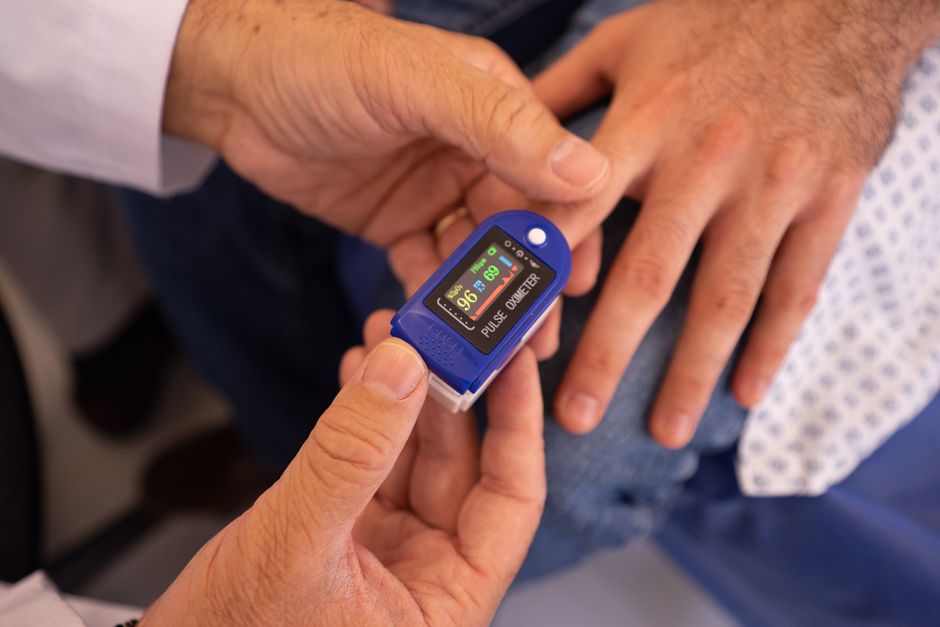
A normal respiratory rate for adults at rest is 12 to 20 breaths per minute. This is the range used in clinical practice and it applies to healthy adults who are awake, sitting still, and not recovering from exercise. Breathing rates below 12 or above 20 at rest are considered outside the normal range and are one of the standard vital signs clinicians check.
Respiration is one of four vital signs, alongside heart rate, blood pressure, and body temperature. It is also the one most often skipped in busy clinical settings. That matters, because breathing rate can change before other vital signs do when something is going wrong.
What Is a Normal Respiration Rate for Adults?
For a healthy adult at rest, 12 to 20 breaths per minute is the accepted normal range. That range appears consistently in clinical reference standards and hospital monitoring protocols.
One breath cycle includes both an inhale and an exhale. If you count the rise and fall of the chest once, that is one breath.
Normal resting rates are the same for adult men and women. They do not change meaningfully with height or body weight in healthy adults.
What does change is the rate during activity, sleep, and illness. A rate of 16 at rest might climb to 30 or higher during hard exercise. That is expected. The number that matters most in a clinical setting is the resting rate, measured when a person is calm and still.
How Do You Measure Your Breathing Rate Accurately?
Counting your own breathing rate is harder than it sounds, because the moment you focus on it, you tend to change it. Most people breathe slightly faster or hold their breath without meaning to.
A more reliable approach is to count without trying to control the breath. Here is a simple method:
- Sit quietly for a few minutes first. Do not measure right after moving around.
- Set a timer for 60 seconds.
- Count each full breath cycle — one inhale plus one exhale equals one breath.
- Do not try to breathe “normally.” Just notice what your body is already doing.
If counting for a full minute feels long, you can count for 30 seconds and multiply by two. A full minute is more accurate, though, because breathing naturally varies from moment to moment.
In a clinical setting, a nurse or doctor typically counts for a full 60 seconds while appearing to check your pulse. This is intentional. Patients who know their breathing is being watched often change it.
What Causes a Breathing Rate That Is Too Fast or Too Slow?
A resting rate above 20 breaths per minute is called tachypnea. Below 12 is called bradypnea. Both are signs, not diagnoses. They point to something else going on.
Fast breathing can happen with fever, pain, anxiety, lung conditions, heart problems, low oxygen levels, or metabolic issues like diabetic ketoacidosis. It can also be a side effect of certain medications. In some cases, fast breathing is the first vital sign to change when a person is getting sicker.
Slow breathing is less common. It can occur with sedative or opioid medications, alcohol or drug use, certain neurological conditions, or a problem with the brain’s breathing control center. In serious cases, it can mean the body is not getting enough oxygen or clearing enough carbon dioxide.
One clarification worth knowing: a single abnormal reading does not confirm a problem. Breathing rate shifts with stress, room temperature, and even mild dehydration. A clinician looks at the pattern, not one number.





When Does Breathing Rate Change With Age or Health Conditions?
Normal resting ranges shift with age. Infants and young children breathe faster than adults. A newborn typically breathes 30 to 60 times per minute. By adolescence, the rate settles into the adult range of 12 to 20.
In older adults, the normal resting range stays the same, but the ability to increase breathing during illness or activity may be reduced. This means a rate that looks only mildly elevated in an older adult can sometimes signal a more serious problem.
Certain health conditions affect breathing rate more directly:
- Chronic obstructive pulmonary disease (COPD) can raise the resting rate and change breathing patterns.
- Heart failure may cause faster breathing, especially when lying flat.
- Anxiety and panic can push the rate up quickly, even when oxygen levels are normal.
- Opioid medications can slow breathing, which is a serious warning sign.
These conditions do not always change the rate on their own. What matters is the full picture — symptoms, oxygen level, and how the person looks and feels.
Why Is Breathing Rate Often Overlooked?
Breathing rate is the vital sign most likely to be estimated rather than measured. In busy clinical settings, it is sometimes recorded as “16” out of habit without an actual count.
That is a problem, because research has repeatedly found that an abnormal respiratory rate is one of the earliest and most useful warning signs of clinical deterioration. Some hospital early-warning scoring systems give breathing rate more weight than any other single vital sign.
This is not a new idea. It has been recognized in critical care literature for years. The gap is usually in practice, not in knowledge.
For everyday purposes, knowing your own resting rate gives you a baseline. If you notice it is consistently higher or lower than usual, that is worth mentioning to a doctor — especially if it comes with shortness of breath, chest pain, confusion, or fatigue.
What Should You Do If Your Breathing Rate Seems Off?
One unusual reading is rarely cause for alarm. Breathing rate changes with stress, caffeine, recent activity, and even a stuffy room.
What matters is a pattern. If your resting rate stays above 20 or below 12 over several measurements, or if it changes alongside other symptoms, that is a reason to seek medical advice.
Seek emergency care right away if fast or slow breathing comes with any of the following:
- Blue or gray color on the lips, face, or fingertips
- Chest pain or pressure
- Confusion or difficulty staying awake
- Struggling to breathe or feeling like you cannot get enough air
- Breathing that has slowed dangerously after taking sedatives or opioids
These signs suggest the body is not getting enough oxygen or is not clearing carbon dioxide properly. They are not something to wait out at home.
How Does Breathing Rate Compare to Other Vital Signs?
Each vital sign measures something different. Together they give a fuller picture of how the body is functioning.
| Vital Sign | Normal Adult Range at Rest |
|---|---|
| Respiratory rate | 12–20 breaths per minute |
| Heart rate | 60–100 beats per minute |
| Blood pressure | Around 120/80 mm Hg |
| Body temperature | About 97°F to 99°F (36.1°C to 37.2°C) |
Breathing rate stands out because it is the vital sign most sensitive to early changes in a person’s condition. It can rise before heart rate or blood pressure shift. That is one reason it is tracked closely in hospitals.
For home monitoring, a simple count once in a while is enough for most healthy adults. You do not need a device. You just need a minute and a quiet moment.
Frequently Asked Questions
What is a normal respiratory rate for adults?
A normal resting respiratory rate for adults is 12 to 20 breaths per minute. This range applies to healthy adults who are awake, calm, and not recovering from exercise.
Is 22 breaths per minute normal for an adult?
No, 22 breaths per minute at rest is above the normal adult range of 12 to 20. A single reading can be caused by stress or recent activity, but a consistent rate above 20 is worth discussing with a doctor.
Can anxiety raise your breathing rate?
Yes, anxiety and panic can quickly push breathing above 20 breaths per minute even when oxygen levels are normal. The rate usually returns to baseline once the anxious moment passes.
When should you worry about a slow breathing rate?
A resting rate below 12 breaths per minute is below normal and should be checked by a doctor. Seek emergency care if slow breathing comes with confusion, extreme drowsiness, or happens after taking sedatives or opioids.
