
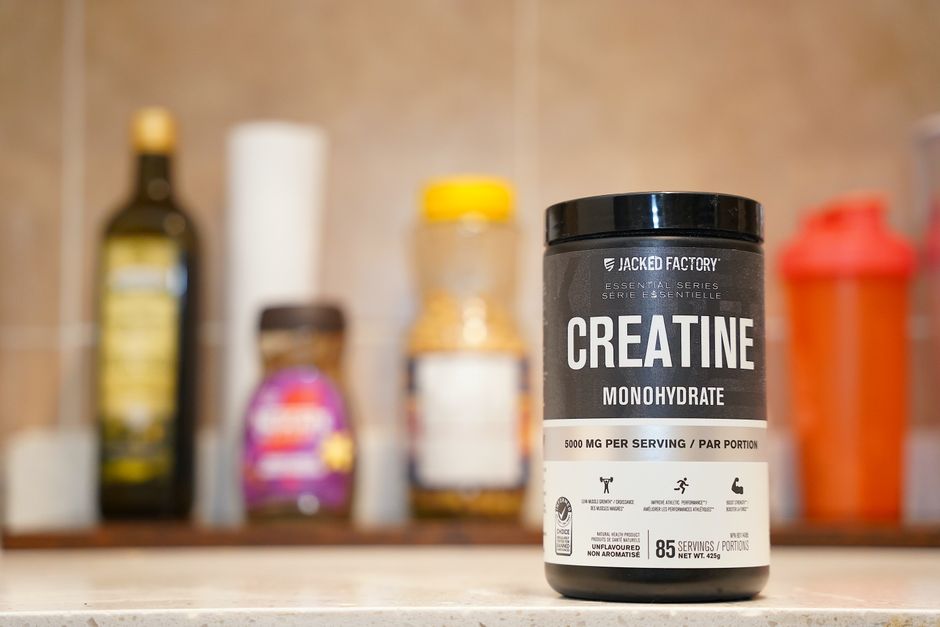
Creatine is one of the most studied supplements in sports nutrition, and the standard daily dose for most adults is 3 to 5 grams. This amount is consistently used in clinical research to support muscle strength and exercise performance. For healthy adults, taking 3 to 5 grams of creatine monohydrate once per day is considered normal and effective.
Why Is 3 to 5 Grams the Standard Dose?
Research consistently shows that 3 to 5 grams per day is enough to saturate your muscles with creatine over time. Your body naturally produces about 1 to 2 grams of creatine daily, and you get another 1 to 2 grams from food, mainly red meat and seafood. Supplementing with 3 to 5 grams adds to that total.
Muscle cells can only hold a certain amount of creatine. Once they are full, your body simply excretes the excess through urine. Taking more than 5 grams per day does not provide additional benefit for most people. It only increases the amount your kidneys filter out and eliminate.
This dose works because it is a maintenance dose. It slowly raises your muscle creatine stores to a saturated level over three to four weeks. That is why the 3 to 5 gram daily range appears in most clinical trials and sports nutrition guidelines.
What About a Loading Phase?
A loading phase is a higher-dose protocol used to saturate muscles faster. The typical loading protocol is 20 grams per day, split into four 5-gram doses, taken for five to seven days. After the loading week, you drop down to the standard 3 to 5 gram maintenance dose.
Loading is optional. It simply gets your muscle creatine stores topped off more quickly. Some people notice the performance benefits sooner with loading, but research shows that taking 3 to 5 grams daily without loading achieves the same saturation within three to four weeks.
Some people experience stomach discomfort or bloating with 20 grams per day. If you want to avoid that, skip the loading phase entirely. Just take your daily 3 to 5 grams and be patient for a few weeks.
Is Timing Important for Creatine?
Timing is not critical for creatine. Your muscles do not need creatine at a specific moment to benefit from it. What matters is consistency. Taking it every day keeps your muscle stores saturated.
Some research suggests that taking creatine around the time of your workout, either before or after, may offer a slight advantage over taking it at other times of day. But the difference is small. If you take it at the same time daily, you will see the full benefit.
Many people mix creatine into a post-workout shake or morning smoothie. The key is to make it a daily habit. Missing a day here and there is not a problem, but regular daily intake produces the best results.

Can You Take Creatine with Food or Coffee?
Yes. Creatine does not need to be taken on an empty stomach. Mixing it into water, juice, or a protein shake works fine.
One common question is whether caffeine interferes with creatine. Earlier concerns suggested caffeine might reduce creatine’s effectiveness, but more recent research indicates that moderate caffeine intake does not significantly blunt creatine’s benefits. You do not need to separate your creatine dose from your morning coffee.
There is some evidence that taking creatine with carbohydrates or protein may improve muscle uptake slightly due to the insulin response. However, the practical difference is minimal for long-term use. The most important factor is daily consistency, not what you mix it with.
Are There Different Types of Creatine?
Creatine monohydrate is the most studied and most effective form. It is also the cheapest. Hundreds of studies have used creatine monohydrate at 3 to 5 grams daily and confirmed its safety and effectiveness.
Other forms exist, including creatine hydrochloride, creatine ethyl ester, and buffered creatine. These are marketed as being better absorbed or causing less bloating. No clinical evidence currently confirms that any of these forms outperform creatine monohydrate at the standard dose.
Creatine monohydrate is poorly soluble in cold water, which leads some people to think it is not dissolving. It settles at the bottom of a glass. Stirring it more or using warm liquid helps, but even if some powder settles, it still works when swallowed.
Who Should Not Take Creatine?
Healthy adults can generally take creatine safely at 3 to 5 grams daily. Extensive research over several decades has not found serious adverse effects at this dose in healthy people.
People with pre-existing kidney disease should not take creatine without medical supervision. Your kidneys filter creatine, and a diseased kidney may struggle to handle the extra load. If you have any kidney condition, talk to your doctor before starting creatine.
There is no established clinical guidance for creatine use in pregnant or breastfeeding women. No large human trials have confirmed its safety in these populations. If you are pregnant or nursing, do not take creatine unless your doctor specifically recommends it.
Teenagers and adolescents should also consult a healthcare provider before using creatine. The evidence for safety in younger populations is less complete than in adults.
What Happens If You Take More Than 5 Grams?
Taking more than 5 grams daily does not increase muscle creatine saturation. Once your muscles are full, the excess is excreted in urine. You are essentially wasting the extra supplement.
Higher doses do carry a slightly higher risk of digestive discomfort. Some people report bloating, diarrhea, or stomach cramps at doses above 10 grams in a single sitting. Splitting the dose throughout the day can reduce these effects, but there is no performance benefit to taking more than the standard amount.
Creatine is not a drug with a dangerous overdose threshold. Even very high doses are unlikely to cause serious harm in healthy people. But that does not mean more is better. The 3 to 5 gram range is supported by research as the effective amount.
How Long Does Creatine Take to Work?
If you take 3 to 5 grams daily without a loading phase, you can expect to notice effects within two to four weeks. This is the time needed for muscle creatine stores to reach saturation.
Some people notice a slight increase in body weight during the first week. This is water retention inside muscle cells. It is not fat gain. Creatine pulls water into your muscles, which can make them look fuller and slightly heavier on the scale.
Performance benefits, particularly in repeated short bursts of high-intensity exercise, appear once saturation is reached. This includes activities like weightlifting, sprinting, and other explosive movements. Endurance activities like long-distance running show less benefit from creatine.
Do You Need to Cycle Creatine?
No. Cycling, which means taking breaks from creatine, is not necessary. Research supports continuous daily use at 3 to 5 grams without needing a break.
Your body does not build a tolerance to creatine. It does not stop responding to the supplement over time. The benefits remain as long as you continue taking it daily.
If you stop taking creatine, your muscle stores gradually return to baseline over several weeks. You will not lose the muscle you built, but the performance-enhancing effect will fade as creatine levels drop back to normal.
How Should You Measure a 3 to 5 Gram Dose?
Most creatine powders come with a scoop that measures approximately 5 grams. A level scoop of most creatine monohydrate products equals about 5 grams. This is the easiest way to measure your daily dose.
If you do not have the scoop, a standard teaspoon holds roughly 5 grams of creatine powder, though it may be slightly packed. A kitchen scale is the most accurate method if you want precision. Weighing your powder once to see what your scoop or teaspoon actually delivers is a practical step.
For a 3 gram dose, you would need three-fifths of a standard 5 gram scoop. Most people find it simpler to just take the full 5 gram scoop. Both 3 and 5 grams are within the normal effective range.
Frequently Asked Questions
Is 5 grams of creatine per day too much?
No, 5 grams per day is a standard maintenance dose for healthy adults. Research consistently uses this amount and confirms it is safe and effective.
Can I take 3 grams of creatine instead of 5 grams?
Yes, 3 grams daily is within the effective range and will saturate your muscles over time. It may take slightly longer than 5 grams to reach full saturation.
Should I take creatine every day or only on workout days?
Take creatine every day, including rest days. Daily intake maintains muscle saturation, while taking it only on workout days leaves gaps in your stores.
What is the best time of day to take creatine?
Any consistent time works, but some research suggests around your workout may offer a slight benefit. The most important factor is taking it daily.
