
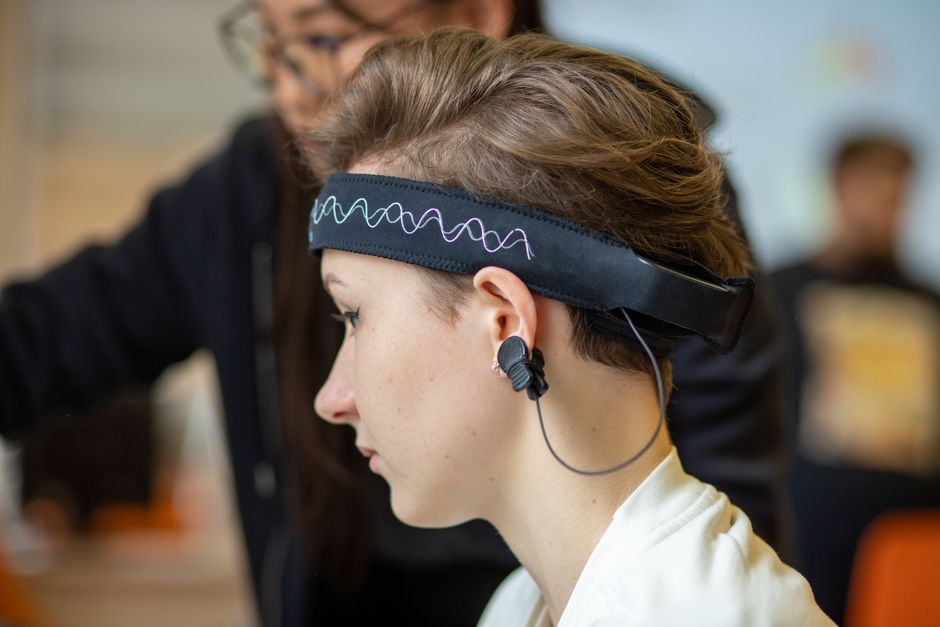
A neuroscience degree is the study of the brain and nervous system — how neurons communicate, how the brain produces behavior and thought, and what happens when these systems break down. It is a science degree that sits at the intersection of biology, psychology, chemistry, and increasingly computer science and data analysis. Graduates go into research, healthcare, pharmaceuticals, education, technology, and dozens of roles that value analytical thinking about complex systems.
What Is A Neuroscience Degree And What Can You Do With It?
Neuroscience is the scientific study of the nervous system. A degree in the field trains you to understand how the brain develops, how nerve cells send and receive signals, how the brain controls movement, emotion, memory, and perception, and how neurological and psychiatric conditions arise.
The degree is genuinely interdisciplinary. You will take courses in biology and chemistry, study psychology and behavior, and increasingly learn statistics, programming, and data analysis. That breadth is the defining feature of the field — and the reason graduates end up in such varied careers.
What you can do with it depends heavily on the level of degree. A bachelor’s degree opens doors to research assistance, healthcare support roles, pharmaceutical and biotech work, and non-science jobs that reward analytical skill. A master’s or PhD opens research and academic careers. Professional pathways like medicine, clinical psychology, or physical therapy require additional training beyond the neuroscience degree itself.
What Do You Actually Study In A Neuroscience Degree?
Core coursework builds a foundation in how the nervous system works at every scale, from single molecules to whole behaviors.
Most programs cover neuroanatomy — the physical structure of the brain and spinal cord. You study neurophysiology, which is how neurons generate and transmit electrical and chemical signals. You learn about neurotransmitters, the chemical messengers that carry signals between neurons, and about how drugs and disease affect those systems.
Expect substantial coursework in cellular and molecular biology, chemistry, and often organic chemistry. Psychology courses cover perception, learning, memory, and behavior. Statistics and research methods are standard, because neuroscience is an evidence-based field and you need to evaluate and produce data.
Many programs include laboratory work. Students may run experiments, analyze data, or work with model organisms. Some universities offer computational neuroscience tracks, where you learn to model brain function with code.
What Jobs Can You Get With A Neuroscience Degree?
A bachelor’s degree in neuroscience does not lead to one specific job. It leads to a set of pathways, and what you do with it depends on whether you stop at the bachelor’s level or continue your education.
- Research assistant or lab technician in university labs, hospitals, or research institutes. This is one of the most direct routes for bachelor’s graduates.
- Pharmaceutical and biotechnology roles, including clinical research coordination, regulatory affairs, and quality control.
- Healthcare support positions such as working in neurology clinics, sleep labs, or neurodiagnostic settings. Some of these roles require specific certification beyond the degree.
- Data analysis and health informatics, especially if your program included statistics and programming.
- Science communication, education, and technical writing.
It is worth being direct about one thing: a bachelor’s in neuroscience is not a clinical credential. You cannot diagnose or treat patients with it. Roles that involve direct patient care — physician, clinical psychologist, nurse practitioner, physical therapist — require a separate professional degree and licensure.
Do You Need A Graduate Degree To Work In Neuroscience?
For most research and academic careers, yes. A PhD is the standard credential for conducting independent neuroscience research, running a lab, or holding a faculty position. A master’s degree can lead to research positions, industry roles, or teaching, though it is less commonly the terminal degree in this field.
Doctoral programs typically take several years and involve original research culminating in a dissertation. During a PhD, you are usually funded through research or teaching assistantships, though funding varies by program and country.
Some graduates pair neuroscience with professional training. Combined MD-PhD programs train physician-scientists who study neurological disease. Others pursue clinical psychology doctoral programs, which include licensure requirements that vary by state. Each of these is a distinct path with its own admission requirements, and none is guaranteed by the neuroscience degree alone.
How Is Neuroscience Different From Psychology Or Biology?
Neuroscience overlaps with both fields but is not identical to either. Psychology studies behavior and mental processes. Biology studies living systems broadly. Neuroscience focuses specifically on the nervous system and the biological mechanisms underlying behavior and cognition.
In practice, a psychology degree tends to emphasize behavior, cognition, and research methods, with less emphasis on cellular and molecular biology. A biology degree emphasizes living systems generally. A neuroscience degree combines both lenses and adds dedicated study of the brain and nervous system.
These boundaries are not rigid. Many psychology programs include neuroscience coursework, and many neuroscience programs include substantial psychology. The distinction matters most when you look at specific career paths and graduate program prerequisites, which vary by institution.
Is A Neuroscience Degree A Good Choice?
It is a strong choice if you are genuinely interested in how the brain works and are prepared for a science-heavy curriculum. It is a demanding degree with significant chemistry, biology, and statistics requirements. Students who dislike laboratory work or quantitative coursework often find it difficult.
It is a less direct choice if your goal is a fast path to a specific job. Unlike nursing or engineering, neuroscience does not map cleanly onto one occupation at the bachelor’s level. Graduates who go straight into the workforce often rely on transferable skills — data analysis, critical thinking, scientific literacy — rather than a job title tied to the major.
One clarification that surprises many students: the field’s growth in public attention has not changed the basic economics of the career. Research funding, graduate school admission, and academic job markets are competitive and fluctuate. The degree is a strong foundation, not a guarantee.
What Skills Does A Neuroscience Degree Build?
The degree builds a specific set of skills that transfer well beyond the lab. You learn to read and evaluate scientific evidence, design experiments, analyze data, and communicate complex ideas clearly.
Because neuroscience spans biology, psychology, and computation, graduates often develop unusual breadth. They can move between biological reasoning and statistical thinking. Many programs now require some programming, which adds a practical technical skill.
These skills matter in fields well outside neuroscience. Employers in data, healthcare administration, education, and science policy value people who can interpret evidence and think carefully about complex systems. The degree trains exactly that.
What Should You Consider Before Choosing This Degree?
Look closely at the specific program, because neuroscience degrees vary widely between universities. Some lean heavily toward molecular and cellular biology. Others emphasize psychology and cognitive science. Some include strong computational training. The same degree name can mean quite different coursework.
Check the program’s research opportunities for undergraduates. Hands-on lab experience is often what makes a graduate competitive for research roles or advanced study. Ask about faculty research areas and whether undergraduates can join labs.
Also consider your end goal honestly. If you want to practice medicine or clinical psychology, plan the additional training early, since prerequisites and admission timelines are demanding. If you want to work in industry, look for programs with statistics, programming, and internship connections.
Frequently Asked Questions
What can you do with a bachelor’s degree in neuroscience?
Common paths include research assistant roles, pharmaceutical and biotech positions, healthcare support work, and data or science communication jobs. A bachelor’s degree does not qualify you for clinical practice, which requires a separate professional degree.
Is a neuroscience degree hard?
It is generally considered demanding because it requires chemistry, biology, statistics, and laboratory coursework alongside psychology. Students who enjoy science and quantitative work tend to find it manageable.
Do you need a PhD to work in neuroscience?
A PhD is standard for independent research and academic careers. Bachelor’s and master’s graduates can work in research support, industry, and related fields without a doctorate.
Can you become a doctor with a neuroscience degree?
Yes, but the neuroscience degree alone does not make you a physician. You must complete medical school and residency, and neuroscience is one of several undergraduate majors that can meet medical school prerequisites.
