
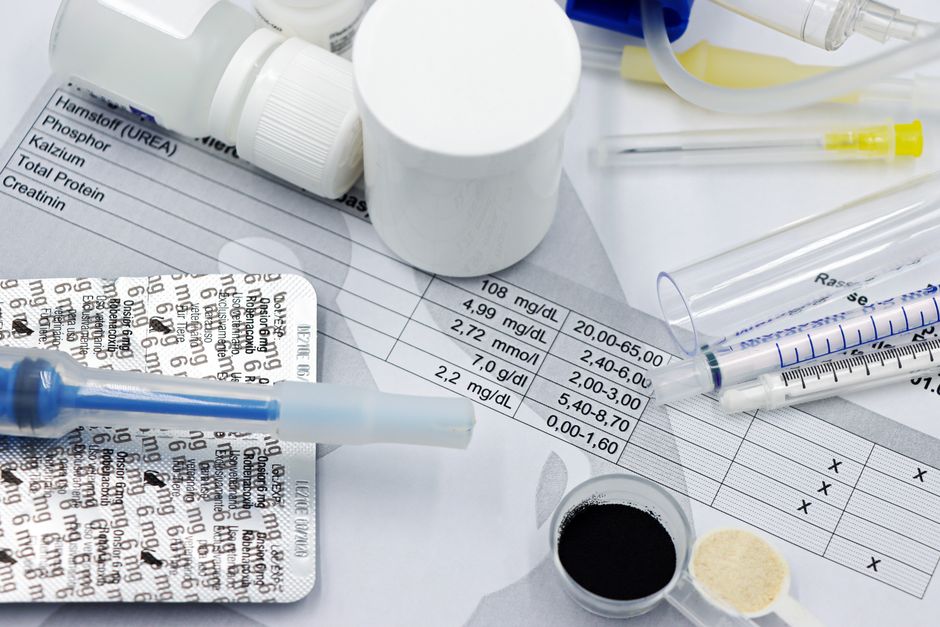
If your doctor says your eGFR is low, you are probably holding a lab report full of abbreviations and wondering what any of it means. The eGFR — estimated glomerular filtration rate — is a calculated number that estimates how well your kidneys are filtering waste from your blood. It is not measured directly. It is estimated from a substance in your blood called creatinine, along with your age and sex. The “beyond” part matters too, because eGFR is only one piece of a kidney panel that includes several other tests.
What Is A Kidney Blood Test Called eGFR And Beyond?
The eGFR is the headline number on most kidney blood tests. It estimates the percentage of kidney function you have left, expressed as a number that can range from above 90 down to below 15.
Kidneys filter blood through millions of tiny structures called nephrons. Each nephron contains a glomerulus — a small cluster of blood vessels that acts like a sieve. The glomerular filtration rate is the volume of blood plasma these sieves clean per minute. Measuring that directly is difficult and impractical in routine care.
So labs use a workaround. They measure creatinine, a waste product from normal muscle activity that healthy kidneys remove steadily. When kidney filtration drops, creatinine builds up in the blood. The eGFR formula combines your creatinine level with your age and sex to estimate filtration rate. Modern formulas may also factor in cystatin C, another blood protein that reflects kidney function.
One important point: eGFR is an estimate, not a measurement. It can be less accurate at very high or very low muscle mass, in people with amputations, in bodybuilders, and in some older adults. Your doctor interprets it alongside other results, not in isolation.
What Other Tests Come With an eGFR?
A basic metabolic panel or kidney function panel typically includes several tests beyond eGFR. Each one answers a different question about kidney health.
- Serum creatinine — the raw material for the eGFR calculation. Normal ranges vary by lab, age, and sex.
- Blood urea nitrogen (BUN) — another waste product. It rises when kidneys filter poorly, but it also rises with dehydration, high protein intake, or bleeding in the digestive tract. BUN alone is not a reliable kidney test.
- Electrolytes — sodium, potassium, bicarbonate, and chloride. Kidneys regulate these tightly. Abnormal levels can signal kidney trouble or other conditions.
- Albumin-to-creatinine ratio (ACR) — a urine test, not blood, but a standard part of kidney evaluation. It detects protein leaking into urine, which often appears before eGFR drops.
The ACR deserves special attention. In conditions like diabetes and high blood pressure, albumin can leak into urine while eGFR is still normal. That is why clinical guidelines for chronic kidney disease evaluation include both a blood test for eGFR and a urine test for albumin. Checking only eGFR can miss early kidney damage.
What Do eGFR Numbers Mean?
Kidney function is staged using eGFR ranges. These categories come from established clinical guidelines and are widely used.
| eGFR Range | Stage | What It Generally Means |
|---|---|---|
| 90 or above | G1 | Normal filtration, but kidney damage may still be present if other markers are abnormal |
| 60–89 | G2 | Mildly reduced filtration; often normal with aging |
| 45–59 | G3a | Mild to moderate reduction |
| 30–44 | G3b | Moderate to severe reduction |
| 15–29 | G4 | Severe reduction |
| Below 15 | G5 | Kidney failure; dialysis or transplant may be needed |
A single low eGFR does not automatically mean chronic kidney disease. The definition of CKD requires reduced kidney function or evidence of kidney damage persisting for at least three months. One low reading could reflect dehydration, a medication effect, or a temporary illness.
Age matters here. eGFR naturally declines with age in many people. A number in the 60s may be normal for a 75-year-old but concerning for a 40-year-old. This is why doctors interpret results in context, not by the number alone.





Why Would a Doctor Order a Kidney Blood Test?
Doctors order kidney panels for several reasons. Some are routine. Others respond to specific symptoms or risk factors.
- Diabetes — the leading cause of kidney disease in the United States. High blood sugar damages kidney filters over time.
- High blood pressure — the second most common cause. It damages blood vessels throughout the body, including in the kidneys.
- Family history of kidney disease — some kidney conditions run in families.
- Medications that affect kidneys — certain pain relievers, antibiotics, and blood pressure drugs require monitoring.
- Swelling, fatigue, or changes in urination — symptoms that can suggest kidney problems.
- Age over 60 — routine screening is often recommended.
Kidney disease is often called a silent condition because early stages produce no symptoms. By the time swelling, fatigue, or nausea appear, function may already be significantly reduced. That is why blood testing matters — it catches problems before you feel them.
What Can Affect Your eGFR Result?
Several factors can push eGFR up or down without reflecting a true change in kidney function. Knowing these helps you have a better conversation with your doctor.
Muscle mass is the biggest one. Creatinine comes from muscle. A person with more muscle produces more creatinine, which can make eGFR look lower than it is. A person with less muscle — from aging, illness, or amputation — may produce less, making eGFR look higher. Cystatin C-based formulas reduce this problem because cystatin C production is less dependent on muscle.
Hydration affects results too. Dehydration concentrates blood and raises creatinine. Being very well hydrated can slightly lower it.
Diet plays a role. A large meat meal before testing can raise creatinine. Some supplements, including creatine, can affect levels.
Medications can alter results. Some drugs raise creatinine without actually harming kidneys. Others genuinely reduce kidney function. Your doctor can tell the difference.
Pregnancy increases kidney filtration, so eGFR rises. Reference ranges for pregnant women differ from the general population, and no standard eGFR formula is validated specifically for pregnancy.
What Happens If Your eGFR Is Low?
A low eGFR triggers further evaluation, not immediate panic. Your doctor will likely repeat the test to confirm the result and check a urine albumin test if not already done.
If reduced function is confirmed and persists, the focus shifts to slowing progression. Research consistently shows that controlling blood pressure and blood sugar helps protect kidney function in people with diabetes or hypertension. Specific classes of blood pressure medications — ACE inhibitors and ARBs — are commonly prescribed for kidney protection. Newer drug classes have also shown benefit in clinical trials for certain patients.
Dietary changes sometimes help. Reducing sodium intake is widely recommended. Protein intake may need adjustment depending on stage and overall health. A kidney dietitian can provide individualized guidance.
For advanced stages, treatment options include dialysis and kidney transplant. These are serious decisions made with a nephrologist — a kidney specialist.
What you should not do is rely on supplements marketed for “kidney support.” No clinical evidence currently confirms that most of these products improve kidney function. Some may cause harm.
How Often Should You Get Kidney Blood Tests?
Frequency depends on your risk factors and current kidney function. People with diabetes or high blood pressure are typically tested at least once a year. Those with known kidney disease may be tested more often.
People without risk factors may not need routine kidney testing, though it is often included in standard blood work during physicals. If you are over 60, have family history, or take medications that affect kidneys, ask your doctor whether testing makes sense for you.
One non-obvious point: eGFR trends over time often matter more than any single result. A steady eGFR of 55 for five years tells a different story than a drop from 90 to 55 in one year. Bring previous results to appointments when possible.
Frequently Asked Questions
What is a normal eGFR by age?
For most adults under 60, an eGFR of 90 or above is considered normal. After age 60, eGFR often declines naturally, and values in the 60s may be normal for older adults.
Can eGFR go back up?
Yes, if the drop was caused by dehydration, medication, or a temporary illness, eGFR can return to baseline once the cause resolves. Chronic kidney disease generally does not reverse, but progression can often be slowed.
Is eGFR the same as kidney function percentage?
Roughly, yes. eGFR is often described as a percentage of kidney function, though the comparison is not exact. An eGFR of 60 does not mean you have lost exactly 40 percent of function.
Do I need to fast for a kidney blood test?
Fasting is not usually required for eGFR alone, but it may be needed if other tests like glucose or cholesterol are included. Follow your doctor’s specific instructions.
