
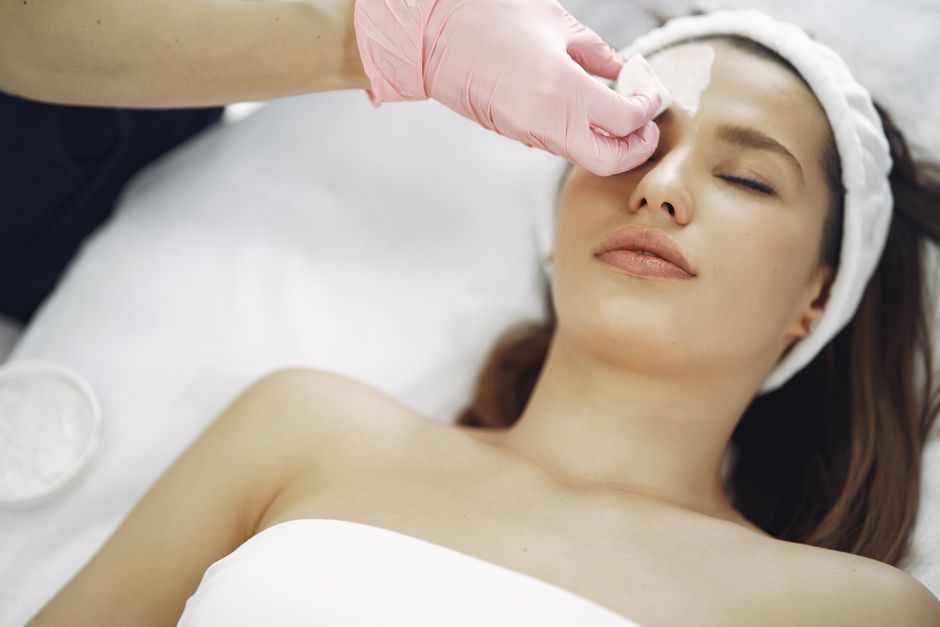
A jet peel facial is a skin treatment that uses a device to spray a high-speed mist of saline and compressed air across the face. The stream is strong enough to exfoliate the surface of the skin and push fluid into the tissue, but it does not use needles. Providers market it as a gentler alternative to microdermabrasion or hydrafacial-style treatments. Reported benefits include smoother texture and temporary hydration. Side effects are usually mild and short-lived, such as redness or tightness. Cost in the US typically runs somewhere in the range of $100 to $400 per session, depending on the clinic and city.
What Is A Jet Peel Facial and How Does It Work?
A jet peel uses a device that combines pressurized air with a sterile saline solution. The mixture moves fast enough to hit the skin as a fine mist rather than a spray. That force does two things at once. It loosens dead cells on the surface, and it pushes the saline into the upper layers of the skin.
The device works without contact. Nothing solid touches your face. No crystals, no suction cup, no needle. That is the main structural difference between a jet peel and treatments like microdermabrasion, which uses a rough tip, or a hydrafacial, which uses a vacuum tip.
The saline is the only thing being delivered in a standard jet peel. Some clinics add serums, vitamins, or other ingredients to the saline. Whether those added ingredients actually get into the skin in meaningful amounts is not well established. The device was cleared by the FDA as a general skin treatment tool, not as a drug delivery system for specific active ingredients.
One distinction worth making: a jet peel is often marketed as a way to “infuse” products into the skin. That word implies the ingredients reach a deeper layer where they can do more. The evidence for how much actually penetrates, and whether it matters, is thin. The mechanical exfoliation and hydration, on the other hand, are well understood.
What Are the Benefits of a Jet Peel Facial?
The most reliable benefits are the ones tied to the mechanism itself. Exfoliation removes dead surface cells. Hydration temporarily plumps the skin. Both are real, both are temporary.
People commonly report:
- Smoother skin texture for a few days after treatment
- A temporary reduction in dullness
- Softer feel to the skin
- Mild improvement in the appearance of fine lines, mostly from hydration
Notice the word “temporary” appears more than once. That is not a marketing hedge. It reflects how the treatment works. You are removing surface cells and adding water. Both effects fade as the skin renews and the water evaporates.
Some clinics claim jet peels help with acne, scarring, pigmentation, or pore size. The evidence for those claims is much weaker. A jet peel is not a treatment for active acne or scarring in the way a prescription or a laser is. If a provider tells you it will clear your acne or fade a scar, ask what evidence supports that. The honest answer is that the research is limited.
There is one practical advantage that does hold up: because the treatment is non-contact and needle-free, it tends to be well tolerated by people who find other treatments uncomfortable. That is a real reason some people choose it, separate from any skin benefit.
What Are the Side Effects and Risks?
Most side effects are mild and go away within hours to a couple of days. The most common are redness, warmth, and a tight or dry feeling right after treatment.
Less common but possible:
- Mild irritation or stinging, especially on sensitive skin
- Dryness for a day or two
- Breakouts in some people, possibly from the added serums rather than the saline
- Cold sore flare-ups in people who carry the virus, if the treatment irritates the lip area
The biggest variable is not the device. It is what the clinic adds to the saline. Unregulated serums, essential oils, or concentrated actives sprayed into the skin can cause irritation or an allergic reaction. If you have sensitive skin or known allergies, ask exactly what will be sprayed on your face before you agree.
People with active acne, open skin, active cold sores, or certain skin conditions should talk to a dermatologist first. So should anyone who is pregnant or breastfeeding. No clinical guidelines specifically address jet peels during pregnancy, so there is no established safety data for that group. That is a reason for caution, not proof of harm.
The device itself is not a laser and does not remove layers of skin the way a chemical peel or dermabrasion can. That lowers the risk of scarring or pigment changes. It also means the results are proportionally modest.





How Much Does a Jet Peel Facial Cost?
In the US, a single jet peel session generally costs between $100 and $400. The range is wide because pricing depends on the city, the type of clinic, and whether added serums are included.
Big-city med spas and dermatology offices tend to sit at the higher end. Smaller clinics and standalone esthetician practices often sit at the lower end. Packages of several sessions usually bring the per-session price down, but they also lock you in before you know how your skin responds.
One thing worth knowing: results from a single session are short-lived. Clinics often recommend a series of treatments spaced a few weeks apart, then occasional maintenance. That changes the real cost considerably. Three or four sessions can easily run several hundred dollars or more, and the effects still fade without ongoing treatment.
Insurance does not cover jet peels. It is considered cosmetic, not medical, so you pay out of pocket.
Jet Peel vs. Other Facial Treatments
It helps to see where a jet peel sits next to the treatments people most often compare it to. The table below reflects general differences in mechanism and typical intensity, not head-to-head study results.
| Treatment | How it works | Typical downtime | Typical cost per session |
|---|---|---|---|
| Jet peel | Pressurized saline mist, no contact | None to minimal | $100–$400 |
| Microdermabrasion | Abrasive tip or crystals | None to minimal | $75–$200 |
| Hydrafacial | Cleansing, exfoliation, suction, serum delivery | None | $150–$300 |
| Light chemical peel | Acid applied to remove surface layers | A few days of peeling | $150–$400 |
These treatments overlap more than they differ. All of them exfoliate and hydrate to some degree. None of them produce the kind of structural change a laser or prescription retinoid can. Choosing among them is mostly about tolerance, convenience, and cost, not about one being clearly superior.
If your goal is smoother, more hydrated skin for a short period, any of the gentler options can work. If your goal is treating acne, scarring, or pigmentation, none of these is the right tool. That is a conversation for a dermatologist.
Who Should Skip a Jet Peel Facial?
Jet peels are generally low-risk, but they are not for everyone. Skip it, or check with a dermatologist first, if you have any of the following:
- Active acne breakouts or open skin on the face
- An active cold sore or a history of frequent flare-ups
- Known allergies to any ingredient a clinic plans to add
- Very sensitive or reactive skin
- Pregnancy or breastfeeding, given the lack of specific safety data
- Recent cosmetic procedures or laser treatments, until cleared by your provider
Also worth a mention: if you are looking for a lasting change to your skin, a jet peel is unlikely to deliver it. It is a maintenance treatment. That is not a flaw, but it does mean the value depends on what you expect going in.
Is a Jet Peel Facial Worth It?
Whether it is worth it depends on what you want. For a quick, low-downtime treatment that leaves skin feeling smoother and more hydrated for a few days, a jet peel can deliver that. The mechanism supports it, and the risks are low for most people.
For anything beyond that, the evidence thins out fast. Claims about acne, scarring, pigmentation, or long-term skin improvement are not well supported. The treatment is gentle partly because it does not go deep, and that same gentleness limits what it can do.
If you are considering one, ask two questions before booking. What exactly will be sprayed on your skin, and what outcome does the provider expect. A clinic that answers both clearly is a better bet than one that promises results the treatment cannot reliably produce.
Frequently Asked Questions
Is a jet peel facial painful?
Most people describe a jet peel as a cool, pressurized mist with no pain. Some feel mild tingling or a tight sensation during and right after treatment.
How long do jet peel results last?
Results are temporary, typically lasting a few days to about a week. The smoother texture and hydration fade as the skin renews and the added water is lost.
How much does a jet peel facial cost?
In the US, a single session usually costs between $100 and $400, depending on the clinic and city. Insurance does not cover it because it is considered cosmetic.
Can a jet peel facial treat acne or scarring?
No, the evidence does not support using a jet peel to treat acne or scarring. Those concerns are better addressed with treatments prescribed or performed by a dermatologist.
